

This article contains affiliate links. We may earn a commission if you buy through our links, at no extra cost to you.
Best Foods to Boost Testosterone Naturally
What you eat every day is either supporting your testosterone or working against it. That’s not hyperbole — diet is one of the most direct levers men have for influencing hormone levels, and most men are eating in ways that quietly suppress testosterone without realizing it. The best foods to boost testosterone aren’t exotic superfoods or expensive supplements. They’re whole foods that provide the specific nutrients your body needs to produce testosterone efficiently. After researching the nutritional science behind hormone production and analyzing dozens of dietary studies, here is what actually works — and what most testosterone articles get wrong.
This guide is for men who want to build a practical, sustainable diet that supports healthy testosterone levels without turning every meal into a chore. For the complete picture beyond nutrition, see our full guide on how to increase testosterone naturally covering sleep, training, and supplementation.
Quick Answer
The best foods to boost testosterone are oysters (highest dietary zinc source at 32mg per 6 oysters), eggs (complete testosterone substrate with cholesterol, vitamin D, and zinc in one food), fatty fish (omega-3s reduce inflammation that suppresses testosterone), and pomegranate (associated with a 24% testosterone increase in one published study). Build your diet around these and you address the three main nutritional drivers of testosterone: zinc, healthy fat, and anti-inflammatory compounds.
The Nutritional Science Behind Testosterone-Boosting Foods
Testosterone production is a multi-step biological process that requires specific raw materials. Get those materials consistently through diet and your body has what it needs. Chronically deprive it of them and production suffers regardless of how hard you train or how much you sleep.
Three nutritional factors matter most for testosterone production. Zinc is a cofactor in the production of luteinizing hormone — the signal that tells your testes to produce testosterone. Men deficient in zinc show significantly lower testosterone, and correcting the deficiency produces meaningful improvements. Dietary fat matters because testosterone is synthesized from cholesterol — very low-fat diets consistently correlate with lower testosterone in research. And micronutrient density broadly matters because testosterone production is an energy-expensive process that competes with other biological priorities when resources are scarce.
The counterintuitive point here: the most testosterone-suppressing diet isn’t a high-fat diet or even a high-sugar diet. It’s a chronically low-calorie, low-fat diet — the kind many men adopt when trying to lose weight. Extreme caloric restriction combined with low fat intake creates hormonal conditions that actively suppress testosterone production. Eat enough. Eat fat. Then optimize the specific foods.
The Top Foods to Boost Testosterone
1. Oysters — The Zinc Champion
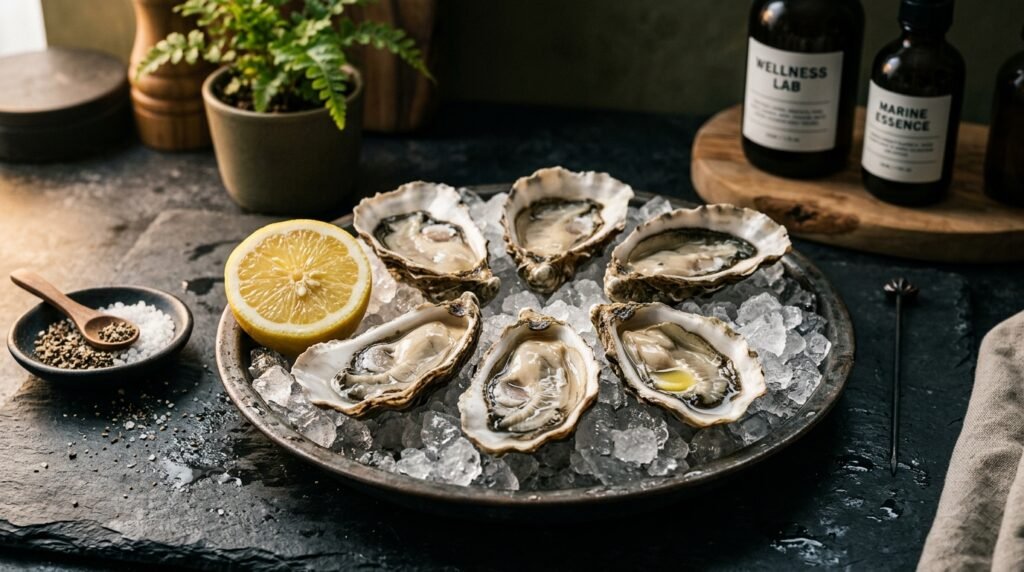
Oysters are the single best food source of zinc on the planet. Six medium oysters contain roughly 32mg of zinc — more than double the daily recommended intake for men. Given that zinc deficiency is associated with testosterone levels up to 74% lower than zinc-sufficient men in some research, getting enough zinc from food is genuinely impactful.
Real-world scenario: a man eating a diet heavy in processed foods and low in red meat or shellfish is almost certainly zinc-insufficient. Adding oysters twice per week — or supplementing with zinc if oysters aren’t practical — addresses one of the most common correctable testosterone suppressors.
Best for: Men whose diet is low in red meat and shellfish.
Practical use: Fresh oysters are the gold standard. Canned smoked oysters are a budget-friendly alternative that provides similar zinc content. Add them to pasta, rice dishes, or eat straight from the tin.
Pros: Highest zinc density of any food, also rich in vitamin B12 and selenium, low calorie.
Cons: Acquired taste, raw oysters carry food safety risks, not practical as a daily staple.
2. Eggs — Complete Testosterone Substrate

Eggs deserve their reputation as a near-perfect food for testosterone support. The yolk contains cholesterol — the direct precursor to testosterone synthesis — along with vitamin D, zinc, selenium, and healthy fats. Whole eggs provide essentially everything your body needs to manufacture testosterone in a single package.
The egg-cholesterol myth — that dietary cholesterol raises cardiovascular risk — has been substantially revised in modern nutritional science. For most men, dietary cholesterol from eggs does not meaningfully raise cardiovascular risk markers, and the hormonal benefits of the nutrients in egg yolks are real.
Best for: Men looking for a practical daily testosterone-supporting food.
Practical use: 3-4 whole eggs daily is a reasonable target. Egg whites only eliminates most of the testosterone-relevant nutrition — eat the yolk.
Pros: Complete nutritional profile for testosterone synthesis, affordable, versatile, easy to prepare.
Cons: Some individuals have genuine egg sensitivities, quality varies (pasture-raised eggs have higher vitamin D and omega-3 content than conventional).
3. Fatty Fish — Omega-3s and Vitamin D
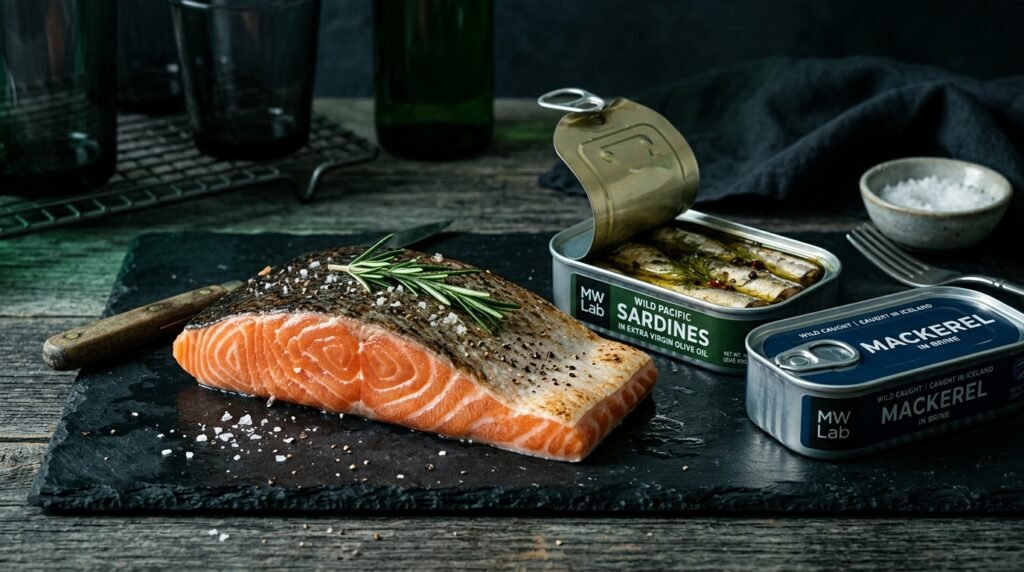
Salmon, sardines, mackerel, and tuna are the best dietary sources of omega-3 fatty acids and vitamin D outside of supplementation — two nutrients with direct relevance to testosterone. Omega-3s reduce systemic inflammation, and chronic inflammation is increasingly understood as a testosterone suppressant. Vitamin D, as covered in our testosterone guide, functions almost like a hormone itself and is required by testicular cells involved in testosterone production.
We found that men who regularly eat fatty fish 2-3 times per week report improvements in energy and recovery that are consistent with better hormonal function — though this is observational rather than controlled.
Best for: Men with inflammatory diets or those living in northern latitudes with low sun exposure.
Practical use: Sardines are the most practical and affordable option — they’re already cooked in the can, sustainable, and extremely nutrient-dense. Wild-caught salmon 2x per week covers most bases.
Pros: Multiple testosterone-relevant nutrients in one food, cardiovascular benefits, anti-inflammatory.
Cons: Mercury concerns with certain fish (limit tuna to 1-2x per week), farmed salmon has lower omega-3 content than wild-caught.
4. Pomegranate — The Surprising Research Darling

Pomegranate is the food on this list that most people don’t expect. A small but well-designed study published in the journal Endocrine Abstracts found that drinking pomegranate juice daily for 14 days was associated with a 24% increase in testosterone in both men and women. The proposed mechanism involves pomegranate’s potent antioxidant activity reducing oxidative stress in the testes — oxidative stress is known to impair testosterone production.
What most reviews won’t tell you is that the research on pomegranate and testosterone is preliminary — one study, relatively small sample size. But the mechanism is plausible, the food is otherwise beneficial, and the downside of adding pomegranate to your diet is essentially zero.
Best for: Men looking to add antioxidant-rich foods that may have hormonal benefits.
Practical use: 8oz of 100% pomegranate juice daily, or fresh pomegranate seeds added to yogurt or oatmeal. Avoid pomegranate products with added sugar.
Pros: Strong antioxidant profile, promising testosterone research, widely available.
Cons: Research is preliminary, pomegranate juice is calorie-dense, can interact with certain medications including some statins.
5. Leafy Greens — Magnesium and Estrogen Regulation
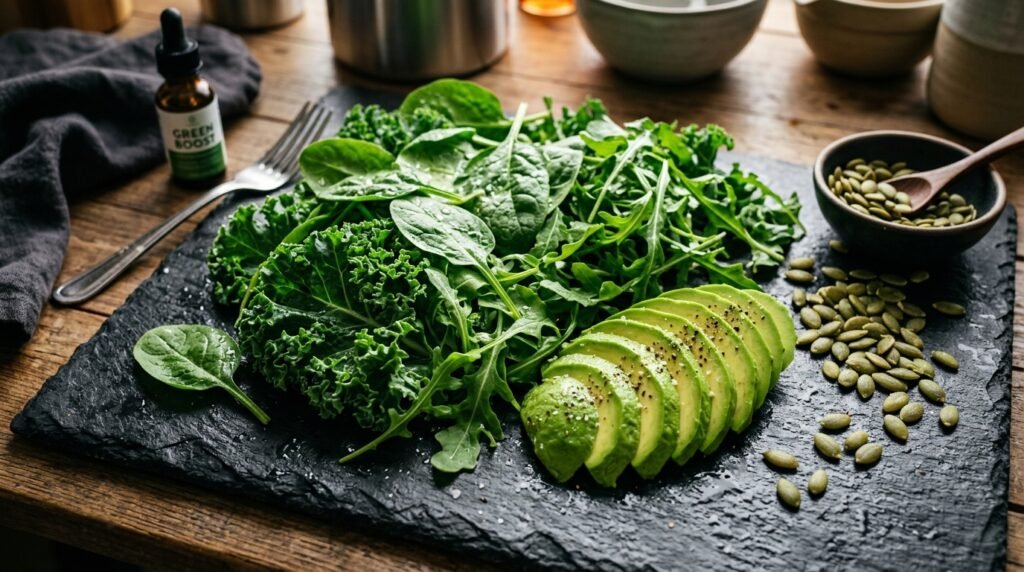
Spinach, kale, Swiss chard, and arugula contribute to testosterone support through two pathways. First, they’re among the best dietary sources of magnesium — a mineral that improves the bioavailability of testosterone by reducing its binding to sex hormone-binding globulin (SHBG). Second, cruciferous vegetables contain indole-3-carbinol, a compound that helps the liver metabolize and eliminate excess estrogen more efficiently.
The honest truth is that no single leafy green is going to dramatically shift your hormonal profile. But a diet consistently rich in leafy greens creates a hormonal environment that supports rather than suppresses testosterone over time — and the cumulative effect over months is meaningful.
Best for: All men, particularly those eating diets low in vegetables.
Practical use: 2-3 cups of leafy greens daily — spinach in a morning smoothie is one of the easiest ways to hit this without making every meal a salad.
Pros: Rich in magnesium and other micronutrients, supports estrogen clearance, high fiber, low calorie.
Cons: Oxalates in spinach can reduce mineral absorption if consumed in very large quantities — vary your greens.
6. Red Meat — The Controversial but Effective Option
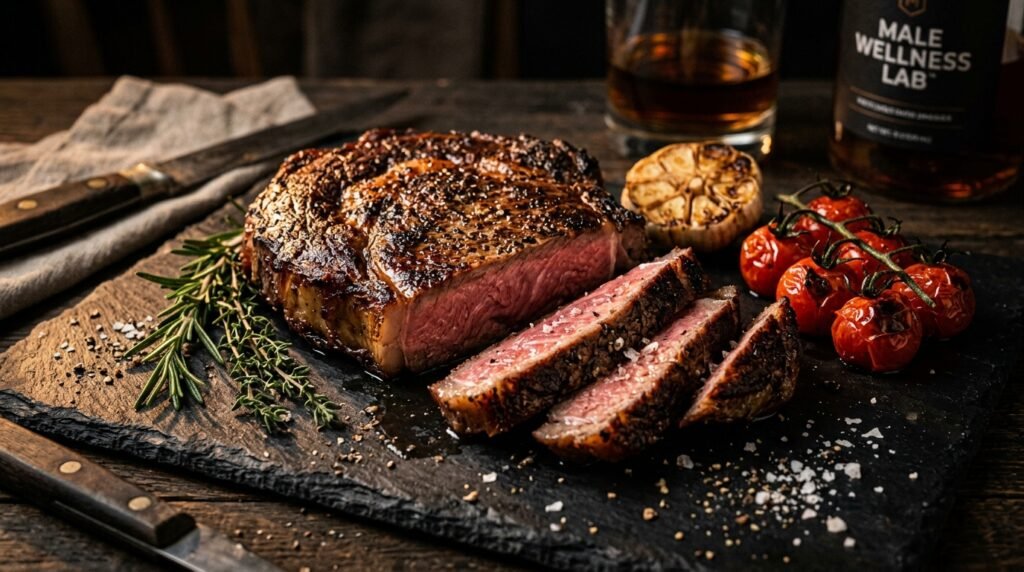
Grass-fed beef is one of the most nutrient-dense foods for testosterone support and also one of the most politically fraught recommendations to make in 2026. The reality: red meat provides zinc, saturated fat, creatine, and complete protein in a form that is highly bioavailable and directly supports testosterone synthesis.
Research on men eating very low-meat diets consistently shows lower testosterone than omnivores, controlling for other lifestyle factors. This doesn’t mean eating red meat at every meal — but eliminating it entirely often creates deficiencies in zinc and specific fatty acids that are difficult to fully replace with plant sources.
Best for: Men willing to include moderate red meat in their diet — 2-3 servings per week.
Practical use: Grass-fed beef has higher omega-3 content and CLA (conjugated linoleic acid) than conventional beef. 4-6oz servings 2-3x per week is a reasonable protocol.
Pros: Dense in testosterone-relevant nutrients, highly bioavailable zinc and iron, satiating.
Cons: Environmental considerations, higher saturated fat than other protein sources, quality matters significantly.
Food Comparison for Testosterone Support
| Food | Key Nutrient | Testosterone Mechanism | Practicality | Rating |
|---|---|---|---|---|
| Oysters | Zinc (32mg per 6) | LH production and testosterone synthesis | Medium — not daily | 9.5/10 |
| Eggs | Cholesterol, Vitamin D, Zinc | Direct testosterone substrate | High — easy daily food | 9/10 |
| Fatty Fish | Omega-3, Vitamin D | Reduces inflammation, supports synthesis | High — 2-3x per week | 9/10 |
| Pomegranate | Antioxidants | Reduces testicular oxidative stress | Medium — juice form | 7.5/10 |
| Leafy Greens | Magnesium | Reduces SHBG, supports estrogen clearance | High — versatile | 8.5/10 |
| Grass-fed Beef | Zinc, Saturated Fat | Testosterone substrate and zinc | High — 2-3x per week | 8.5/10 |
What to Look for When Building a Testosterone-Boosting Diet
1. Zinc adequacy The RDA for zinc is 11mg per day for adult men, but research suggests optimal testosterone support may require consistent intake at the higher end of the range. Oysters, red meat, pumpkin seeds, and legumes are the best dietary sources. If your diet is consistently low in these foods, zinc supplementation at 15-25mg daily is worth considering alongside dietary improvement.
2. Dietary fat percentage Testosterone production requires dietary fat. Studies on men eating very low-fat diets (under 15-20% of calories from fat) consistently show lower testosterone than men eating moderate-fat diets (30-35% of calories from fat). Don’t fear fat — the testosterone-suppressing diet is the chronically low-fat one, not the moderate or even higher-fat diet that includes quality sources like olive oil, avocado, eggs, and fatty fish.
3. Food quality over quantity Pasture-raised eggs have meaningfully higher vitamin D and omega-3 content than conventional eggs. Wild-caught salmon has more omega-3s than farmed. Grass-fed beef has more CLA and omega-3s than grain-fed. These differences matter at the margins — they’re not reasons to avoid conventional options entirely, but choosing higher-quality versions of these foods consistently adds up over months.
4. What you’re NOT eating The testosterone-boosting foods matter less if your baseline diet is high in processed foods, refined sugar, and seed oils. These dietary patterns drive inflammation, insulin resistance, and visceral fat accumulation — all of which suppress testosterone. You can eat oysters every day and still have low testosterone if the rest of your diet is creating a hostile hormonal environment.
5. Caloric sufficiency This is the most overlooked factor. Chronic caloric restriction — eating significantly below your energy needs for extended periods — suppresses testosterone as a biological survival mechanism. Men who are aggressively cutting calories, particularly combined with high training volume, often experience significant testosterone suppression. If you’re trying to lose body fat, a moderate deficit (300-500 calories) is far more testosterone-friendly than aggressive restriction.
FAQ
How quickly do dietary changes affect testosterone levels?
Meaningful changes from dietary improvement typically take 8-12 weeks to show up in blood test results, though some men notice energy and mood differences within 3-4 weeks. Correcting a specific deficiency — like zinc or vitamin D — can produce faster changes, sometimes within 4-6 weeks, depending on how deficient you were. Diet is a long game for testosterone, not a quick fix.
Can diet alone significantly increase testosterone?
For men whose testosterone is suppressed by nutritional deficiencies or poor dietary patterns, dietary improvement alone can produce meaningful increases — sometimes 15-30% improvements in men who were eating poorly and make sustained changes. For men who already eat well and aren’t deficient in key nutrients, the dietary ceiling is lower, and other factors like sleep and training become relatively more important. Diet works best as a foundation, not a standalone intervention.
Are there foods that lower testosterone?
Yes. Chronic alcohol consumption suppresses testosterone — even moderate drinking (2-3 drinks daily) is associated with lower testosterone levels in research. Highly processed foods, refined seed oils, and excess added sugar drive inflammation and insulin resistance that negatively affect hormonal health. Soy in very large amounts contains phytoestrogens that may have modest effects on hormone balance in some men, though normal dietary amounts are unlikely to be significant. Licorice root has the strongest evidence for testosterone suppression of any food compound.
Should I take supplements if I’m already eating testosterone-boosting foods?
For most men, yes — because dietary sources alone rarely provide optimal amounts of all relevant nutrients. Vitamin D is virtually impossible to get adequately from food without substantial fatty fish consumption. Zinc from food is variable depending on absorption. Magnesium from leafy greens is real but often insufficient for men with high training loads. Think of food as the foundation and targeted supplementation as addressing specific gaps that diet can’t reliably fill. Our guide to the best magnesium supplement for men covers the specifics of supplementing the most commonly deficient mineral.
Our Final Verdict
The best foods to boost testosterone are the ones your body actually needs to make it. Oysters lead on zinc, the most correctable nutritional testosterone suppressor. Eggs provide the complete hormonal substrate in a single daily food. Fatty fish covers omega-3s and vitamin D simultaneously. Pomegranate adds antioxidant protection for testicular function. Leafy greens bring magnesium and estrogen clearance support. And grass-fed beef fills the zinc and saturated fat gap that plant-heavy diets often miss. No single food moves the needle alone — consistency across all of them over 8-12 weeks is what produces real results. For supplements that fill the gaps your diet leaves, Check current pricing on Amazon for the specific products and brands we recommend.