
This article contains affiliate links. We may earn a commission if you buy through our links, at no extra cost to you.
Magnesium Glycinate vs Citrate for Sleep: Which Is Better?
You’ve decided magnesium is worth trying for sleep. Smart decision — the evidence is solid. Now you’re staring at two bottles on Amazon: magnesium glycinate and magnesium citrate, both claiming to improve sleep, both reasonably priced. The difference isn’t obvious from the label. But it matters — particularly if you’ve ever taken magnesium and spent the next morning closer to the bathroom than you’d like.
The comparison between magnesium glycinate vs magnesium citrate for sleep comes down to bioavailability, digestive tolerance, and which form actually supports the specific sleep mechanisms that matter for men. After researching both forms extensively and comparing the clinical evidence, here is what actually works and when each form makes sense.
This guide is for anyone who’s already decided magnesium is worth trying and wants to choose the right form before spending money on the wrong one.
Quick Answer
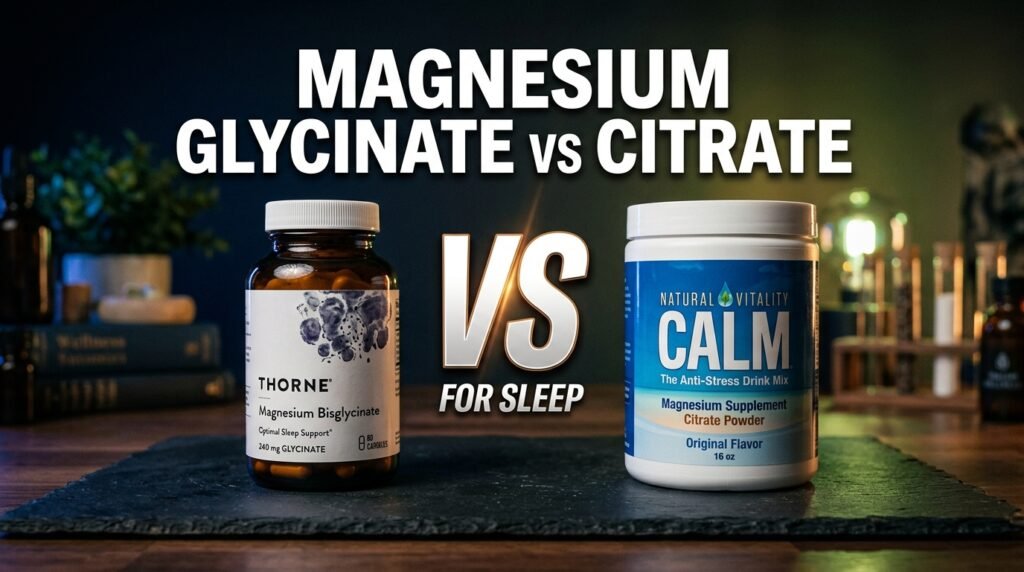
Magnesium glycinate wins for sleep. The Thorne Magnesium Bisglycinate is the top pick — bound to glycine, an amino acid with its own sleep-promoting properties, and gentle enough to take at 200-400mg nightly without digestive side effects. Magnesium citrate (Natural Vitality Calm) is better absorbed than oxide but causes loose stools at higher doses, making it unreliable for the nightly dosing that sleep research supports.
What Makes These Two Forms Different
Both magnesium glycinate and magnesium citrate deliver elemental magnesium to your body. The difference is what the magnesium is bound to — and that binding affects how much your body absorbs, how your digestive system tolerates it, and what additional effects the compound delivers beyond the magnesium itself.
Magnesium glycinate is magnesium bound to glycine, a non-essential amino acid. Glycine has its own independent effects on sleep — it lowers core body temperature, activates inhibitory neurotransmitter receptors, and has been shown in research to improve sleep quality at 3g doses independently of magnesium. When you take magnesium glycinate, you’re getting both the magnesium benefit and the glycine benefit simultaneously. That synergy is why it consistently outperforms other forms for sleep specifically.
Magnesium citrate is magnesium bound to citric acid. It’s more bioavailable than magnesium oxide — the cheap form found in most drugstore supplements — but less bioavailable than glycinate in most comparative studies. The citrate form has a notable laxative effect at higher doses, which limits how much you can practically take before experiencing digestive consequences. This is actually useful if you’re dealing with constipation. For sleep, it’s a limitation.
The counterintuitive point: bioavailability alone doesn’t determine which form is better for sleep. Magnesium citrate has good bioavailability, but the laxative threshold limits the dose you can practically take nightly. Magnesium glycinate has excellent bioavailability and no laxative effect, allowing you to consistently reach the 200-400mg doses that sleep research actually supports.
For context on how these forms fit into the broader magnesium landscape, see our complete guide on the best magnesium supplement for men — it covers all major forms across every use case.
How Each Form Affects Sleep Differently
Sleep improvement from magnesium works through several pathways. Understanding which pathways each form engages helps explain why glycinate consistently outperforms citrate for this specific application.
Magnesium’s sleep mechanisms — shared by both forms:
- Activates GABA receptors — the same receptors targeted by sleep medications — promoting nervous system calm
- Regulates the hypothalamic-pituitary-adrenal axis, reducing evening cortisol
- Supports melatonin production through enzyme cofactor activity
- Reduces neuromuscular excitability, relieving the muscle tension that keeps many men awake
Glycine’s additional sleep mechanisms — unique to magnesium glycinate:
- Lowers core body temperature by 0.5-1°C — a key trigger for sleep onset and deep sleep maintenance
- Activates glycine receptors in the brain stem that promote sleep
- Shown in a 2012 study in Sleep and Biological Rhythms to improve sleep quality, reduce daytime sleepiness, and improve next-day cognitive performance at 3g doses
Magnesium citrate engages only the magnesium-specific pathways. Magnesium glycinate engages both sets of mechanisms. For sleep specifically, that compound effect is meaningful — it’s not a small margin.
Real-world scenario: a man taking 400mg of magnesium citrate at bedtime notices some improvement in sleep onset but experiences loose stools the next morning — a common complaint at that dose. Switching to 400mg of magnesium glycinate eliminates the digestive issue entirely while adding the glycine sleep benefit. This is one of the most common transitions men make after their first magnesium experience.
The Digestive Tolerance Reality
This deserves its own section because it’s the most practically important difference between these two forms for men taking magnesium specifically for sleep.
Magnesium citrate’s laxative effect is dose-dependent and individual-dependent — some men experience it at 200mg elemental magnesium, others not until 500mg. The threshold is unpredictable until you’ve tested it personally. Taking magnesium citrate at 10pm may produce a 4-6am bathroom wake-up — which obviously defeats the sleep improvement purpose.
In our experience, the most common complaint from men who “tried magnesium and it didn’t work” is that they used magnesium citrate at full dose, experienced digestive disruption, and abandoned the protocol entirely — never reaching the 2-3 weeks of consistent use where the sleep benefits actually develop.
Magnesium glycinate has no meaningful laxative effect at standard doses of 200-400mg elemental magnesium. You can take the full research-supported dose nightly without digestive unpredictability. That consistency is what allows the tissue repletion process to occur over 2-3 weeks that produces reliable sleep improvement. For a dedicated deep-dive into the best glycinate options, see our guide on the best magnesium glycinate for sleep.
The 5 Best Magnesium Supplements for Sleep — Glycinate and Citrate Options
1. Thorne Magnesium Bisglycinate — Best Overall for Sleep (~$28-32)
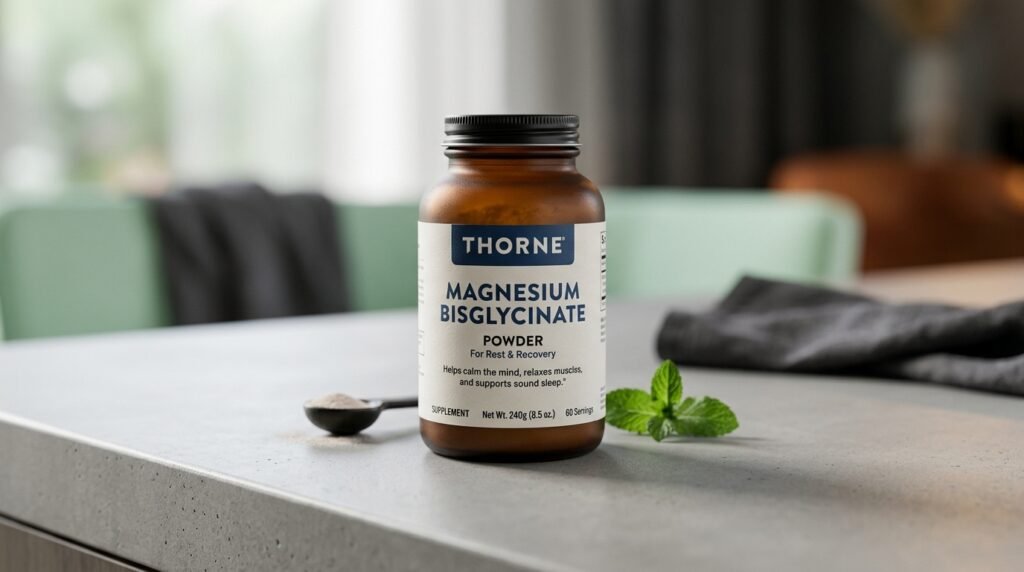
Thorne Magnesium Bisglycinate is the gold standard for sleep-specific magnesium supplementation. The bisglycinate form — where each magnesium ion is bound to two glycine molecules rather than one — has superior stability and absorption compared to standard glycinate, and delivers the full glycine synergy that makes this form specifically effective for sleep depth and onset. NSF Certified for Sport, free from fillers, manufactured to pharmaceutical-grade GMP standards with Thorne’s four-round testing protocol.
Each serving delivers 200mg of elemental magnesium. Most men find 1-2 servings (200-400mg) taken 30-60 minutes before bed is the effective dose range for sleep. At 90 servings per bottle it’s competitively priced for the quality tier.
Pros: NSF Certified, bisglycinate form for maximum sleep benefit, no laxative effect at standard doses, no fillers, trusted manufacturing, 90 servings per bottle. Cons: $28-32 price point is higher than budget alternatives, capsule only — no powder option in this SKU.
2. Pure Encapsulations Magnesium Glycinate — Best Value Clean Formula (~$20-25)
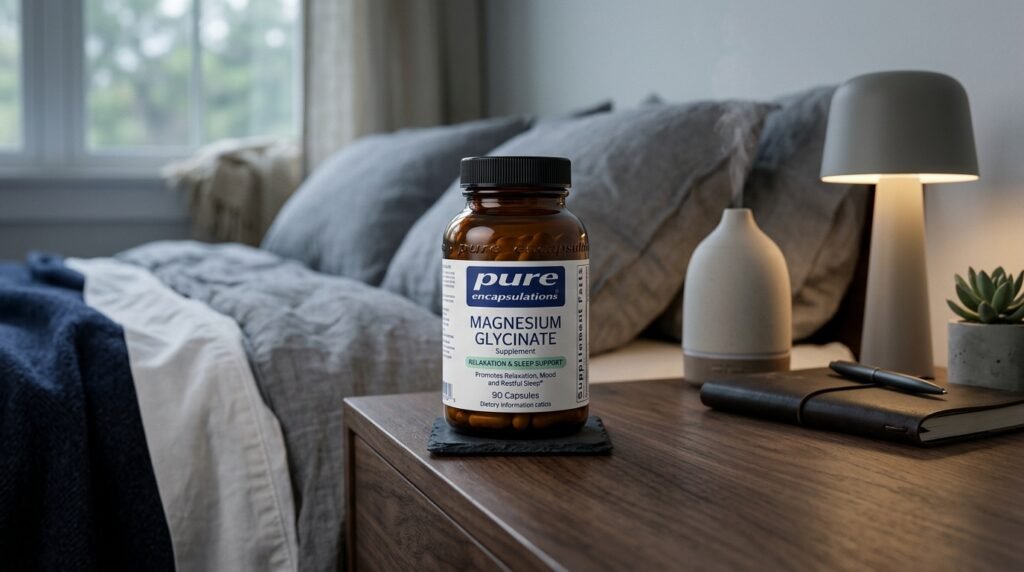
Pure Encapsulations Magnesium Glycinate delivers clean magnesium glycinate in a hypoallergenic formula at a lower price than Thorne. At 120mg of elemental magnesium per capsule, it gives men the flexibility to titrate dose carefully — 1 capsule for a lighter 120mg dose, 2-3 capsules for the research-supported 240-360mg range. Manufactured in an NSF-certified facility with independent potency verification.
What most reviews won’t tell you is that Pure Encapsulations’ lower per-capsule dose is actually an advantage for men who want to start conservatively and increase gradually — a reasonable approach for anyone new to magnesium supplementation who wants to confirm tolerance before committing to a full dose.
Pros: Hypoallergenic formula, clean minimal ingredients, NSF-certified facility, flexible dosing, no laxative effect, consistent batch quality. Cons: Multiple capsules required to reach 300-400mg dose, lower dose per capsule, slightly less bioavailable than bisglycinate form.
3. Doctor’s Best High Absorption Magnesium — Best Budget Glycinate Option (~$12-18)
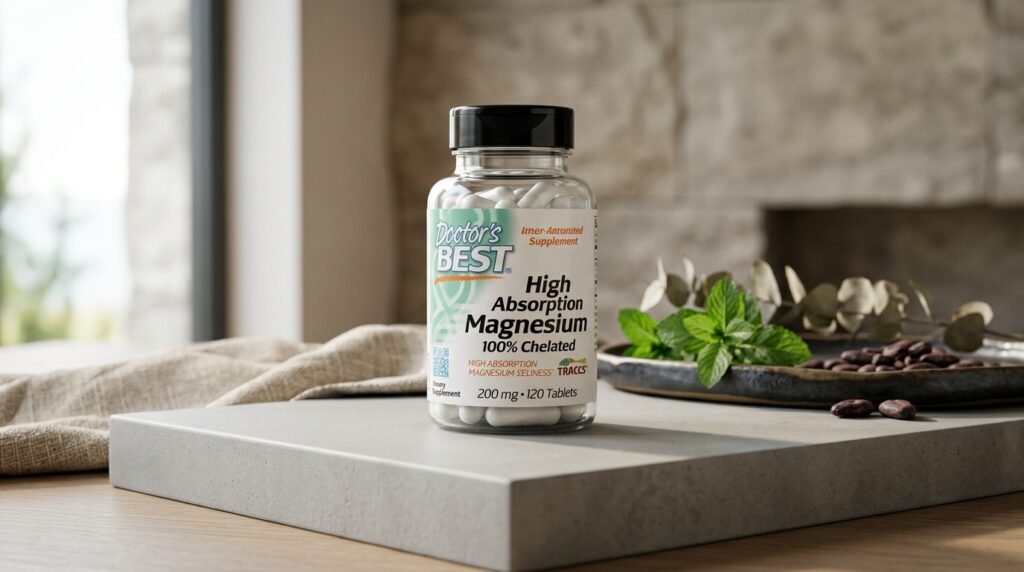
Doctor’s Best High Absorption Magnesium uses a chelated glycinate/lysinate blend delivering 200mg of elemental magnesium per serving at a price point that makes it the most accessible entry into quality magnesium glycinate supplementation. 120 tablets per bottle at $12-18 provides a 4-month supply at one serving daily — the longest supply of any option on this list at its price.
The honest truth about Doctor’s Best: it uses a glycinate/lysinate blend rather than pure bisglycinate, which means slightly less of the glycine-specific sleep benefit. For men testing whether magnesium glycinate helps their sleep before committing to premium pricing, the difference is acceptable — and the 4-month supply gives enough time for the full effect to develop.
Pros: 200mg elemental magnesium per serving, chelated form, 120 tablets = 4-month supply, vegan, non-GMO, gluten-free, best cost per effective dose on this list. Cons: Glycinate/lysinate blend not pure bisglycinate, tablet form rather than capsules, not third-party certified, contains excipients that premium options avoid.
4. Natural Vitality Calm — Best Magnesium Citrate for Stress and Mild Sleep Support (~$25-30)

Natural Vitality Calm is the best-known magnesium citrate product and genuinely useful for stress reduction and mild sleep support — particularly for men who want a warm drink ritual before bed or who also want the digestive regularity benefit alongside modest sleep improvement. The powder form creates a fizzy drink that mixes magnesium carbonate with citric acid to form magnesium citrate in solution, delivering 350mg of magnesium per full serving.
The key caveat: start at half a teaspoon (approximately 87mg elemental magnesium) and increase slowly over 1-2 weeks. Most men find 1-1.5 teaspoons is their practical ceiling before the laxative effect becomes inconvenient. Taking it 60-90 minutes before bed rather than immediately before bed reduces the overnight digestive timing risk.
Pros: Pleasant warm drink ritual, stress-reducing pre-bed routine, flexible powder dosing, good for digestive regularity, non-GMO, gluten-free, vegan, widely available. Cons: Laxative effect limits practical nightly dose, less targeted for deep sleep improvement than glycinate, sweet flavor from added stevia, not ideal as a standalone sleep supplement at full dose.
5. Thorne Magnesium CitraMate — Best Magnesium Citrate for Daytime Use (~$28-32)
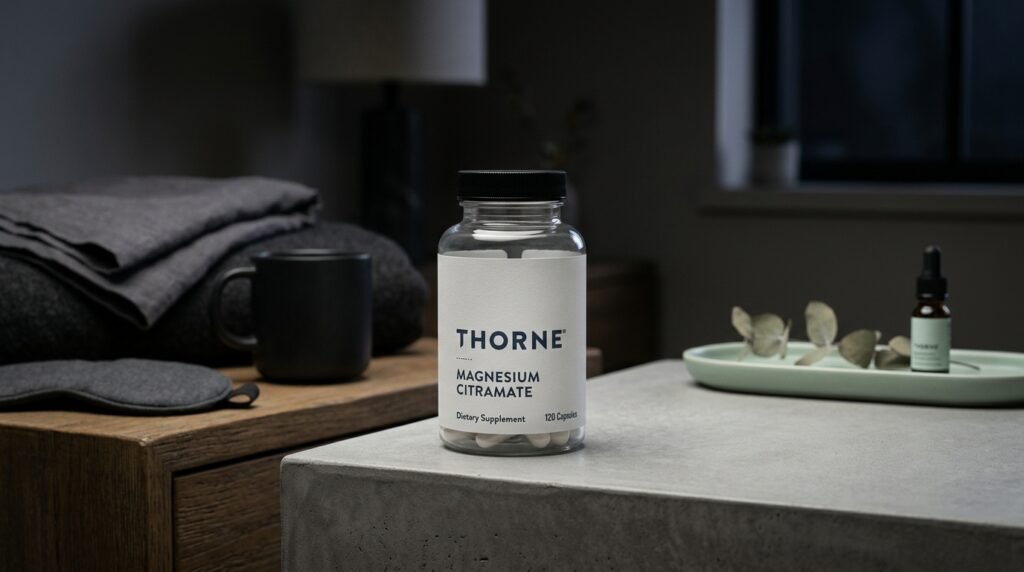
Thorne Magnesium CitraMate combines magnesium citrate with malate — malic acid’s involvement in the Krebs cycle makes this form specifically supportive of ATP energy production and muscle function. At 135mg of elemental magnesium per capsule, third-party certified, and manufactured to Thorne’s standard, it’s the quality option in the citrate category.
The honest positioning of this product: CitraMate is better as a daytime supplement than a dedicated sleep tool. The malate component’s energy metabolism support makes it more appropriate for morning or afternoon use — it addresses daytime energy and muscle function more effectively than it addresses sleep architecture. Men who want magnesium citrate specifically for daytime energy and use it secondarily for light sleep support will find it useful. Men whose primary goal is sleep improvement should choose one of the glycinate options above.
Pros: Thorne quality and four-round testing protocol, third-party certified, dual citrate/malate form for energy and digestion, clean formula, 90 servings. Cons: Better suited as daytime supplement than dedicated sleep support, $28-32 approaches glycinate pricing without the sleep-specific advantage, laxative risk at higher doses applies.
Comparison Table
| Product | Form | Price | Best For | Laxative Risk | Rating |
|---|---|---|---|---|---|
| Thorne Magnesium Bisglycinate | Bisglycinate | ~$30 | Best overall sleep supplement | None | 9.5/10 |
| Pure Encapsulations Glycinate | Glycinate | ~$22 | Clean flexible dosing | None | 9/10 |
| Doctor’s Best High Absorption | Glycinate/Lysinate | ~$15 | Budget sleep option | None | 8/10 |
| Natural Vitality Calm | Citrate powder | ~$28 | Stress + mild sleep + digestion | Moderate at full dose | 7.5/10 |
| Thorne Magnesium CitraMate | Citrate/Malate | ~$30 | Daytime energy + light sleep | Low at recommended dose | 7/10 |
What to Look for When Choosing Between Magnesium Forms for Sleep
1. Your primary goal determines your form Sleep depth and onset → magnesium glycinate, full stop. Digestive regularity alongside mild sleep support → magnesium citrate. Daytime energy production and muscle function → magnesium malate or citramate. Buying a citrate product expecting the same sleep effect as glycinate consistently produces disappointment — the mechanisms are partially overlapping but not equivalent.
2. Digestive sensitivity is the deciding factor for dose Men with sensitive digestive systems should exclusively use glycinate. The laxative threshold for magnesium citrate varies significantly between individuals — from 200mg to 600mg elemental magnesium — and is impossible to predict without personal testing. Glycinate has no meaningful laxative effect at standard sleep doses, making it predictable and practical for the consistent nightly use that sleep improvement requires.
3. Elemental magnesium vs compound weight on the label Labels can be misleading. A product listing “500mg magnesium glycinate” per serving delivers approximately 14% of that as elemental magnesium — about 70mg. Always check the elemental magnesium content specifically. For sleep support, 200-400mg of elemental magnesium is the research-supported range. This is the number that matters, not the total compound weight.
4. Third-party testing for nightly use For a supplement taken every night long-term, label accuracy matters more than for occasional supplements. Thorne products are third-party certified with publicly available testing. Pure Encapsulations is manufactured in an NSF-certified facility. Doctor’s Best and Natural Vitality are GMP-compliant. Prioritize verified products for any supplement protocol lasting more than a few weeks.
5. Timeline for evaluation L-theanine and glycine produce noticeable effects within the first few days. Magnesium glycinate typically takes 2-3 weeks of consistent nightly use to produce significant sleep improvement — because it works by gradually correcting cellular magnesium deficiency rather than producing acute sedation. Men who evaluate at day 5-7 and notice nothing often abandon it before the mechanism has had time to operate. Set a minimum 21-day trial period before concluding whether it’s working.
FAQ
Which is better absorbed — magnesium glycinate or citrate?
Both forms are significantly better absorbed than magnesium oxide. In comparative studies, magnesium glycinate shows equal or slightly superior absorption to citrate in most measures, and because it doesn’t trigger the laxative response that limits citrate dosing, more of the practical daily dose actually reaches circulation rather than being rushed through the digestive tract. For absorption specifically, both are good choices — glycinate wins on tolerability at the doses needed for sleep support.
Can I take magnesium citrate before bed?
You can, but the timing risk is real. Magnesium citrate’s laxative effect typically manifests 4-8 hours after ingestion. Taking it at 10pm may produce a 4-6am bathroom interruption — which defeats the sleep improvement purpose entirely. If you use magnesium citrate for sleep, keep the dose conservative (150-200mg elemental magnesium maximum), take it 60-90 minutes before bed rather than immediately before, and start at half the recommended dose for the first week. Magnesium glycinate eliminates this timing risk entirely at standard doses.
How long does it take to notice sleep improvements from magnesium?
It depends on the form. Glycine (as a standalone supplement) produces noticeable effects within the first few days. Magnesium glycinate typically takes 2-3 weeks of consistent nightly use to produce the most significant sleep improvements — particularly for sleep depth and staying asleep through the night. This gradual timeline reflects tissue magnesium repletion rather than acute sedation. Men who evaluate at day 5-7 and notice nothing often abandon the protocol 2 weeks before the benefit would have developed.
Should I take magnesium glycinate if I’m already taking a multivitamin with magnesium?
Check your multivitamin’s magnesium form and content first. Most multivitamins contain magnesium oxide at 50-100mg — low bioavailability and insufficient for sleep support. Even if your multivitamin contains a better form, supplementing separately with magnesium glycinate for sleep is generally worthwhile because total dietary plus multivitamin magnesium still falls below optimal levels for most men, and the glycine component provides independent sleep benefit that a general multivitamin doesn’t replicate. For the complete framework on magnesium supplementation for men, see our guide on best supplements for sleep for men.
Our Final Verdict
The magnesium glycinate vs citrate comparison for sleep has a clear answer. Thorne Magnesium Bisglycinate is the correct choice for men optimizing sleep — the glycine synergy improves sleep depth and quality beyond what magnesium alone delivers, and the absence of laxative effects means you can take the 200-400mg doses that research supports without digestive unpredictability. Pure Encapsulations delivers the same glycinate benefit at a lower price for men who want clean ingredients and flexible dosing. Doctor’s Best is the right entry point for men testing the protocol at minimal cost. Natural Vitality Calm works well for digestive regularity and pre-bed stress reduction but isn’t the optimal sleep tool. And Thorne CitraMate is better positioned as a daytime energy supplement than a sleep aid. Start with magnesium glycinate at 200mg before bed and increase to 400mg after 2 weeks if needed. Give it 21 days. Check current pricing on Amazon for all five options.