

This article contains affiliate links. We may earn a commission if you buy through our links, at no extra cost to you.
Intermittent Fasting for Men Over 30 — Full Guide 2026
Intermittent fasting works differently after 30 — and most guides written for a general audience miss the specific reasons why. After 30, testosterone begins its gradual annual decline, insulin sensitivity starts shifting, and the body’s hormonal response to extended fasting becomes more nuanced than it is in younger men. Done correctly, intermittent fasting for men over 30 supports fat loss, improves insulin sensitivity, and may support growth hormone production. Done incorrectly — wrong protocol, wrong training timing, inadequate protein — it accelerates muscle loss and compounds the hormonal challenges that men in their 30s and 40s are already managing.
After researching the clinical evidence on intermittent fasting specifically in men over 30 and comparing protocol outcomes across different lifestyle contexts, here is what actually works in 2026.
This guide is for men who want a practical, honest framework for intermittent fasting that accounts for age-related hormonal and metabolic changes.
Quick Answer: The 16:8 protocol — 16 hours fasting, 8-hour eating window — is the most sustainable and evidence-backed intermittent fasting approach for men over 30. It produces meaningful fat loss without the muscle loss risk of more aggressive protocols, maintains training performance when the eating window is timed around workouts, and doesn’t require the lifestyle disruption that 24-hour or alternate-day fasting demands. Pair it with Thorne Creatine at 5g daily and 1.6–2.2g protein per kg bodyweight within the eating window to protect muscle during fasted periods.
Why Intermittent Fasting Affects Men Over 30 Differently
The physiology of fasting changes meaningfully between your 20s and your 30s and 40s — and ignoring this is why many men over 30 try intermittent fasting, see worse results than expected, and conclude the approach doesn’t work for them.
Muscle protein synthesis becomes more sensitive to fasting duration. Younger men maintain muscle more effectively during extended fasting because higher baseline testosterone supports muscle protein synthesis even in a catabolic state. After 30, with testosterone declining roughly 1% annually, extended fasting without adequate protein in the eating window produces more muscle loss per hour of fasting than the same protocol in a 22-year-old. The solution isn’t abandoning fasting — it’s prioritizing protein aggressively within the eating window.
Cortisol response to fasting intensifies. Extended fasting is a physiological stressor that elevates cortisol. In men already managing chronic work stress, adding a significant daily fasting stress on top of existing cortisol load can compound hormonal disruption rather than improve it. Men with already-elevated baseline cortisol often do better with 14:10 rather than 16:8.
Insulin sensitivity responds particularly well to fasting in men over 30. This is the strongest argument for intermittent fasting in this age group. As insulin resistance increases with age, fasting periods significantly improve insulin receptor sensitivity — shifting caloric partitioning away from fat storage and toward muscle glycogen. Men with central adiposity typically see the most dramatic body composition improvements from intermittent fasting because they’re starting from a position of significant insulin resistance.
The counterintuitive point: intermittent fasting is not primarily a calorie restriction strategy. Most men eat fewer calories on a 16:8 protocol simply because there’s less time to eat — but the metabolic benefits of fasting (insulin sensitivity, growth hormone pulsatility, cellular autophagy) are independent of caloric intake and occur regardless of whether the eating window is caloric surplus or deficit.
For men who want to understand how fasting fits into a broader hormonal optimization approach, see our guide on how to increase testosterone naturally — fasting’s effect on growth hormone and insulin is one component of a complete male hormonal health framework.
The Different IF Protocols — Which Works Best for Men Over 30
Not all fasting protocols are equally appropriate for men over 30. The popular ones vary significantly in their risk-benefit profile for this age group.
16:8 (Leangains Protocol) — Fast for 16 hours, eat within an 8-hour window. The most researched and sustainable protocol for men over 30. Typically implemented as last meal at 8pm, first meal at noon. Produces fat loss, insulin sensitivity improvement, and growth hormone pulsatility without significant muscle loss risk. The default recommendation for most men in this age group.
14:10 — Fast for 14 hours, eat within a 10-hour window. The appropriate starting point for men with high stress loads, active cortisol issues, or who are new to fasting. A 2019 study showed meaningful improvements in blood pressure, insulin sensitivity, and inflammatory markers in adults using 14:10 for 12 weeks — most of the metabolic benefit of 16:8 with significantly less cortisol stress.
18:6 — Fast for 18 hours, eat within a 6-hour window. More aggressive than 16:8 and requires careful protein management within the compressed window. Appropriate for men who are experienced with 16:8, have lower stress loads, and prioritize fat loss in a specific cutting phase. Not the default recommendation for men managing significant work or life stress.
5:2 — Eat normally 5 days, restrict to 500–600 calories 2 days per week. The problem for men over 30 is that 500-calorie restriction days make adequate protein intake nearly impossible, producing more muscle loss risk than daily 16:8 at the same caloric deficit. We’d recommend daily 16:8 over 5:2 specifically because of the muscle retention issue.
OMAD (One Meal a Day) — One meal per day, 23-hour fast. Produces rapid fat loss but significant muscle loss risk for men over 30 regardless of protein intake. Muscle protein synthesis requires protein distributed across multiple meals — 160g of protein in one meal is not equivalent to 40g across four meals for muscle retention. Not appropriate for sustained practice in men over 30 who want to maintain muscle.
How to Structure 16:8 for Men Over 30 to Preserve Muscle

The biggest mistake men over 30 make with intermittent fasting is treating it purely as a caloric restriction tool and neglecting the protein and training variables that determine whether fat or muscle comes off.
Protein target: 1.6–2.2g per kg of bodyweight daily. For a 185lb (84kg) man, that’s 135–185g of protein consumed within the 8-hour window. This is higher than the general population protein recommendation and specifically calibrated for men over 30 where anabolic resistance — the reduced muscle protein synthesis response per gram of protein — requires more dietary protein to produce the same muscle-retaining effect as less protein in younger men.
Training timing. Two approaches work. Fasted training in the last 1–2 hours before the eating window opens, with protein immediately at window opening (within 30 minutes of training), produces excellent body composition results. Alternatively, training within the eating window 2–3 hours after the first meal works equally well and avoids the cortisol elevation of fasted training for men who are already cortisol-loaded.
Breaking the fast with protein, not carbohydrates. Breaking a 16-hour fast with fruit juice, a smoothie, or a high-carbohydrate meal produces an insulin spike on a depleted system that promotes fat storage rather than continuing fat oxidation. Breaking the fast with 40–50g of protein — a protein shake, eggs, Greek yogurt — before adding carbohydrates maintains the metabolic environment the fasting period created.
For men who want to support muscle retention during fasting with targeted supplementation, see our guide on best protein powder for men over 30 — protein quality and timing within the eating window are the primary determinants of muscle retention during intermittent fasting.
What to Consume During the Fasting Window
What breaks a fast: Any caloric intake breaks the insulin suppression and metabolic shift that fasting produces. This includes protein shakes, BCAAs, milk in coffee, fruit juice, and small snacks. The metabolic benefits of fasting require maintaining a fasted state — zero caloric intake.
What doesn’t break a fast: Water is essential — dehydration during fasting is a primary cause of the headaches and fatigue that men attribute to fasting itself. Black coffee and plain tea don’t break a fast and caffeine has modest appetite-suppressing effects that make the fasting window more comfortable.
Electrolytes during fasting: Sodium, potassium, and magnesium are lost through urine more rapidly during fasting as insulin levels drop and the kidneys excrete more sodium. Men doing 16:8 with exercise during the fasting window should supplement electrolytes — a pinch of sea salt in water or a zero-calorie electrolyte product — to prevent the headaches, fatigue, and muscle cramping that electrolyte depletion produces.
In our experience, the men who fail at intermittent fasting in the first two weeks almost always cite headaches and low energy as the reason — symptoms that are almost entirely electrolyte depletion and adaptation, not intrinsic problems with fasting. Adding sodium and magnesium during the fasting window eliminates these symptoms for most men within 3–5 days.
The Supplements That Support Intermittent Fasting for Men Over 30
1. Thorne Creatine — Best for Muscle Preservation (~$35–40 / 90 servings)
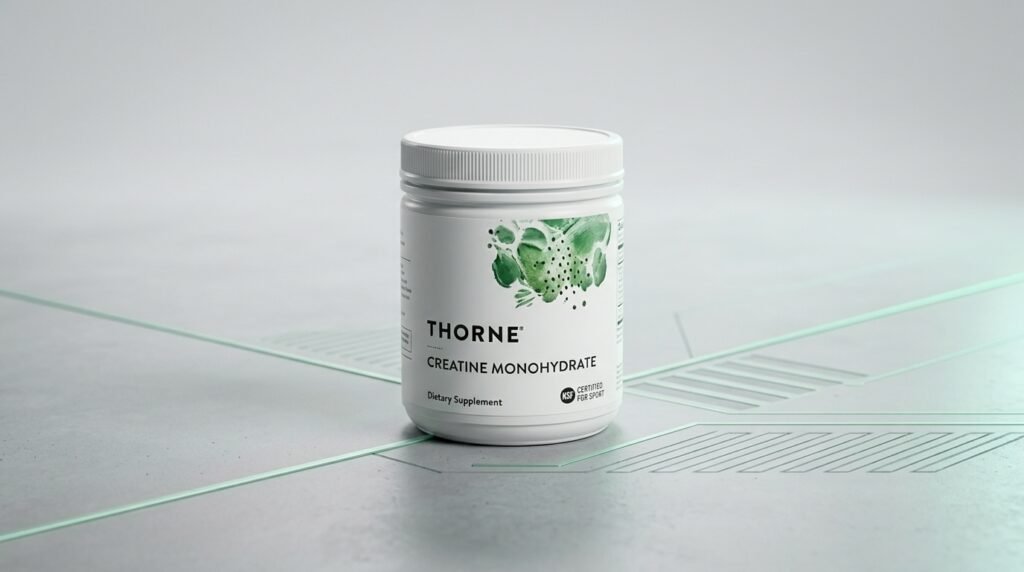
Thorne Creatine monohydrate at 5g daily is the most important supplement for men over 30 practicing intermittent fasting. It directly supports the muscle retention that compressed eating windows make more challenging by regenerating ATP, supporting muscle protein synthesis, and reducing the performance decline that fasted training can produce. NSF Certified for Sport, pharmaceutical manufacturing.
Take within the eating window — creatine absorption and utilization are improved in the presence of insulin from a meal. At $0.35–0.40 per day, it’s the highest evidence-per-dollar supplement for any man practicing IF over 30. Most men notice training performance maintained or improved within 2–3 weeks of consistent use despite the caloric restriction that IF typically involves.
Pros: NSF certified, supports muscle retention during fasted periods, cognitive and physical energy benefits, no stimulant load, cost-effective at $0.35–0.40/day. Cons: Takes 2–3 weeks to saturate, should be taken with food in the eating window rather than during the fast, minor water retention in first 2 weeks can confuse scale readings.
2. Transparent Labs Whey Isolate — Best for Hitting Protein Targets (~$59 / 30 servings)
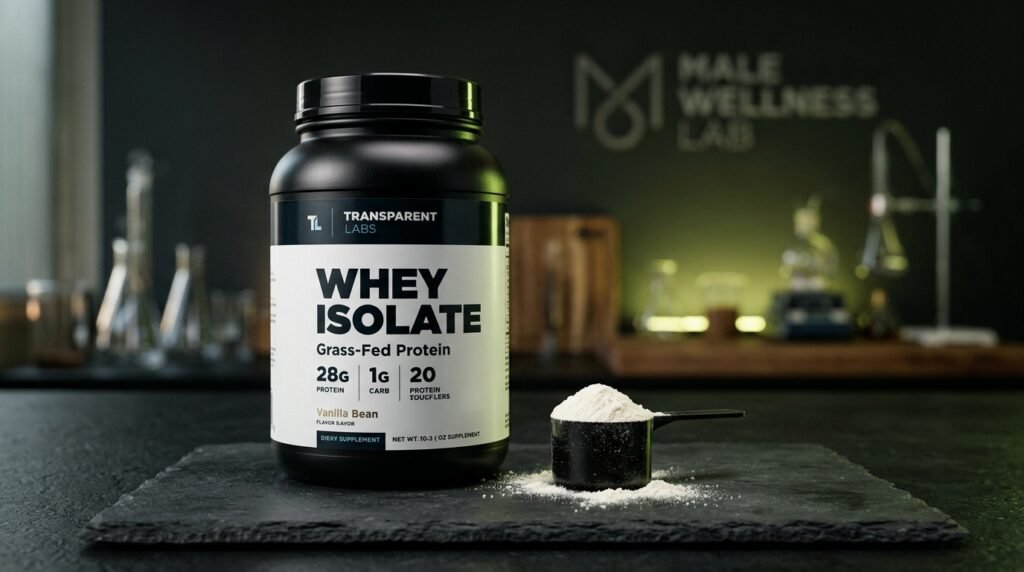
Transparent Labs Whey Isolate at 28g protein per serving is the tool for hitting 135–185g daily protein within an 8-hour window without eating an implausible volume of whole food. Grass-fed whey isolate, no artificial sweeteners, 2.7g leucine per serving — above the threshold for maximal muscle protein synthesis stimulation. Fully transparent labeling with no proprietary blends.
One or two scoops per day closes the protein gap that whole food alone struggles to cover in a compressed eating window. Breaking the fast with one scoop in water (or mixed into Greek yogurt) immediately provides the 28g protein hit that muscle protein synthesis requires, while the whole food meals throughout the remainder of the window cover the balance of the daily target.
Pros: 28g protein per serving, grass-fed isolate, 2.7g leucine, no artificial sweeteners, transparent labeling, helps meet high protein targets in compressed eating window. Cons: $1.97 per serving is premium pricing, whey-based so not suitable for dairy-sensitive men, 30 servings per container requires monthly reordering.
3. Thorne Magnesium Bisglycinate — Best for Electrolytes & Sleep (~$22 / 60 servings)
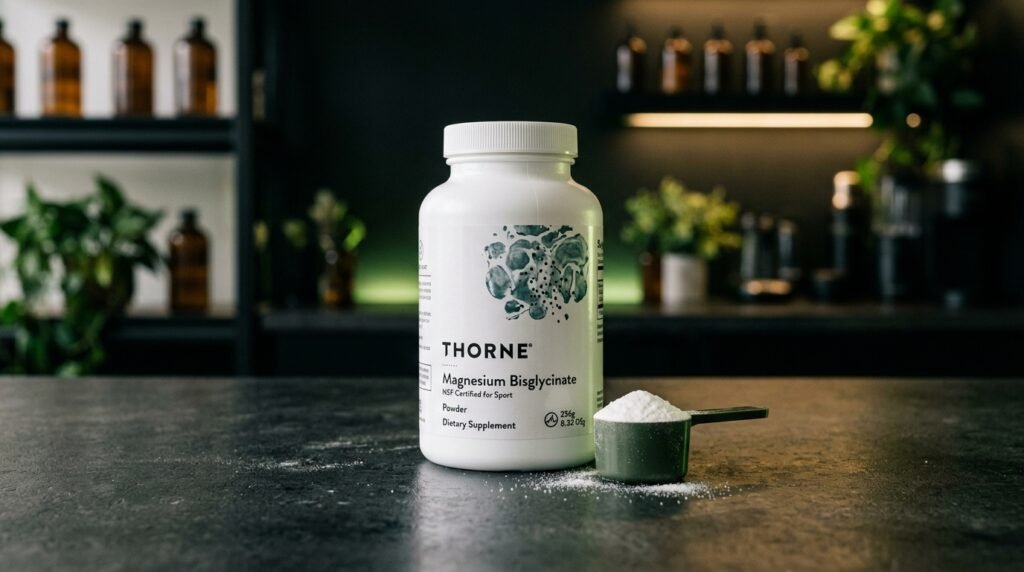
Thorne Magnesium Bisglycinate at 200–400mg addresses both the electrolyte depletion that fasting accelerates and the sleep quality that men over 30 need to maintain testosterone production and recovery during a fasting protocol. Magnesium is lost through urine more rapidly during fasting as insulin levels drop — men doing 16:8 consistently are at higher risk of magnesium insufficiency than men eating throughout the day.
Take within the eating window or 30–60 minutes before sleep. The bisglycinate form absorbs without the digestive side effects of oxide or citrate, and the pre-sleep timing supports the GABA receptor activation that facilitates deep sleep — the sleep stage where growth hormone is released and testosterone is produced. NSF certified, pharmaceutical manufacturing.
Pros: NSF certified, addresses fasting-accelerated magnesium loss, supports sleep quality and deep sleep simultaneously, bisglycinate for superior absorption, pharmaceutical manufacturing. Cons: Powder format less convenient for travel, effect builds over 7–14 days rather than immediately, add copper separately at higher doses long-term.
Comparison Table — IF Protocols for Men Over 30
| Protocol | Fasting Window | Best For | Muscle Risk | Rating |
|---|---|---|---|---|
| 14:10 | 14 hours | IF beginners, high-stress men | Low | 8.5/10 |
| 16:8 | 16 hours | Most men over 30 | Low-moderate | 9.5/10 |
| 18:6 | 18 hours | Experienced fasters, cutting phase | Moderate | 8/10 |
| 5:2 | 2 low-cal days | Alternative approach | Moderate-high | 7/10 |
| OMAD | 23 hours | Not recommended over 30 | High | 5/10 |
What to Look for When Choosing an IF Protocol Over 30
1. Stress load compatibility Men with high chronic stress — demanding careers, significant life pressure, high training volume — should start with 14:10 rather than 16:8. The cortisol elevation from fasting stacks with existing stress, and compounding an already-elevated cortisol load produces more hormonal disruption than benefit. Assess your baseline stress level honestly before choosing an aggressive fasting window.
2. Training schedule integration The fasting protocol that works best places training either in the final 1–2 hours of the fast (with protein immediately after at window opening) or within the eating window 2–3 hours post-meal. Protocols that require training in the middle of a long fast without protein for hours afterward produce more muscle loss and performance degradation than either alternative.
3. Protein target achievability Before starting any fasting protocol, calculate whether 1.6–2.2g protein per kg bodyweight is realistically achievable in your intended eating window. A 200lb man needs 145–200g of protein daily. In an 8-hour window, that requires deliberate, consistent protein prioritization at every meal. If the window is too compressed to hit protein targets without force-feeding, widen the window rather than compromising protein.
4. Social and lifestyle sustainability A fasting protocol you can maintain 6–7 days per week for months produces better results than an aggressive protocol you abandon after two weeks due to social conflict, hunger, or irritability. For men with family dinners, business lunches, or social eating commitments, a flexible 16:8 window that shifts 1–2 hours based on the day’s schedule is more sustainable than a rigid eating window that creates daily friction.
5. 30-day commitment before evaluation The adaptation period for intermittent fasting — hunger regulation, energy stability, sleep impact — takes 2–3 weeks. Hunger during the fasting window decreases significantly after 10–14 days as ghrelin (hunger hormone) adapts to the new meal timing. Commit to 30 days before evaluating — the first two weeks are adaptation, not the result.
FAQ
Does intermittent fasting lower testosterone in men over 30?
Short-term fasting (16–24 hours) appears to increase growth hormone pulsatility and may modestly support testosterone in some studies. However, chronic caloric restriction within fasting protocols — eating significantly below maintenance calories — does reduce testosterone over time. Men over 30 practicing IF should ensure their eating window provides adequate total calories and protein to prevent the testosterone suppression that severe restriction produces. IF at maintenance calories or modest deficit does not appear to lower testosterone in healthy men.
Can I build muscle while doing intermittent fasting over 30?
Yes, with important qualifications. Muscle building during IF requires eating at caloric surplus during the eating window, hitting 1.6–2.2g protein per kg daily, and timing protein intake around training. It’s more challenging than building muscle with unrestricted meal timing because the compressed protein delivery window makes optimizing muscle protein synthesis harder. Most men over 30 find IF most effective for body recomposition — losing fat while maintaining muscle — rather than pure muscle-building phases where unrestricted eating is typically more productive.
What should I eat to break my fast for best results?
Break a 16-hour fast with 40–50g of high-quality protein before adding carbohydrates. Practical options: 2 scoops whey protein in water, 4–5 eggs, Greek yogurt with protein powder, or grilled chicken. Avoid starting with high-glycemic carbohydrates alone, which produce a pronounced insulin spike on a fasted system that shifts metabolism toward fat storage rather than continuing the fat oxidation the fasting period established.
Is intermittent fasting safe for men over 40?
For healthy men without underlying medical conditions, yes. Men over 40 with diabetes, thyroid conditions, cardiovascular disease, or history of eating disorders should consult a doctor before starting any fasting protocol. The cortisol response to fasting intensifies further in men over 40 compared to men in their early 30s, making 14:10 the more appropriate starting point and making stress load assessment more important before choosing protocol intensity.
Our Final Verdict
Intermittent fasting for men over 30 works when the protocol is matched to stress load, protein targets are met within the eating window, and training is timed appropriately. Start with 16:8 if your stress load is manageable, 14:10 if cortisol is already a concern. Prioritize 1.6–2.2g protein per kg daily — this single variable determines whether IF produces fat loss with muscle retention or fat loss with muscle loss.
Add Thorne Creatine at 5g daily within the eating window to protect muscle during fasted periods. Use Transparent Labs Whey Isolate to close the protein gap that compressed eating windows create. Take Thorne Magnesium Bisglycinate before sleep to support the electrolyte balance and deep sleep that fasting protocols require. Give the protocol 30 days before evaluating. Check current pricing on Amazon for the supplements mentioned in this guide.