

This article contains affiliate links. We may earn a commission if you buy through our links, at no extra cost to you.
Best Supplements for Gut Health Men in 2026
Most men don’t think about gut health until something goes wrong — chronic bloating, inconsistent digestion, unexplained fatigue, or the kind of brain fog that doesn’t resolve with caffeine or sleep. The gut microbiome affects far more than digestion. It influences testosterone production, immune function, cortisol regulation, and mood through the gut-brain axis — all of which are directly relevant to how men over 30 feel and perform daily. The best supplements for gut health in men address this system comprehensively rather than just treating symptoms.
After researching the clinical evidence on gut health supplementation specifically for men and comparing the products with the strongest evidence and Amazon availability, here is what actually works in 2026.
This guide is for men dealing with digestive issues, low energy, or general performance decline who haven’t considered the gut as a potential root cause.
Quick Answer: The most evidence-backed gut health supplements for men are a quality multi-strain probiotic, prebiotic fiber to feed beneficial bacteria, and L-glutamine to support intestinal barrier integrity. Garden of Life Dr. Formulated Probiotics for Men covers the probiotic layer at 50 billion CFU with 15 strains. NOW Foods Inulin Prebiotic Powder feeds those bacteria consistently. NOW Foods L-Glutamine supports the gut lining that keeps everything contained.
Why Gut Health Matters Specifically for Men

The gut microbiome research that’s emerged over the past decade has shifted gut health from a niche digestive concern to a central variable in male hormonal and metabolic health — and most men are completely unaware of the connection.
Testosterone and gut bacteria have a direct relationship that runs in both directions. Specific gut bacteria produce beta-glucuronidase, an enzyme that influences estrogen metabolism and recirculation — when this enzyme is overactive, estrogen recirculates rather than being excreted, shifting the testosterone-to-estrogen ratio in the wrong direction for men. Studies show that men with lower testosterone have measurably different gut microbiome compositions than men with normal testosterone. Restoring microbiome diversity is one of the least discussed but most biologically plausible interventions for supporting male hormonal balance.
The gut-brain axis — the bidirectional communication network between the enteric nervous system and the central nervous system — produces approximately 90% of the body’s serotonin in the gut rather than the brain. This means gut health directly affects mood stability, stress resilience, and cognitive clarity in ways that most men experiencing anxiety, irritability, or brain fog don’t trace back to their digestive system.
Immune function is 70–80% located in gut-associated lymphoid tissue. Men with disrupted gut microbiomes — common after antibiotic use, high processed food intake, or chronic stress — have impaired immune responses that manifest as frequent illness, slow recovery, and chronic low-grade inflammation.
The counterintuitive point: the symptoms most men attribute to stress, aging, or poor sleep — fatigue, brain fog, mood instability, body composition changes — frequently have a gut microbiome component that no amount of sleep optimization or stress management fully corrects without addressing the underlying bacterial imbalance.
For men working on complete hormonal optimization alongside gut health, see our guide on how to increase testosterone naturally — the gut-testosterone connection is one of the most underappreciated variables in male hormonal health.
The Three Gut Health Mechanisms Worth Targeting
Before reviewing specific products, understanding the three primary mechanisms that determine gut health quality helps identify which supplements address your specific situation.
Bacterial diversity — the variety of different bacterial species in the gut microbiome — is the primary determinant of gut health outcomes. Men eating standard Western diets consistently show reduced microbiome diversity compared to men eating varied whole-food diets. Reduced diversity correlates with increased inflammation, impaired metabolism, and worse hormonal profiles. Probiotics introduce beneficial bacterial strains; maintaining diversity requires ongoing dietary support through varied fiber sources.
Prebiotic substrate — the fermentable fibers that beneficial gut bacteria consume — determines whether introduced probiotic bacteria survive and colonize long-term. Taking a probiotic without adequate dietary fiber is like planting seeds in dry soil. Prebiotic fiber from vegetables, legumes, and specific supplements feeds Bifidobacterium and Lactobacillus species specifically, supporting their proliferation in the gut environment.
Intestinal barrier integrity — the health of the single cell-thick lining that separates gut contents from the bloodstream — determines whether gut inflammation stays contained or becomes systemic. Compromised intestinal barrier allows bacterial products and undigested food particles to cross into circulation, triggering immune responses that produce the systemic inflammation associated with fatigue, joint pain, and brain fog. L-glutamine provides the primary fuel source that intestinal lining cells require for repair and maintenance.
For men who want to understand how sleep affects gut health recovery — the gut microbiome repairs itself significantly during deep sleep — see our guide on how to improve sleep quality naturally.
The 3 Best Gut Health Supplements for Men in 2026
1. Garden of Life Dr. Formulated Probiotics for Men — Best Probiotic (~$35–40 / 30 servings)
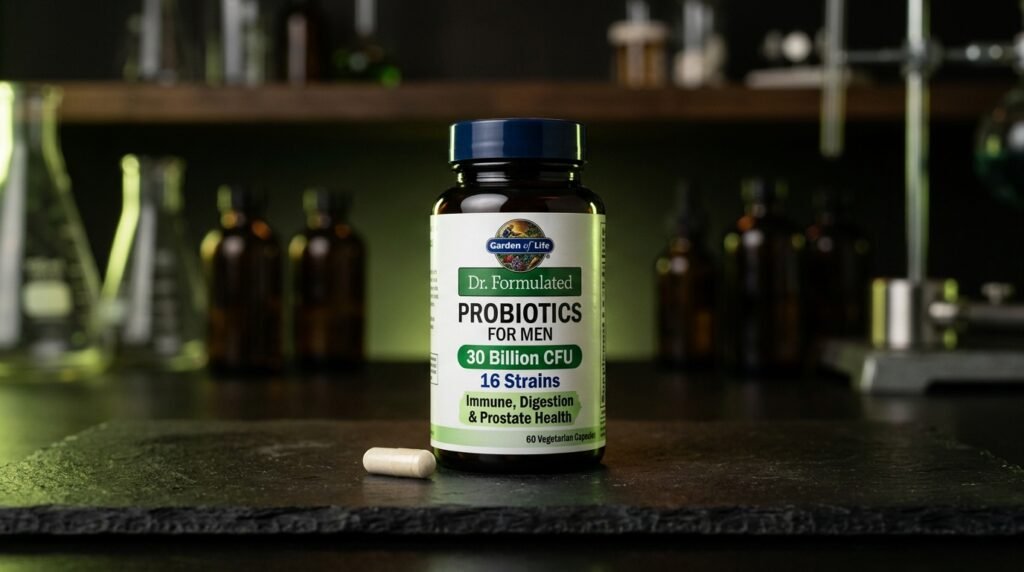
Garden of Life Dr. Formulated Probiotics for Men is the probiotic built specifically for male gut health — 50 billion CFU from 15 strains including Lactobacillus reuteri and Lactobacillus fermentum, which have specific evidence for male reproductive health and testosterone support alongside general gut health benefits. Formulated by Dr. David Perlmutter, NSF Non-GMO certified, and shelf-stable — no refrigeration required, which solves the compliance problem that cold-chain probiotics create for men who travel or keep supplements at a desk.
The organic prebiotic fiber blend is included in the capsule, making it a complete synbiotic — probiotic and prebiotic in one product. For men starting a gut health protocol without wanting to manage multiple separate supplements, this single-capsule daily approach covers both the bacterial diversity and the bacterial nutrition mechanisms simultaneously.
A man who took three rounds of antibiotics in 12 months — a scenario that strips the gut microbiome significantly — who starts Garden of Life Men’s probiotic consistently for 60 days typically reports improved digestive regularity within 2–3 weeks and reduced bloating and mid-afternoon energy crashes by week 6–8.
Pros: Men’s-specific strain selection with testosterone-relevant strains, organic prebiotic fiber included, 50 billion CFU, shelf-stable, NSF Non-GMO certified, one-capsule daily compliance. Cons: 30-serving supply requires monthly reordering, GMP rather than NSF Sport certification, organic certification adds cost without additional functional benefit for most men.
2. NOW Foods Inulin Prebiotic Pure Powder — Best Prebiotic (~$15–18 / 57 servings)
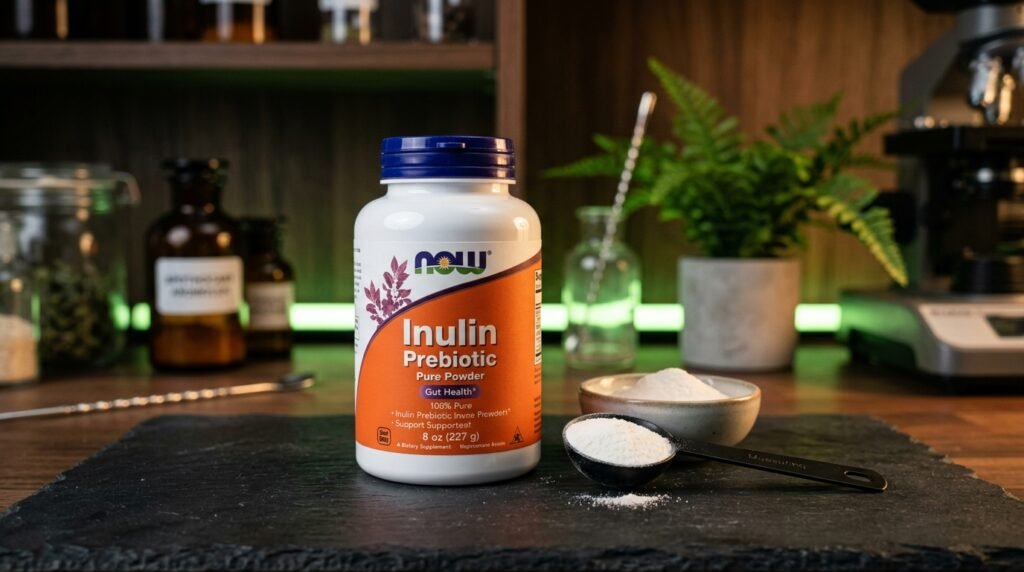
NOW Foods Inulin Prebiotic Pure Powder is the dietary fiber supplement that feeds beneficial gut bacteria — the missing component in most men’s gut health stacks who take a probiotic but don’t provide the substrate their bacteria need to colonize and thrive. Certified organic inulin from chicory root, Non-GMO Project Verified, GMP certified, and completely flavorless — it mixes into water, coffee, or food without changing taste.
Inulin is selectively fermented by Bifidobacterium and Lactobacillus species — the beneficial bacteria that probiotics introduce — without feeding opportunistic bacteria. At 1 teaspoon (approximately 4–5g) daily mixed into food or liquid, it’s the most practical way to increase prebiotic fiber intake for men whose diet lacks adequate vegetable and legume diversity.
The honest caveat: start at half a teaspoon daily and build to a full teaspoon over 2 weeks. Men with low baseline fiber intake who jump to full dose immediately will experience temporary bloating and gas as the gut microbiome adapts — not a sign it isn’t working, just the adjustment period for a microbiome recalibrating to increased fermentable fiber.
Pros: Certified organic, Non-GMO verified, GMP certified, flavorless and mixes into anything, affordable at $0.26–0.32 per serving, selectively feeds beneficial bacteria. Cons: Temporary bloating during adaptation period requires gradual dose introduction, minimal effect without concurrent probiotic use, powder format requires measuring.
3. NOW Foods L-Glutamine 500mg — Best for Intestinal Barrier (~$15–18 / 120 servings)
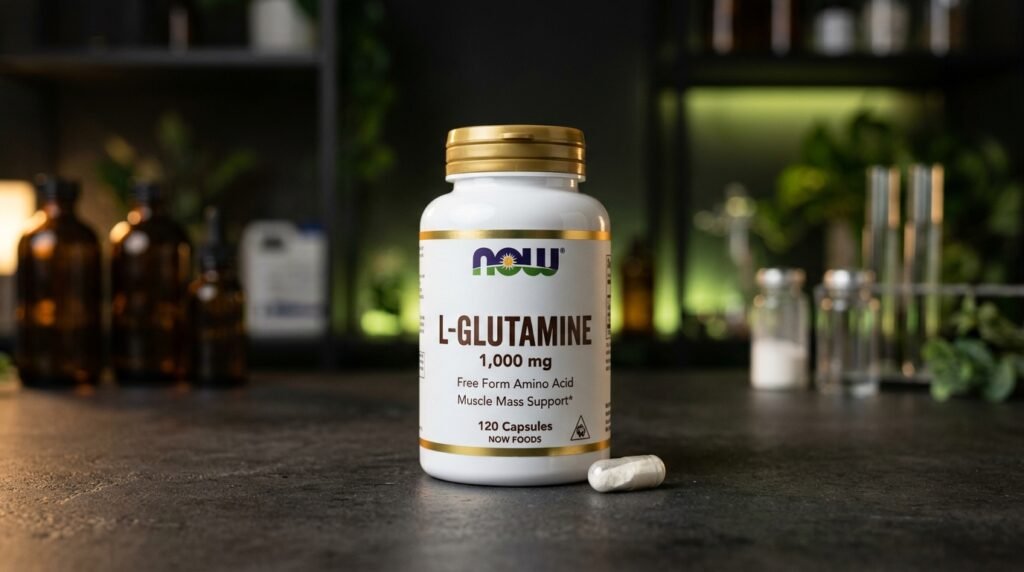
NOW Foods L-Glutamine addresses the gut health mechanism that probiotics and prebiotics don’t directly target: intestinal barrier integrity. Glutamine is the primary fuel source for intestinal epithelial cells — the cells that form the single cell-thick lining separating gut contents from the bloodstream. When glutamine is insufficient, which is common in men under high physical or psychological stress, intestinal barrier cell turnover slows and barrier integrity deteriorates.
Studies show L-glutamine supplementation at 5–10g daily reduces intestinal permeability markers in men with compromised gut barrier function. At 500mg per capsule, reaching the therapeutic 5g dose requires 10 capsules — which makes NOW’s capsule format impractical at therapeutic doses. The more practical approach is using a separate L-glutamine powder (available from multiple brands on Amazon) for 5–10g therapeutic dosing, while using NOW’s capsule format for a maintenance 1.5–3g daily dose that supports barrier integrity without the bulk capsule count.
For men whose primary symptom is post-antibiotic gut disruption, persistent bloating that doesn’t resolve with probiotics, or chronic stress-driven digestive instability, L-glutamine addresses the barrier component that bacteria-focused supplements can’t fix alone.
Pros: GMP certified, affordable at $0.13–0.15 per capsule, established NOW Foods quality, available without prescription, addresses intestinal barrier mechanism distinctly from probiotics. Cons: 500mg per capsule requires 10 capsules to reach 5g therapeutic dose — powder format more practical for therapeutic dosing, GMP rather than NSF certification.
Comparison Table
| Product | Price/Month | Mechanism | Best For | Rating |
|---|---|---|---|---|
| Garden of Life Men’s Probiotic | ~$37 | Bacterial diversity + prebiotic | Complete synbiotic for men | 9.5/10 |
| NOW Foods Inulin Prebiotic | ~$8 | Bacterial nutrition | Feeding beneficial bacteria | 8.5/10 |
| NOW Foods L-Glutamine | ~$6 | Intestinal barrier repair | Gut lining integrity | 8.5/10 |
What to Look for When Choosing Gut Health Supplements for Men
1. Strain diversity over total CFU count A probiotic with 15 well-chosen strains at 50 billion CFU outperforms a product with 2 strains at 100 billion CFU for gut health restoration. Different bacterial strains colonize different sections of the gut, produce different metabolites, and support different health outcomes. Look for at least 10 strains including multiple Lactobacillus and Bifidobacterium species — these are the genera with the strongest clinical evidence for gut health benefits in adult men.
2. Men’s-specific strain selection for hormonal support Generic probiotics use whatever strains are cheapest to manufacture. Men’s-specific formulas include strains like Lactobacillus reuteri and Lactobacillus fermentum with documented evidence for testosterone-adjacent benefits. For men using probiotics specifically to support hormonal health alongside digestive function, strain selection matters beyond the CFU number on the label.
3. Prebiotic fiber as a non-negotiable pairing Probiotics work best when the gut environment provides adequate fermentable fiber for introduced bacteria to consume. Either choose a synbiotic product that includes prebiotic fiber — like Garden of Life Men’s which includes organic prebiotic fiber — or supplement separately with inulin or FOS powder. Men eating below 20g fiber daily, which describes most men on standard Western diets, should supplement prebiotic fiber alongside any probiotic for meaningful colonization improvement.
4. Address the barrier separately from bacteria Most gut health stacks focus entirely on bacteria — probiotics to introduce them, prebiotics to feed them. The intestinal barrier is a separate and equally important mechanism that neither probiotics nor prebiotics directly repair. L-glutamine at 5–10g daily is the most evidence-backed intervention for men with compromised barrier integrity — symptoms include bloating that doesn’t resolve with probiotics, food sensitivities that have worsened over time, and chronic low-grade inflammation.
5. Consistent 60-day trial before evaluating Gut microbiome shifts are measured in weeks and months, not days. Digestive improvements — reduced bloating, improved regularity — typically appear within 2–3 weeks. Systemic effects — improved energy, mood stability, reduced brain fog — take 4–8 weeks. Intestinal barrier restoration with L-glutamine requires 4–8 weeks of consistent supplementation. Set a 60-day minimum assessment window before concluding whether a gut health supplement is producing meaningful results.
FAQ
How long before gut health supplements produce noticeable results?
Digestive improvements — reduced bloating, improved regularity, less discomfort — typically appear within 2–3 weeks of consistent probiotic use. Systemic effects — improved energy, mood stability, reduced brain fog — take longer to manifest as the microbiome shifts, typically 4–8 weeks. Intestinal barrier restoration with L-glutamine requires 4–8 weeks of consistent supplementation. Set a 60-day minimum assessment window before evaluating whether a gut health supplement is producing meaningful results.
Can gut health supplements help with weight management in men?
Indirectly, yes. Studies show men with higher microbiome diversity extract fewer calories from equivalent food intake and show better insulin sensitivity — both of which support weight management. However, gut health supplements are not fat burners — their weight management benefit operates through metabolic optimization rather than acute fat burning, and the effect is meaningful only in the context of a caloric deficit and adequate protein intake.
Are there foods that support gut health as effectively as supplements?
For men with generally adequate gut health, dietary changes alone can produce significant microbiome improvements. Fermented foods — kefir, yogurt with live cultures, kimchi, sauerkraut, tempeh — introduce beneficial bacteria. High-fiber foods — legumes, vegetables, whole grains — feed them. The challenge is consistency and strain diversity: most fermented foods contain 1–5 bacterial strains at variable CFU counts, while quality probiotics deliver 10–15 clinically selected strains at standardized doses.
Do gut health supplements interact with medications?
Probiotics are generally safe alongside most medications with one important exception: during antibiotic treatment, timing matters. Take probiotics at least 2 hours away from antibiotic doses to prevent the antibiotic from killing the probiotic bacteria before they reach the gut. Men on immunosuppressant medications should consult a doctor before starting high-dose probiotics — immune system modulation from probiotics requires medical supervision in immunocompromised individuals.
Our Final Verdict
The best gut health supplement stack for men in 2026 starts with Garden of Life Dr. Formulated Probiotics for Men — 50 billion CFU, 15 strains, men’s-specific strain selection, and organic prebiotic fiber included in one daily capsule. Add NOW Foods Inulin Prebiotic Powder if your diet lacks adequate fiber diversity — most men’s diets do.
Include NOW Foods L-Glutamine at 5g daily if you’ve used antibiotics recently, experience chronic stress, or deal with persistent bloating that doesn’t resolve with probiotics alone. Give the stack 60 days before evaluating — gut microbiome shifts are measured in weeks and months, not days. Check current pricing on Amazon for all three supplements in this guide.