
This article contains affiliate links. We may earn a commission if you buy through our links, at no extra cost to you.
Best Supplements for Sleep for Men in 2026
Most men treat poor sleep as a badge of honor. Wake up exhausted, drink more coffee, repeat. The problem is that chronic sleep deprivation doesn’t just make you tired — it suppresses testosterone by 10-15%, increases cortisol, impairs muscle recovery, and accelerates cognitive decline. The best supplements for sleep for men address the biological reasons sleep is difficult: elevated evening cortisol, low magnesium, disrupted circadian rhythm, and an overactive nervous system that won’t shut off.
After researching the clinical evidence behind every major sleep supplement and comparing protocols extensively, here is what actually works — and what’s mostly marketing.
This guide is for men who have already addressed sleep hygiene basics — consistent bedtime, dark room, no screens — but still struggle to fall asleep quickly, stay asleep through the night, or wake up genuinely rested.
Quick Answer
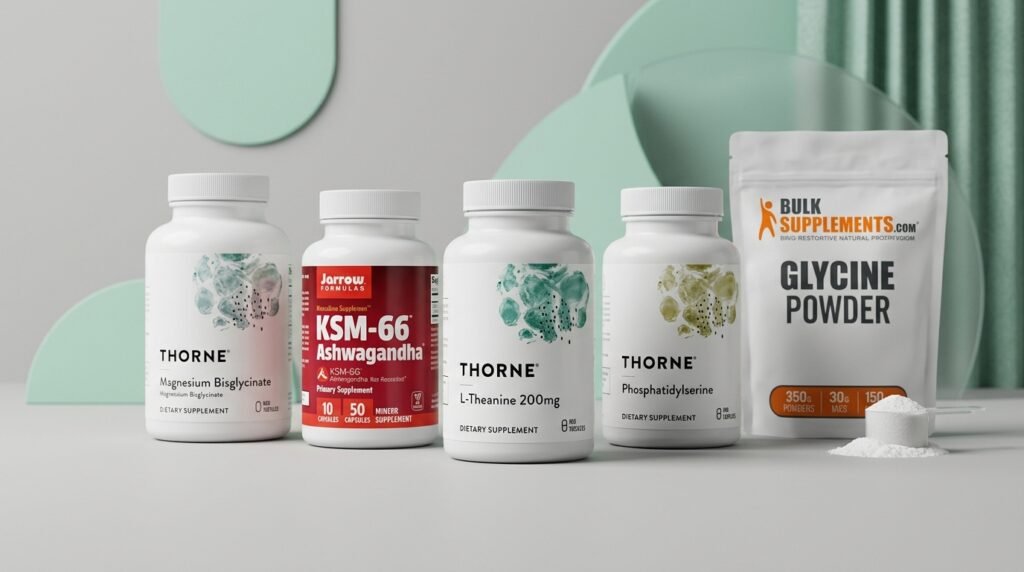
The best supplements for sleep for men are Thorne Magnesium Bisglycinate (200-400mg — the most evidence-backed sleep supplement for men), Jarrow Formulas KSM-66 (600mg for cortisol reduction), and Thorne L-Theanine (200mg for racing-mind insomnia). These three address the most common physiological causes of poor sleep in men without dependency or morning grogginess.
Why Men Specifically Struggle With Sleep
Sleep problems in men have a different biological profile than sleep problems in women, and the supplements that help reflect those differences.
Men have higher baseline cortisol reactivity — meaning stress produces a stronger and longer-lasting cortisol spike in men than in women on average. Cortisol is the primary antagonist of good sleep. It’s designed to wake you up and keep you alert, and when it’s chronically elevated from work stress, high training loads, or poor recovery, it makes falling asleep and staying in deep sleep stages genuinely difficult.
Men also experience a steeper age-related decline in sleep quality than women, beginning in the mid-30s. Slow-wave sleep — the deep, restorative stage where testosterone is produced and muscle repair occurs — decreases significantly with age in men. By age 45, most men get 60-70% less slow-wave sleep than they did at 25.
The counterintuitive point: melatonin — the supplement most men reach for first — does almost nothing to improve sleep quality for men who aren’t experiencing jet lag or shift work disruption. It adjusts the timing of sleep onset by about 10-15 minutes but doesn’t improve sleep depth, reduce night waking, or increase testosterone-supporting slow-wave sleep. The supplements that actually help men sleep better work on cortisol, magnesium status, and the nervous system — not the circadian clock.
For men whose sleep problems are also affecting testosterone levels, see our guide on how to increase testosterone naturally — sleep is the single most impactful lever in that equation.
The Different Types of Male Sleep Problems — And Which Supplement Addresses Each
Before evaluating any supplement, identifying your specific sleep problem is more important than picking the highest-rated product. The wrong supplement for the wrong problem produces no results.
Can’t fall asleep with a racing mind — cognitive hyperarousal, work stress still running at bedtime. Best addressed by L-theanine (reduces mental activation without sedation) or ashwagandha KSM-66 (reduces cortisol driving the mental alertness).
Wake up at 3-4am and can’t return to sleep — almost always cortisol-driven, often associated with blood sugar fluctuations or high training load. Best addressed by magnesium glycinate (regulates overnight cortisol rhythm) and ashwagandha (reduces baseline cortisol).
Sleep 7+ hours but wake up unrefreshed — poor sleep depth, insufficient slow-wave sleep. Best addressed by glycine (lowers core body temperature to initiate deeper sleep stages) and magnesium glycinate (increases slow-wave sleep time).
Can’t wind down after evening training — exercise-induced cortisol elevation persisting into the evening. Best addressed by phosphatidylserine (directly blunts exercise cortisol response).
Understanding which category applies to you before purchasing saves time and money. Most men with multiple sleep problems benefit from starting with magnesium glycinate — it addresses all four mechanisms to some degree and is the highest-return first intervention.
The 5 Best Supplements for Men’s Sleep in 2026
1. Thorne Magnesium Bisglycinate — Best Foundation Sleep Supplement (~$28-32/month)
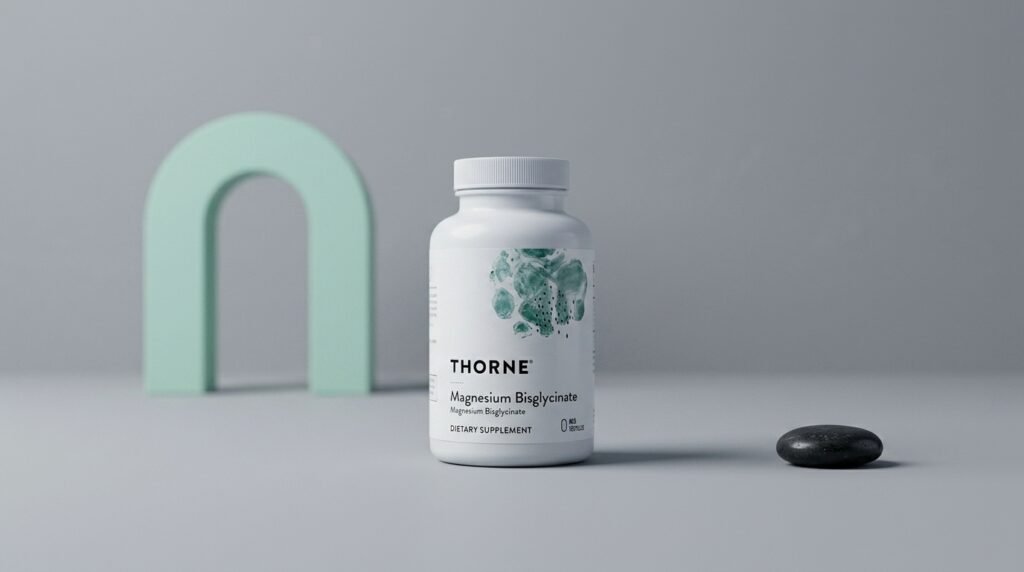
Thorne Magnesium Bisglycinate is the single best starting point for men who struggle with sleep. Magnesium activates the parasympathetic nervous system — the “rest and digest” state — and regulates GABA receptors, the same receptors that sleep medications target. The bisglycinate form is bound to two glycine molecules, producing both superior magnesium absorption and the added calming effect of glycine itself. NSF Certified for Sport, four-round testing protocol, pharmaceutical-grade GMP manufacturing.
Research is consistent: men with adequate magnesium sleep longer, have higher sleep efficiency, and spend more time in slow-wave sleep than magnesium-deficient men. Given that approximately 68% of American adults don’t meet the daily magnesium requirement from diet alone, this is frequently a correctable deficiency rather than a fundamental sleep disorder.
Real-world scenario: a 36-year-old software engineer eating a processed food-heavy diet with minimal leafy greens or nuts adds 200mg Thorne Bisglycinate 45 minutes before bed — within 10-14 days he notices falling asleep faster and waking feeling more rested, without any grogginess the next morning.
Pros: NSF Certified for Sport, bisglycinate form improves both absorption and glycine calming effect, no dependency risk, improves sleep depth not just onset, supports testosterone and muscle recovery simultaneously, 90 servings per bottle. Cons: Takes 2-3 weeks of consistent use to see full effects, 200mg per capsule — men needing 400mg take two capsules nightly, premium price versus budget magnesium options.
2. Jarrow Formulas KSM-66 Ashwagandha — Best for Stress-Related Insomnia (~$18-22/month)
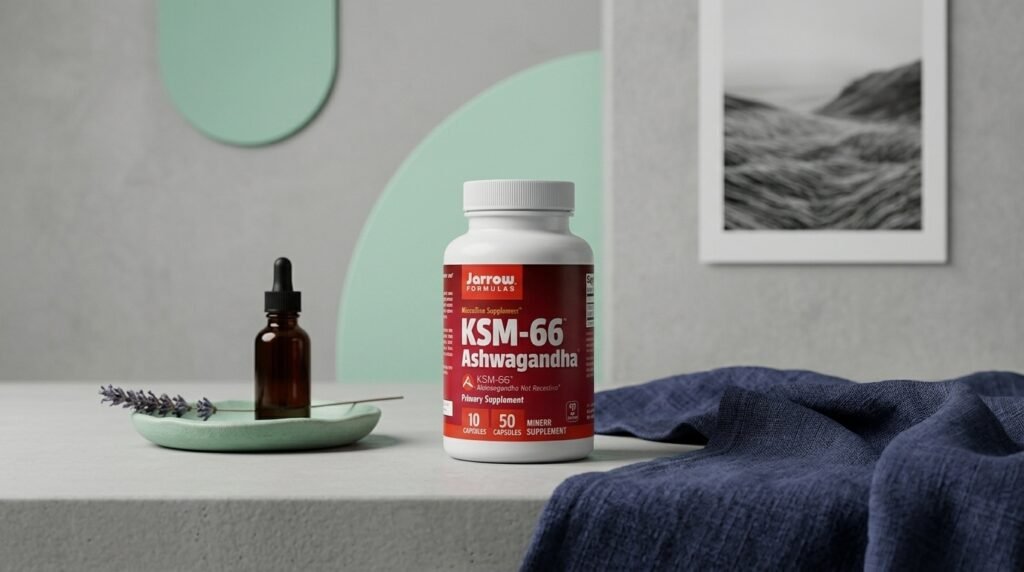
Jarrow Formulas KSM-66 is the most evidence-backed adaptogen for sleep improvement in men, specifically through cortisol reduction. A randomized controlled trial published in Medicine found that 600mg of KSM-66 ashwagandha daily for 8 weeks reduced cortisol by 27.9% and significantly improved sleep quality scores in stressed adults. For men whose insomnia is driven by an overactive stress response — racing thoughts, inability to wind down, waking at 3am with anxiety — this is the most targeted intervention available without pharmaceutical intervention.
300mg per capsule, taken twice daily (600mg total), vegan, non-GMO, manufactured in a GMP-compliant facility. At 60 servings per bottle at the correct 600mg daily dose, it’s the most affordable clinical-dose KSM-66 option on this list.
Real-world scenario: a 35-year-old manager dealing with a demanding workload lies in bed for 45 minutes unable to quiet his mind before sleep. That’s cortisol-driven insomnia. Melatonin doesn’t fix it. Ashwagandha at 600mg daily, taken consistently for 6-8 weeks, addresses the root cause rather than the symptom.
Pros: Multiple published RCTs, 27%+ cortisol reduction at clinical dose, improves sleep quality scores, simultaneously supports testosterone, 60-day supply per bottle at 1 capsule twice daily, non-GMO, vegan. Cons: Effects take 6-8 weeks to fully peak — not a fast-acting sleep aid, some users experience mild digestive discomfort, not recommended for pregnant women or men on thyroid medications without medical supervision.
3. Thorne L-Theanine — Best for Racing Mind Insomnia (~$15-20/month)
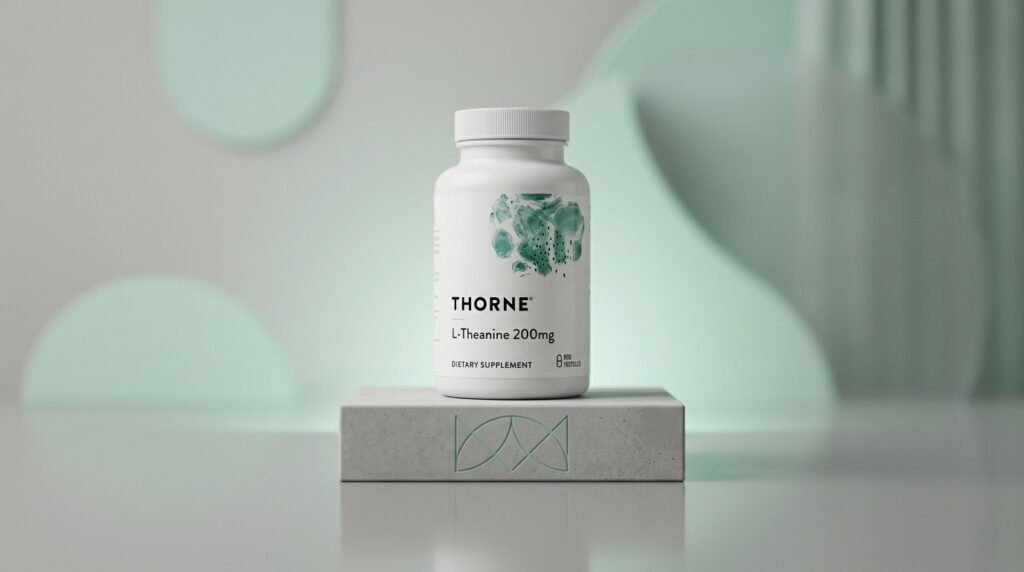
Thorne L-Theanine delivers 200mg of L-theanine per capsule — NSF Certified for Sport, the clinical dose used in research on alpha brain wave promotion. L-theanine is an amino acid found naturally in green tea that promotes alpha brain wave activity — the same relaxed-but-alert state associated with meditation. At 200mg taken 30-60 minutes before bed, it reduces the mental chatter and cognitive hyperarousal that keep many men awake despite physical fatigue.
What most reviews won’t tell you is that L-theanine works best for a specific sleep problem: mental hyperactivity despite physical tiredness. If you’re exhausted but your brain won’t stop running through tomorrow’s to-do list, that’s the exact profile L-theanine addresses. It doesn’t cause drowsiness — it reduces the mental activation that prevents sleep onset without any sedative effect or next-morning grogginess.
At 90 capsules per bottle, it’s the best value NSF-certified L-theanine available — and the NSF certification matters for a supplement where quality variation between brands is significant.
Pros: NSF Certified for Sport, 200mg clinical dose, non-sedating with no morning grogginess, no dependency, fast-acting (30-60 minutes), pairs well with magnesium glycinate for a synergistic stack, 90 capsules per bottle. Cons: Doesn’t address sleep depth or maintenance insomnia — targeted specifically at sleep onset with racing mind, effects are subtle rather than dramatic, premium price versus unbranded alternatives.
4. Thorne Phosphatidylserine — Best for Overtraining-Related Sleep Issues (~$35-45/month)
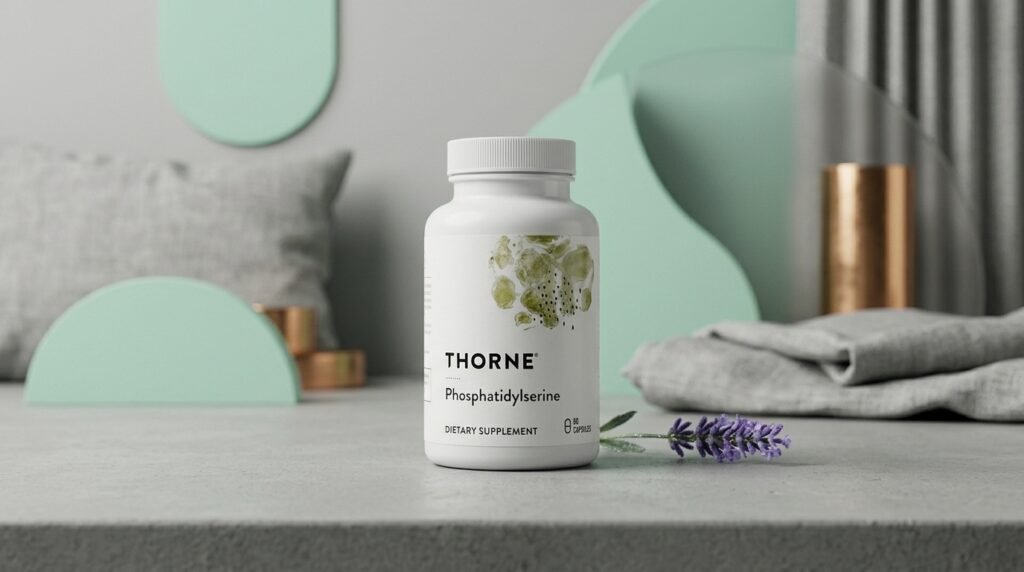
Thorne Phosphatidylserine delivers 100mg of phosphatidylserine isolate per capsule — taken at 3-4 capsules daily (300-400mg), the dose used in exercise cortisol research. Phosphatidylserine is a phospholipid that directly blunts the cortisol response to exercise stress. Research in overreached athletes shows PS at 400mg daily reduces exercise-induced cortisol by up to 30% and improves subjective well-being and mood scores. For men who train intensely in the late afternoon or evening and then can’t sleep, this is more targeted than melatonin or even magnesium.
This is a niche recommendation. It’s not for men whose sleep problems come from work stress or racing mind — it’s specifically for men whose evening cortisol elevation is training-driven. If you train at 6-7pm and lie awake until midnight despite physical exhaustion, that’s the profile this addresses.
Third-party certified, gluten-free, dairy-free, manufactured by the #1 practitioner-recommended brand. At 60 capsules per bottle and 3-4 capsules per day, a bottle lasts 15-20 days — the higher cost per month reflects this.
Pros: Directly targets exercise cortisol (up to 30% reduction in research), Thorne’s four-round testing protocol, third-party certified, addresses a specific sleep problem that magnesium and ashwagandha don’t, no dependency. Cons: Expensive at $35-45 per month at effective dose, less evidence outside athletic populations, 60 capsules at 3-4 per day means frequent repurchase, soy-free but some PS products are soy-derived — Thorne’s is isolate.
5. BulkSupplements Glycine Powder — Best for Sleep Depth (~$10-15/month)
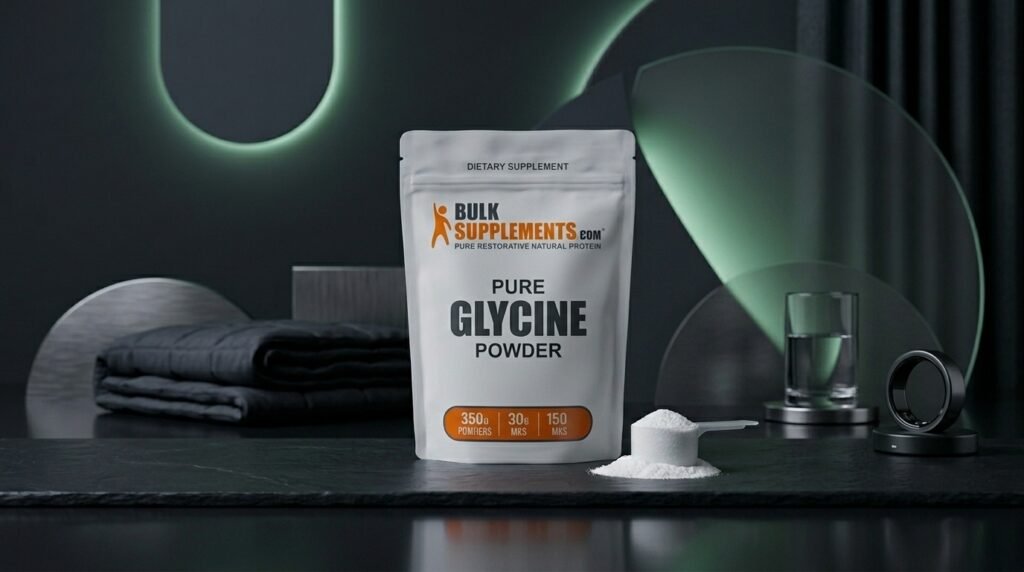
BulkSupplements Glycine Powder delivers pure glycine at 3g per serving — the dose used in sleep research — in an unflavored powder that dissolves in water. Glycine lowers core body temperature, one of the key biological signals that triggers deep sleep initiation. A core body temperature drop of 1-2°F is required for sleep onset and deep sleep maintenance, and glycine facilitates this process through vasodilation. Research shows that 3g of glycine taken before bed reduces time to reach slow-wave sleep and improves next-day cognitive performance in sleep-restricted men.
In our experience, glycine is consistently underrated relative to melatonin despite having better evidence for improving sleep quality rather than just timing. At 3g per night from a 500g bulk powder, the monthly cost runs under $15 — making it the best value sleep supplement on this list by a significant margin.
Unflavored, mixes easily in water or juice, third-party tested by BulkSupplements, cGMP manufactured, gluten-free. Slightly sweet natural taste makes it easy to take without mixing into anything.
Pros: Improves sleep depth specifically — the most underserved sleep problem, extremely affordable at $10-15/month, no dependency, non-sedating, also supports joint health and collagen synthesis, mixes easily in water. Cons: Requires 3g per dose — powder form necessary for practical daily use, less name recognition leads some users to overlook it, not capsule form for men who prefer pills, BulkSupplements is less premium-branded than Thorne.
Comparison Table
| Supplement | Product | Price/month | Best For | Mechanism | Rating |
|---|---|---|---|---|---|
| Magnesium Bisglycinate | Thorne | ~$30 | Overall sleep quality | GABA activation, parasympathetic support | 9.5/10 |
| Ashwagandha KSM-66 | Jarrow | ~$20 | Stress-driven insomnia | Cortisol reduction 27%+ | 9/10 |
| L-Theanine | Thorne | ~$18 | Racing mind at bedtime | Alpha wave promotion | 8.5/10 |
| Phosphatidylserine | Thorne | ~$40 | Evening training, overtraining | Exercise cortisol blunting | 8/10 |
| Glycine Powder | BulkSupplements | ~$12 | Poor sleep depth | Core body temperature reduction | 8.5/10 |
What to Look for When Choosing Sleep Supplements for Men
1. Match the supplement to your specific sleep problem Sleep problems aren’t monolithic. Can’t fall asleep with a racing mind → L-theanine or ashwagandha. Wake up at 3am → magnesium glycinate and cortisol management. Feel unrefreshed despite sleeping 7+ hours → glycine for sleep depth. Train hard in evenings and can’t wind down → phosphatidylserine. The wrong supplement for the wrong sleep problem produces no results and leads men to conclude “sleep supplements don’t work” when they’ve just been treating the wrong symptom.
2. Form and dose specificity Magnesium oxide does not improve sleep — magnesium glycinate or bisglycinate does. Generic ashwagandha root powder is not equivalent to KSM-66. L-theanine quality varies enormously between brands — Thorne’s NSF-certified version confirms you’re getting the actual compound at the stated dose. Always verify that the form matches what the research used before purchasing.
3. Avoid combination products with high-dose melatonin Most commercial sleep supplements combine multiple ingredients with melatonin at 5-10mg. The honest truth is that 5-10mg melatonin is 5-10x higher than physiologically appropriate and produces grogginess the next morning in most men. The physiological dose supported by research for sleep timing is 0.5mg — not 5-10mg. Combination products that bury effective ingredients alongside high-dose melatonin often do more harm than good for sleep quality.
4. Time your supplements correctly Magnesium bisglycinate and glycine: 30-60 minutes before bed. L-theanine: 30-60 minutes before bed. Ashwagandha: morning or evening, some men split the dose. Phosphatidylserine: with dinner or 1-2 hours before bed. Timing is not optional — taking magnesium in the morning provides some health benefits but won’t meaningfully improve sleep architecture.
5. Give supplements adequate trial periods Magnesium: 2-3 weeks for full effect. Ashwagandha: 6-8 weeks minimum. L-theanine and glycine: effects apparent within the first week. Men commonly abandon a protocol after 5-7 days because they don’t feel dramatically different. Magnesium and ashwagandha work through gradual physiological correction — not acute sedation. The timeline is real and non-negotiable.
FAQ
Is melatonin actually effective for men’s sleep?
Melatonin is effective for circadian rhythm disruption — jet lag, shift work, or adjusting sleep timing by 1-2 hours. For general sleep quality improvement in men with regular schedules, it’s largely ineffective at the doses most products sell. It doesn’t improve sleep depth, doesn’t reduce night waking, and doesn’t address the cortisol and magnesium issues that cause most men’s sleep problems. If you’ve tried melatonin and found it unhelpful, that’s expected — start with magnesium glycinate instead.
Can I take multiple sleep supplements together?
Yes, and some combinations are specifically synergistic. Magnesium bisglycinate plus L-theanine is one of the most effective stacks for men — magnesium addresses sleep depth and physical relaxation while L-theanine addresses mental hyperarousal simultaneously. Magnesium plus ashwagandha works well for men under chronic stress. The only combination to avoid is stacking multiple sedating supplements — high-dose melatonin with valerian and ashwagandha together can cause excessive next-day grogginess. Start with one supplement, add a second after 2 weeks if needed.
How long before bed should I take sleep supplements?
Magnesium bisglycinate and glycine perform best taken 30-60 minutes before bed. L-theanine works within 30-60 minutes for most men, though some find 60-90 minutes gives better results. Ashwagandha timing is flexible — morning, evening, or split doses all work, though some men prefer evenings specifically for the winding-down effect. Phosphatidylserine is best taken with dinner or 1-2 hours before bed. Taking sleep supplements right at bedtime consistently reduces their effectiveness.
Do sleep supplements affect testosterone?
Several sleep supplements support testosterone indirectly through sleep quality improvement — since most daily testosterone is produced during slow-wave sleep, deeper sleep generally means better testosterone output. Magnesium directly supports testosterone synthesis. Ashwagandha reduces cortisol, which supports testosterone production. Glycine improves slow-wave sleep, the specific stage where testosterone production is highest. For the complete picture on natural testosterone optimization, see our guide on the best magnesium supplement for men — magnesium is the intersection point between sleep quality and hormonal health.
Our Final Verdict
The best supplements for sleep for men in 2026 aren’t the ones with the biggest marketing budgets — they’re the ones that address real physiological causes. Start with Thorne Magnesium Bisglycinate at 200-400mg before bed if you haven’t corrected that deficiency — it’s the highest-return first intervention for most men. Add Thorne L-Theanine at 200mg if mental hyperactivity is your primary problem at bedtime. Layer in Jarrow KSM-66 if chronic stress is the root driver. Try BulkSupplements Glycine if you sleep adequately but wake unrefreshed. And reach for Thorne Phosphatidylserine specifically if evening training is disrupting your sleep. Give each protocol 3-4 weeks before evaluating. Fix the sleep and everything else — recovery, testosterone, mood, performance — improves with it. Check current pricing on Amazon for all five supplements.