
This article contains affiliate links. We may earn a commission if you buy through our links, at no extra cost to you.
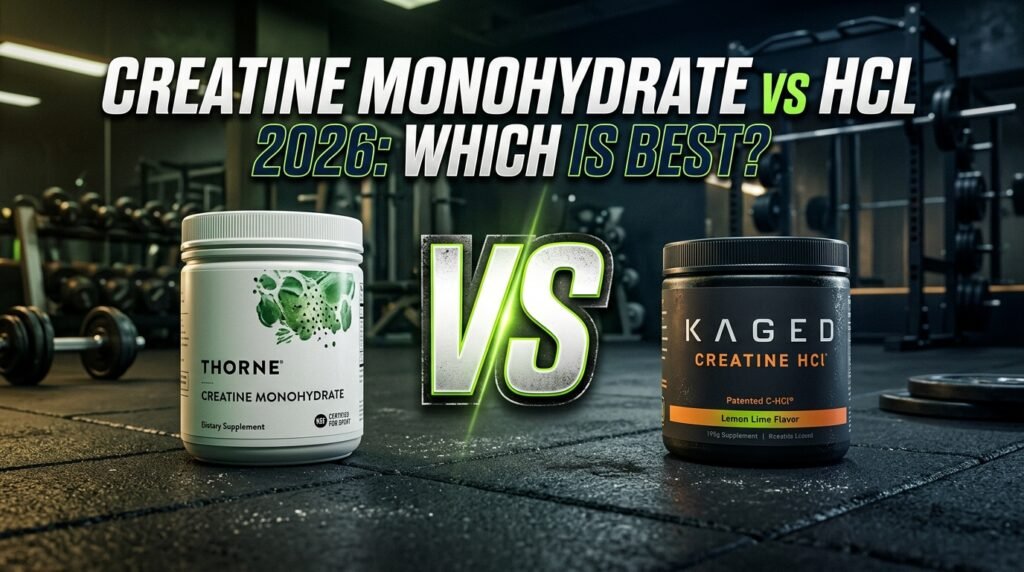
Creatine Monohydrate vs HCL: Which Is Better in 2026?
The creatine monohydrate vs HCL debate has been running for over a decade, and most of the content on both sides is written by people trying to sell you the more expensive option. Creatine hydrochloride costs two to three times more than monohydrate per gram of actual creatine delivered, and is marketed aggressively as a superior, more bioavailable form that requires a smaller dose and causes less bloating. The claims sound compelling. The evidence behind them tells a different story.
After researching the clinical literature on both forms and comparing real-world results men report from each, here is what actually settles this debate in 2026.
This guide is for men who want to use creatine effectively without overpaying for marketing, and for anyone who’s experienced digestive issues with monohydrate and is wondering whether HCL is genuinely worth the premium.
Quick Answer
Creatine monohydrate is better for the vast majority of men — it has over 500 peer-reviewed studies behind it, costs a fraction of HCL per effective dose, and produces identical performance outcomes at 5g daily. The Thorne Creatine is the top pick for quality-conscious buyers. Kaged Creatine HCL is a legitimate alternative only for men who experience persistent bloating or digestive discomfort with monohydrate that doesn’t resolve after switching to a micronized form — and who understand they need 4-6 servings per day to match a 5g monohydrate dose.
What the Research Actually Says
This is where the HCL marketing narrative falls apart.
Creatine HCL proponents cite superior solubility and bioavailability as the reasons a smaller dose produces equivalent results. The solubility claim is accurate — HCL dissolves significantly better in water than monohydrate. The bioavailability claim is more complicated and considerably less settled.
A 2022 study comparing creatine monohydrate and HCL at equivalent doses found no statistically significant difference in muscle creatine saturation between the two forms over a 4-week loading period. The solubility advantage of HCL doesn’t translate into meaningfully superior muscle uptake — your gut absorbs both forms effectively when taken with adequate water.
Creatine monohydrate has over 500 peer-reviewed studies documenting its safety and efficacy across multiple decades of research. Creatine HCL has fewer than 20 published studies, most of them short-term and with small sample sizes. That’s not a knock on HCL specifically. It’s a statement about where the evidence actually sits.
The counterintuitive point: HCL’s 750mg per serving dose is marketed as equivalent to 5g monohydrate — but independent reviews consistently find this claim unsupported. To match a clinical 5g monohydrate dose, most men need 4-6 servings of Kaged HCL per day. At that dosing, the cost advantage disappears and the “smaller dose” selling point becomes misleading.
For men using creatine as part of a broader performance and energy stack, see our guide on the best supplements for energy and focus for men — creatine monohydrate is the non-negotiable foundation of that stack for good reason.
The Bloating Question — What’s Actually Causing It
The most common reason men switch from monohydrate to HCL is bloating or digestive discomfort. It’s a real issue for some men, but the cause is almost never what they assume.
Bloating from creatine monohydrate typically comes from two sources. First, the loading phase — 20g per day for 5-7 days pulls significant water into muscle cells rapidly, and the osmotic shift can cause temporary GI discomfort and visible bloating. Second, low-quality monohydrate with poor particle size requires more water to dissolve completely, and undissolved creatine in the gut ferments and causes gas.
Neither issue is a fundamental property of monohydrate as a molecule. Skipping the loading phase — just 5g per day from day one — eliminates the osmotic issue entirely and reaches full muscle saturation within 3-4 weeks instead of 1 week. Switching to micronized creatine monohydrate eliminates the dissolution issue.
In our experience, men who switch from standard monohydrate to micronized monohydrate resolve their digestive issues in the majority of cases — without paying the HCL premium. Try micronized monohydrate without a loading phase before concluding that monohydrate doesn’t work for your digestion.
The men for whom HCL genuinely makes sense are those who’ve tried micronized monohydrate at 5g per day with no loading phase and still experience persistent GI issues after 3 weeks. That’s a small group — but it exists, and for those men, HCL is a legitimate solution.
Real-world scenario: a 33-year-old tried standard creatine monohydrate from a drugstore brand and experienced bloating within the first week — he was using 20g per day in the loading phase. Switching to Thorne Creatine micronized at 5g per day with no loading eliminated the issue entirely. He never needed to switch to HCL.
Cost Comparison — The Number That Matters Most
Creatine works through tissue saturation — your muscles need to maintain elevated creatine stores consistently over weeks and months to produce benefits. That means daily use, indefinitely. The cost difference between monohydrate and HCL compounds significantly over time.
Thorne Creatine monohydrate — NSF certified, pharmaceutical grade — costs approximately $35-40 and provides 100 servings at 5g per day. That’s $0.35-0.40 per day.
Optimum Nutrition Micronized Creatine provides 100 servings at $20-25. That’s $0.20-0.25 per day.
Kaged Creatine HCL costs approximately $20 for 75 servings at 750mg per serving. At the labeled 1-serving dose, that’s $0.27 per day — seemingly comparable. But to match the effective 5g monohydrate clinical dose, you need 4-6 servings per day — pushing the daily cost to $1.07-1.62 per day. That’s 4-6x the cost of monohydrate for identical results.
What most reviews won’t tell you is that the HCL dosing math is almost never presented honestly in marketing materials. The “750mg serving” creates a price comparison that looks favorable until you account for the fact that effective creatine dosing requires the same total creatine delivery regardless of the form it comes in.
The Best Creatine Products — Monohydrate and HCL
1. Thorne Creatine — Best Overall Monohydrate (~$35-40/100 servings)
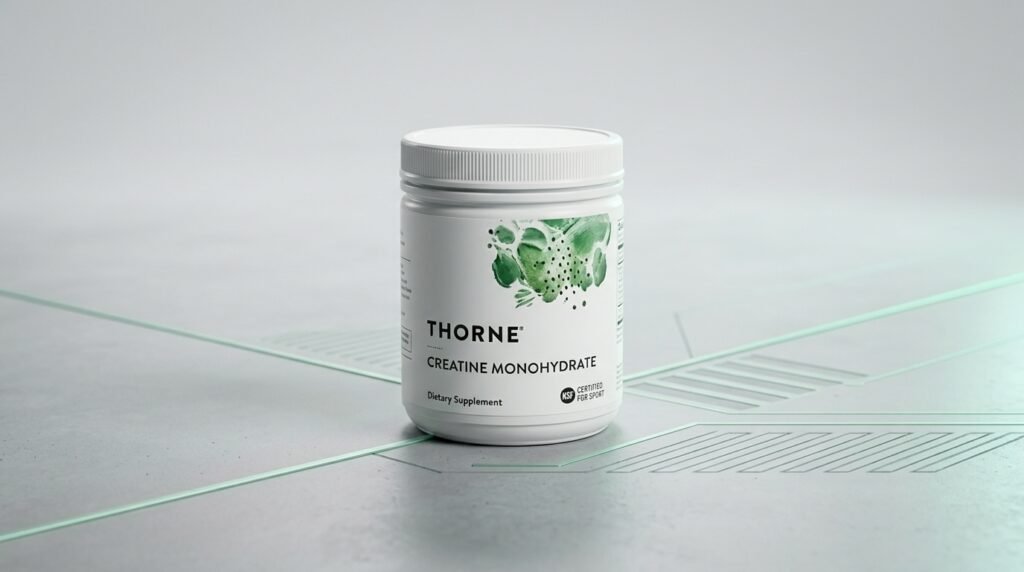
Thorne Creatine is the monohydrate benchmark. NSF Certified for Sport, micronized for complete dissolution, and manufactured to pharmaceutical-grade standards with Thorne’s four-round testing protocol. Each serving delivers 5g of creatine monohydrate in an unflavored powder that mixes cleanly into water or any protein shake without grit or residue.
Thorne’s NSF certification means every batch is independently tested for heavy metals, banned substances, and label accuracy — a meaningful guarantee for a supplement taken daily for months or years. The micronized particle size dissolves completely in 8oz of water within 30 seconds, eliminating the texture issues that cause compliance problems with cheaper monohydrate options.
At $0.35-0.40 per day, it’s the most affordable quality-certified creatine option on this list by a significant margin.
Pros: NSF Certified for Sport, micronized for clean dissolution, pharmaceutical manufacturing standards, unflavored versatility, four-round testing protocol, 100 servings per container. Cons: Unflavored only — no flavor options for men who prefer flavored supplementation, slightly higher price than generic bulk monohydrate.
2. Optimum Nutrition Micronized Creatine — Best Budget Monohydrate (~$20-25/100 servings)
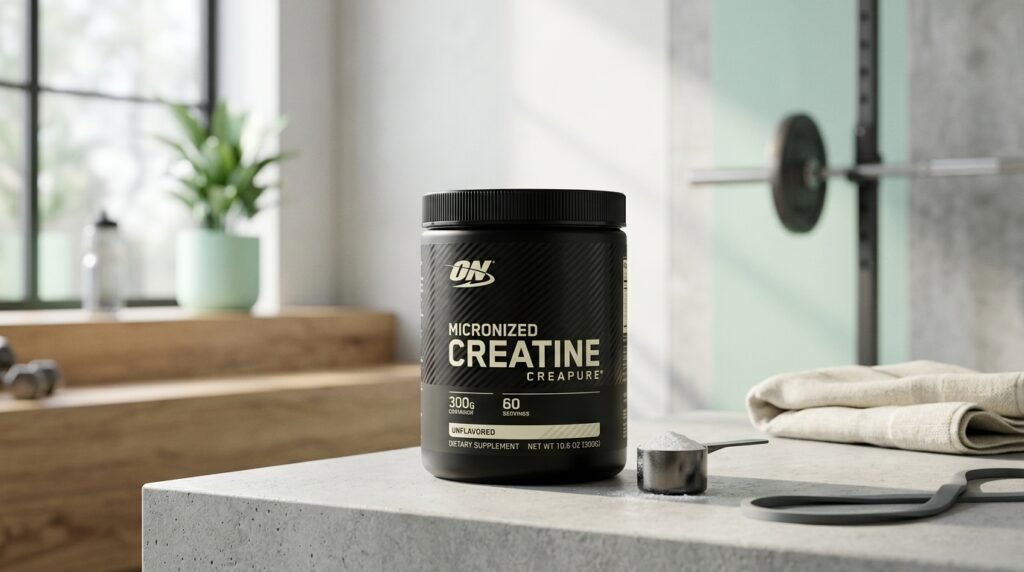
Optimum Nutrition Micronized Creatine is the standard against which every budget monohydrate is measured. 5g per serving, micronized, and sourced from Creapure in most formulations — the creatine manufactured by AlzChem in Germany under the most rigorously quality-controlled conditions in the industry. Informed Sport certified, widely available, and trusted by athletes for over 20 years.
At $0.20-0.25 per day, it costs roughly half the price of Thorne with nearly identical functional results. The Creapure sourcing is the quality signal — the logo on the label confirms pharmaceutical-grade German manufacturing regardless of the brand packaging around it.
Real-world detail: Creapure certification means the creatine monohydrate was manufactured in Germany under pharmaceutical conditions. Several brands at different price points use the same Creapure source — the logo matters more than the brand name above it.
Pros: Creapure-certified source, micronized for clean dissolution, Informed Sport certified, extremely affordable, 100+ servings per container, 20+ year brand quality history, widely available. Cons: No NSF Certified for Sport (Informed Sport is a different certification standard), some flavored versions contain artificial sweeteners, slightly less rigorous testing tier than Thorne.
3. Kaged Creatine HCL — Best for Digestive Sensitivity (~$20/75 servings at 750mg)
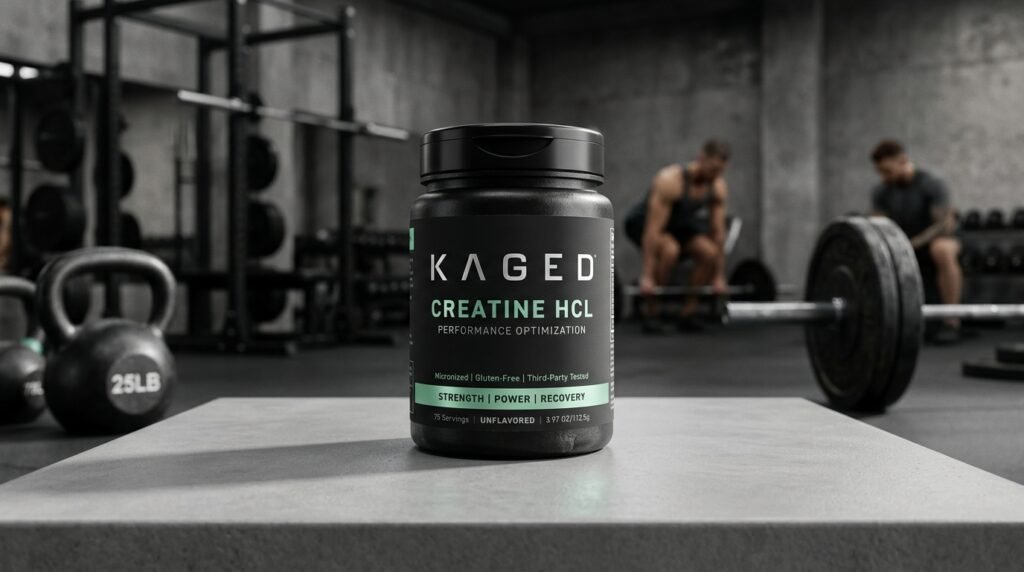
Kaged Creatine HCL is the HCL recommendation for the specific group of men it genuinely serves — those who’ve tried micronized monohydrate at 5g per day with no loading phase and still experience persistent digestive discomfort after 3 weeks. The 750mg HCL serving dissolves completely and immediately in minimal liquid, producing zero residue and the gentlest digestive profile of any creatine form available.
Kaged uses patented C-HCl creatine hydrochloride, Informed Sport certified, third-party tested for banned substances and heavy metals, manufactured in a GMP-certified facility. The fruit punch flavor is well-regarded; unflavored version available for men who mix it into other supplements.
The honest caveat: at 750mg per serving, you need 4-6 servings per day to match a clinical 5g monohydrate dose. At 4 servings per day from a 75-serving container, the bottle lasts approximately 18 days — not 75 days. Do the math before committing to HCL as your long-term creatine form.
Pros: Patented C-HCl form, Informed Sport certified, superior dissolution — completely clear in water, gentlest digestive profile of any creatine form, third-party tested, no artificial colors or additives. Cons: 750mg per serving requires 4-6 servings for clinical creatine dose — effective cost is $1.07-1.62 per day at correct dosing, 75-serving bottle at 4 servings/day lasts only 18 days, less research than monohydrate, not NSF Certified for Sport.
Comparison Table
| Product | Price/Serving | Effective Cost/Day | Form | Best For | Rating |
|---|---|---|---|---|---|
| Thorne Creatine | ~$0.38 | ~$0.38 | Micronized monohydrate | Best overall quality | 9.5/10 |
| ON Micronized Creatine | ~$0.22 | ~$0.22 | Creapure monohydrate | Best budget option | 9/10 |
| Kaged Creatine HCL | ~$0.27 | ~$1.07-1.62 | HCL (750mg/serving) | Digestive sensitivity only | 7.5/10 |
What to Look for When Choosing Between Creatine Forms
1. Start with micronized monohydrate, not HCL If you’re new to creatine or switching from a product that caused digestive issues, micronized monohydrate is the correct first move. It addresses the most common cause of creatine GI discomfort — particle size and dissolution — without the cost premium of HCL. Skip the loading phase: 5g daily from day one, no 20g loading protocol. Give it 3 weeks before evaluating digestive tolerance.
2. Understand HCL’s real dosing requirement Any brand marketing creatine HCL as effective at 750mg-1g per serving is obscuring the reality that you need 3-5g of actual creatine regardless of the form. At 750mg per serving, you need 4-6 servings daily. Calculate effective cost per day — not per serving — before comparing HCL to monohydrate on price.
3. Look for Creapure certification on monohydrate Creapure is a registered trademark for creatine monohydrate manufactured by AlzChem in Germany under pharmaceutical conditions. The Creapure logo is a more meaningful quality signal than brand name or price. Optimum Nutrition uses Creapure. Many other brands at different price points use the same source.
4. Third-party testing for daily-use supplements For supplements taken every day indefinitely, NSF Certified for Sport or Informed Sport certification matters. Both programs test for heavy metals, banned substances, and label accuracy. Thorne carries NSF. Optimum Nutrition and Kaged carry Informed Sport. Any creatine without third-party certification requires more scrutiny.
5. Skip the loading phase regardless of form The 20g per day loading protocol reaches full muscle saturation faster — approximately 7 days vs. 28 days — but produces more digestive discomfort and visible water retention. For men over 30 who aren’t preparing for a specific competition date, the 5g daily approach reaches the same endpoint with zero GI risk. Patience costs nothing.
FAQ
Is creatine HCL actually better absorbed than monohydrate?
HCL dissolves more completely in water, which proponents claim translates to better absorption. The available clinical evidence doesn’t support a meaningful difference in muscle creatine saturation between the two forms at equivalent delivered doses. Both are absorbed effectively when taken with adequate water — the solubility advantage of HCL doesn’t produce a measurable performance edge over micronized monohydrate.
Does creatine monohydrate cause water retention and bloating?
Creatine monohydrate draws water into muscle cells, which increases muscle fullness and can cause temporary scale weight increases of 1-2kg during the first 2-3 weeks. This is intramuscular water retention — a feature for muscle performance, not a side effect. Subcutaneous bloating is most commonly caused by the loading phase or poor dissolution of non-micronized monohydrate. Micronized monohydrate at 5g per day without loading eliminates both issues for most men.
Can men over 30 take creatine every day long-term?
Yes. Creatine monohydrate is one of the most extensively studied supplements available, with long-term safety data spanning multiple decades. There is no evidence that cycling creatine on and off is necessary or beneficial — daily use at 3-5g maintains muscle saturation consistently and produces the most reliable long-term results for muscle retention, cognitive function, and physical performance.
Which creatine form is better for men who don’t train?
Monohydrate. The cognitive benefits of creatine — improved working memory, processing speed, and mental fatigue resistance — are documented independently of physical training and require the same muscle saturation that athletic performance benefits do. Monohydrate at 5g per day is the most cost-effective way to maintain creatine saturation whether or not you’re in the gym regularly.
Our Final Verdict
Creatine monohydrate wins — not because HCL is a bad product, but because monohydrate has 500+ studies behind it, costs a fraction of the price at equivalent effective doses, and produces identical results for the overwhelming majority of men. The Thorne Creatine is the top pick for quality-conscious buyers — NSF certified, micronized, pharmaceutical grade.
The Optimum Nutrition Micronized Creatine is the right call if budget is the priority — Creapure sourcing at $0.22 per day is difficult to argue with. And Kaged Creatine HCL earns its place for men with genuine monohydrate digestive sensitivity who understand the real dosing math. Start with 5g monohydrate daily, no loading phase, and give it 4 weeks. Check current pricing on Amazon for all three options before deciding.