
This article contains affiliate links. We may earn a commission if you buy through our links, at no extra cost to you.
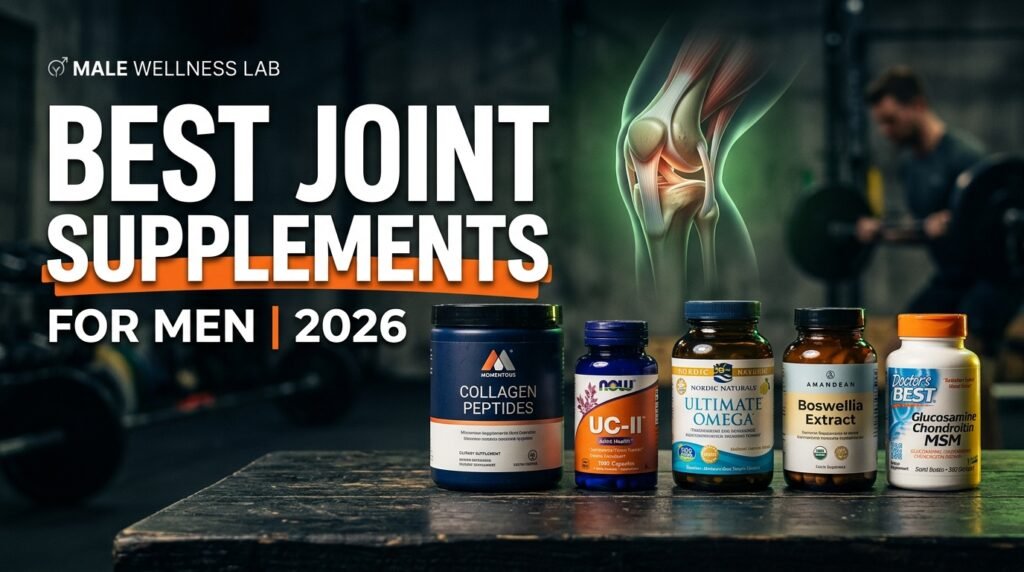
Best Supplements for Joint Health for Men in 2026
Joint pain doesn’t announce itself with a single dramatic moment. It builds — a knee that aches after a long run, a shoulder that catches during a press, a hip that stiffens after sitting at a desk for three hours. For men over 30 who train regularly or spend long hours at a desk, joint deterioration is the silent tax on everything else you’re trying to do with your body. The best supplements for joint health in men address the underlying mechanisms — cartilage degradation, synovial fluid quality, and chronic low-grade inflammation — rather than just masking discomfort.
After researching the clinical literature on joint supplementation and comparing what men in their 30s and 40s consistently report from real-world use, here is what actually works in 2026.
This guide is for active men dealing with joint discomfort who want evidence-backed support, not glucosamine pills from 2003.
Quick Answer
Collagen peptides (10-15g daily with vitamin C) paired with omega-3 fish oil (2-4g EPA+DHA) is the most effective starting point for men’s joint health — Momentous Collagen Peptides includes vitamin C already and uses the clinically studied Fortigel extract. For men with existing knee or hip discomfort, adding NOW Foods UC-II at 40mg daily produces targeted results that standard collagen peptides don’t match.
Why Joint Health Becomes a Priority for Men After 30
Most men don’t think about their joints until something hurts. By the time pain is consistent enough to affect training or daily movement, cartilage degradation is already underway — and cartilage doesn’t regenerate the way muscle does.
The biological shift starts in the early 30s. Collagen synthesis slows. The synovial fluid that lubricates joints becomes less viscous. Testosterone decline contributes — testosterone has anti-inflammatory properties that support joint tissue health, and as levels drop, joints become more vulnerable to the cumulative stress of training and desk work. Men who train intensely through their 20s without addressing recovery often notice this transition sharply around 33-36.
The counterintuitive point: the men most likely to develop significant joint problems are not sedentary men — they’re active men who train hard, ignore mobility work, and underestimate the cumulative load on their joints over years. A man running 30 miles per week with no joint support strategy is doing far more damage than a man walking daily and taking targeted joint supplements.
Inflammation is the common driver across all joint degradation patterns. Chronic low-grade systemic inflammation — driven by poor sleep, processed food, high training volume without recovery, and elevated cortisol — degrades cartilage faster than mechanical wear alone. For men managing inflammation as part of a broader health strategy, see our guide on the best supplements for men’s heart health — omega-3s appear in both lists for good reason.
The Ingredients With Real Joint Health Evidence
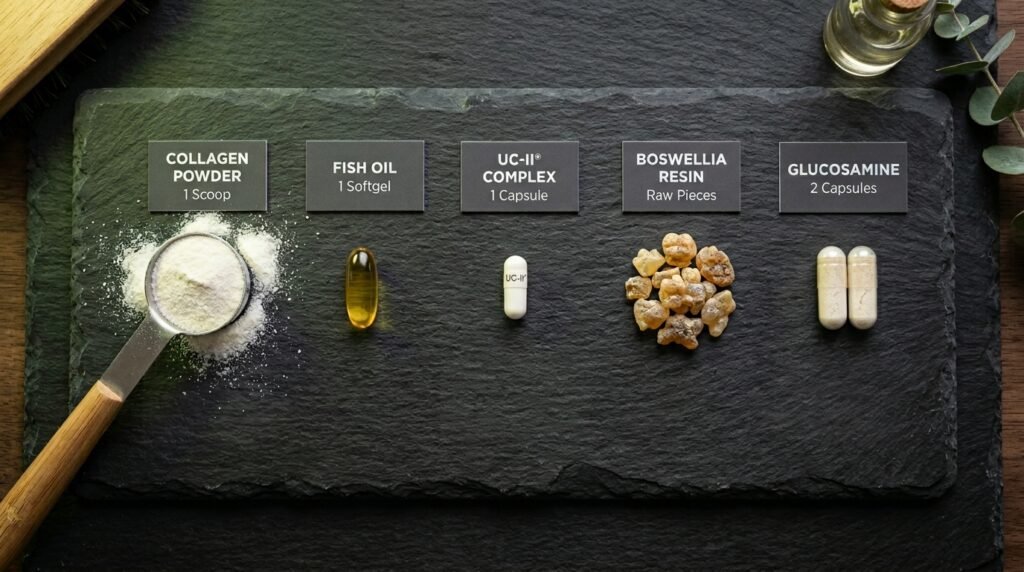
The joint supplement market is crowded with products that have weak or outdated evidence. These are the ingredients with meaningful clinical support.
Collagen peptides provide the amino acid building blocks — primarily glycine, proline, and hydroxyproline — that the body uses to synthesize new collagen in cartilage, tendons, and ligaments. A 2019 study in the British Journal of Sports Medicine found that 15g of collagen peptides taken with vitamin C 60 minutes before exercise increased collagen synthesis markers by approximately 50% compared to placebo. The vitamin C co-factor is critical — collagen synthesis requires vitamin C as an enzymatic cofactor and the effect drops significantly without it.
UC-II undenatured type II collagen works through a completely different mechanism than standard collagen peptides. Rather than providing building blocks, UC-II modulates the immune response that drives cartilage breakdown — a process called oral tolerance. At just 40mg per day, UC-II has outperformed glucosamine and chondroitin in head-to-head studies on knee pain and mobility in men with joint discomfort.
Omega-3 fatty acids (EPA+DHA) reduce the prostaglandin-mediated inflammation that accelerates cartilage breakdown and causes joint swelling. The joint benefit is a downstream effect of omega-3s’ systemic anti-inflammatory action — the same mechanism that supports cardiovascular health.
Boswellia serrata (AKBA extract) blocks a different inflammatory pathway than NSAIDs — the 5-LOX pathway — making it complementary rather than redundant to other anti-inflammatory approaches. Studies show standardized boswellia at 500mg daily reduces knee pain scores by 30-40% within 4-8 weeks in men with moderate joint discomfort.
Glucosamine and chondroitin have more mixed evidence than their decades of marketing suggest. The large GAIT trial found they produced no statistically significant benefit over placebo in most patients. The exception: men with moderate-to-severe joint pain showed a meaningful response at clinical doses. For men with mild discomfort, the evidence is weak.
For a broader look at how testosterone decline affects joint health alongside other systems, see our guide on how to increase testosterone naturally — testosterone’s anti-inflammatory role in joint tissue is one of the less-discussed aspects of the hormone’s function.
The 5 Best Supplements for Men’s Joint Health in 2026
1. Momentous Collagen Peptides — Best Collagen (~$45/30 servings)
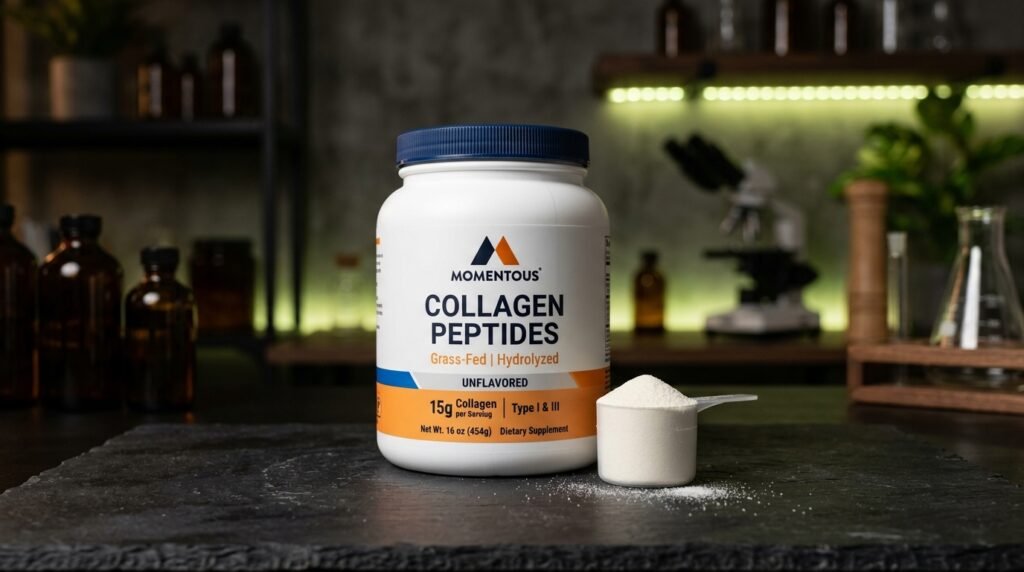
Momentous Collagen Peptides delivers 10g of grass-fed bovine collagen peptides plus 5g of Fortigel — a patented, clinically researched collagen peptide specifically shown to promote collagen synthesis in tendons and ligaments — with vitamin C already included in the formula. This is the detail that separates Momentous from most collagen products: vitamin C is the enzymatic co-factor that makes collagen synthesis work, and most collagen products omit it entirely, leaving users to add it separately or miss the synthesis benefit.
NSF Certified for Sport, sourced from grass-fed bovine hide, unflavored and mixes cleanly into warm or cold liquids. The protocol that produces results: one scoop 45-60 minutes before exercise. This timing window, established in clinical research, primes collagen synthesis in the connective tissue loaded during training.
Real-world detail: a man with recurring Achilles tendon soreness who adds Momentous Collagen on this protocol consistently reports improvement within 6-8 weeks — matching the rate at which tendon tissue remodels.
Pros: Fortigel patented extract for tendon and ligament collagen synthesis, vitamin C included, NSF Certified for Sport, grass-fed bovine sourcing, unflavored, mixes cleanly. Cons: $45/month above average for collagen, collagen is not a complete protein and shouldn’t count toward daily protein targets, benefits require 6-12 weeks to manifest.
2. NOW Foods UC-II Collagen — Best for Existing Joint Pain (~$20-25/120 servings)
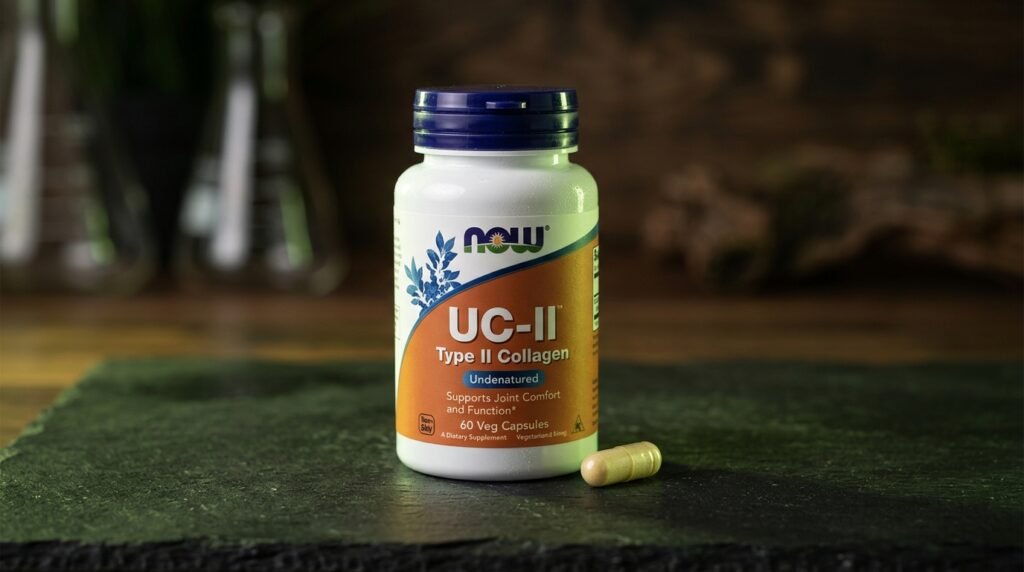
NOW Foods UC-II delivers the clinical 40mg UC-II dose per capsule — the amount used in the clinical studies that showed it outperforming glucosamine and chondroitin for knee pain and mobility scores — at 120 capsules per bottle, a four-month supply at one capsule daily.
The mechanism is genuinely different from standard collagen peptides. UC-II works through immune modulation rather than structural support, which is why it produces results at 40mg where standard collagen requires 10-15g. For a man in his 40s whose knee discomfort during squats has been limiting his training for months, UC-II is the targeted intervention that standard collagen peptides don’t replicate.
One capsule per day on an empty stomach at bedtime — the empty stomach requirement is important for the oral tolerance mechanism to function correctly.
Pros: Clinical 40mg UC-II dose, immune-modulating mechanism distinct from standard collagen, four-month supply per bottle, strong value, GMP certified NOW manufacturing, well-established brand. Cons: Must be taken on an empty stomach for optimal absorption, 90-day minimum before meaningful assessment, weaker evidence for preventive use versus existing pain management.
3. Nordic Naturals Ultimate Omega — Best Omega-3 for Joint Support (~$45/45 servings)
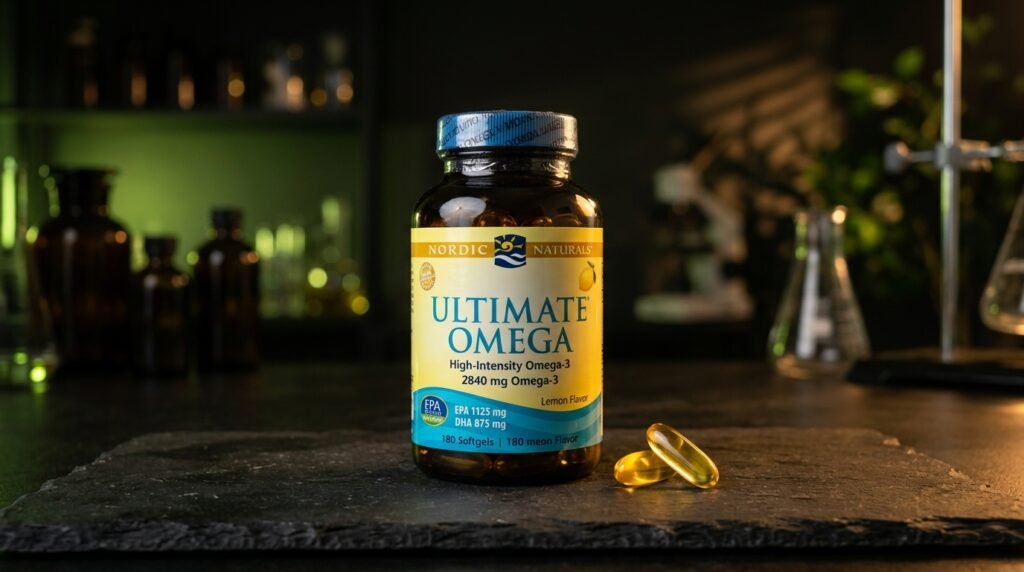
Nordic Naturals Ultimate Omega delivers 1,280mg combined EPA+DHA per serving in triglyceride form — the molecular form that absorbs approximately 70% better than the ethyl ester form used in most budget fish oil products. Two softgels per day reaches the therapeutic range for anti-inflammatory joint support. The lemon flavor eliminates the fishy aftertaste that causes many men to quietly stop taking cheaper alternatives.
Nordic Naturals consistently ranks among the top fish oil brands for purity and oxidation levels — rancid fish oil is a genuine quality control issue in the category that Nordic Naturals’ third-party testing standards address directly. Non-GMO Project Verified, Friend of the Sea certified for sustainable sourcing.
The joint benefit of omega-3s builds over 8-12 weeks of consistent use as EPA and DHA accumulate in cell membranes and progressively reduce inflammatory signaling — not an acute pain intervention, but one of the highest-leverage long-term joint health strategies available.
Pros: Triglyceride form for superior absorption, 1,280mg EPA+DHA per serving, excellent purity and oxidation standards, no fishy aftertaste, Non-GMO Verified, sustainable sourcing certified. Cons: $45/month at two softgels daily, anti-inflammatory effect requires 8-12 weeks, not an acute pain intervention, softgel form contains gelatin.
4. AMANDEAN Boswellia Serrata 500mg — Best for Inflammation-Driven Joint Pain (~$20-25/120 servings)
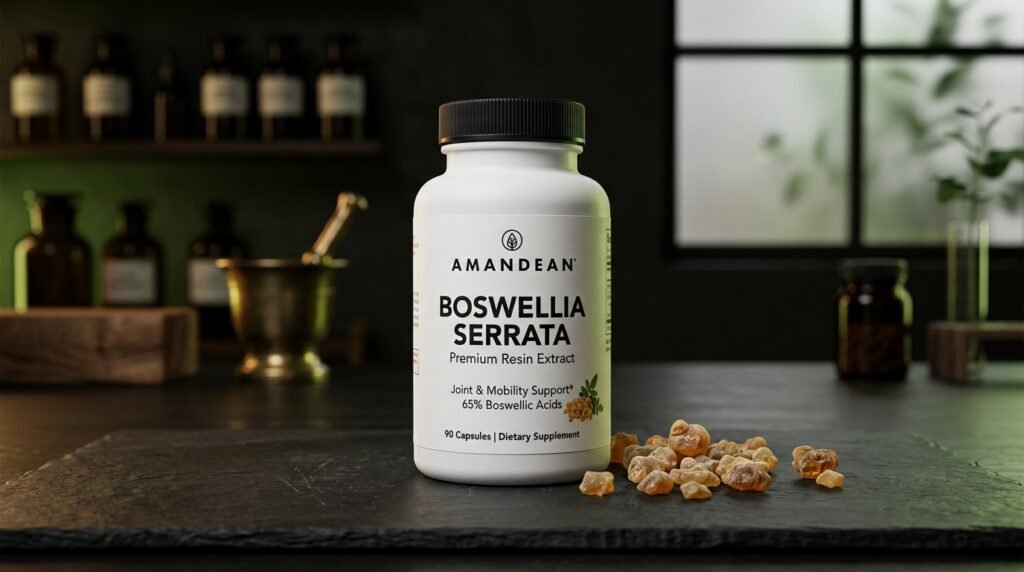
AMANDEAN Boswellia Serrata delivers 500mg of boswellia extract standardized to 65% boswellic acids with AKBA — the specific active component that drives the 5-LOX anti-inflammatory mechanism — at 120 vegetarian capsules per bottle, a four-month supply at one capsule daily.
Boswellia’s 5-LOX pathway inhibition is distinct from both NSAIDs and omega-3s, making it additive rather than redundant in a joint health stack. A man who has been relying on ibuprofen for post-training knee pain can use boswellia as a non-pharmaceutical alternative that addresses the same inflammatory pathway without the gastric side effects that regular NSAID use produces over time.
The AKBA specification matters — general boswellic acid extracts without AKBA content information have less predictable anti-inflammatory activity. AMANDEAN specifies both 65% boswellic acids and AKBA presence on the label.
Pros: 500mg with 65% boswellic acids + AKBA specified, 5-LOX anti-inflammatory mechanism distinct from NSAIDs, four-month supply per bottle, vegetarian capsules, sustainable sourcing, no stearates. Cons: Smaller brand than Thorne or NOW, best taken with a fat-containing food for bioavailability, 4-8 week onset, less name recognition than mainstream supplement brands.
5. Doctor’s Best Glucosamine Chondroitin MSM — Best for Moderate-to-Severe Joint Pain (~$25-35/360 servings)
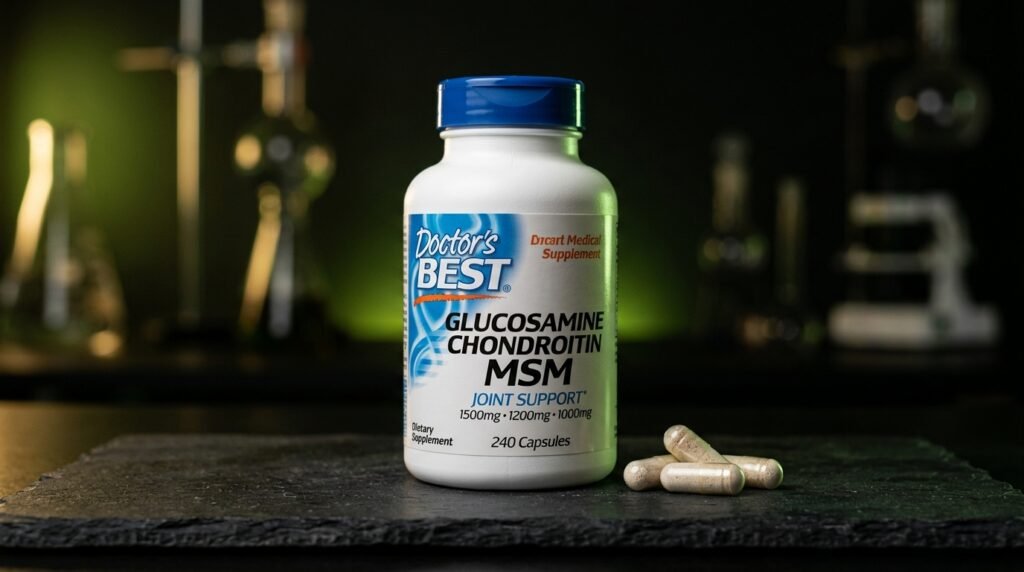
Doctor’s Best Glucosamine Chondroitin MSM uses OptiMSM — the purest form of MSM available — alongside 1,500mg glucosamine sulfate and 1,200mg chondroitin sulfate at the clinical doses used in the GAIT trial, the largest glucosamine and chondroitin study ever conducted. 360 capsules per bottle at four capsules daily = 90-day supply, exactly the minimum trial period needed to assess whether glucosamine and chondroitin work for you.
The honest positioning: this combination works for a specific subset of men — those with moderate-to-severe existing joint pain, particularly in the knees, who have been dealing with the issue for more than six months. The GAIT trial sub-analysis showing significant pain reduction in moderate-to-severe patients is the clinical signal worth acting on. For mild discomfort or preventive use, the evidence doesn’t support this as a first-line choice over collagen and omega-3s.
Pros: Clinical doses of all three compounds at GAIT trial amounts, OptiMSM pure MSM, 90-day supply per bottle, non-GMO, gluten-free, soy-free, #3 bestseller in category on Amazon. Cons: Weak evidence for mild discomfort or preventive use, four-capsule daily serving requires consistency, chondroitin sourced from bovine — not suitable for vegetarians, large capsules.
Comparison Table
| Product | Price/Month | Best For | Rating |
|---|---|---|---|
| Momentous Collagen Peptides | ~$45 | Structural joint and tendon support | 9.5/10 |
| NOW Foods UC-II | ~$6 | Existing knee and hip pain | 9/10 |
| Nordic Naturals Ultimate Omega | ~$45 | Systemic inflammation reduction | 9/10 |
| AMANDEAN Boswellia | ~$6 | Post-training inflammation | 8.5/10 |
| Doctor’s Best Glucosamine | ~$10 | Moderate-to-severe existing pain | 7.5/10 |
What to Look for When Choosing Joint Health Supplements
1. Match the supplement to your specific situation Preventive joint support and existing joint pain require different interventions. Men supplementing preventively should prioritize collagen peptides and omega-3s — structural support and inflammation management. Men with existing moderate-to-severe pain should add UC-II and boswellia. Men who’ve tried everything and still have significant daily pain should see a sports medicine doctor before adding more supplements.
2. Collagen peptides require vitamin C — always Collagen synthesis requires vitamin C as an enzymatic cofactor. Taking collagen peptides without vitamin C reduces the synthesis benefit significantly. Either choose a collagen product that includes vitamin C (Momentous does), or take 200-500mg vitamin C alongside your collagen at the same time. This detail is consistently omitted from collagen marketing and explains why many men don’t see results from otherwise well-formulated products.
3. Timing matters for collagen The clinical research showing collagen peptides increasing collagen synthesis used a specific protocol: 15g taken 45-60 minutes before exercise. This timing window primes collagen synthesis in the connective tissue loaded during training. Taking collagen at a random time during the day is better than nothing but misses the amplification effect that pre-exercise timing produces.
4. Anti-inflammatory foundations before targeted supplements Omega-3s at therapeutic doses address the systemic inflammation that accelerates joint degradation across all joint types. Getting omega-3 status right is the highest-leverage first step — it creates the environment in which targeted joint supplements like UC-II and boswellia can work most effectively.
5. Realistic timelines Joint supplements are among the slowest-acting categories. Collagen peptides: 8-12 weeks. UC-II: 90 days minimum. Omega-3s: 8-12 weeks for anti-inflammatory effect. Boswellia: 4-8 weeks. Glucosamine and chondroitin: 90 days. Set a calendar reminder for 90 days before evaluating.
FAQ
What is the most effective supplement for joint pain in men?
UC-II undenatured type II collagen at 40mg daily has outperformed glucosamine and chondroitin in head-to-head clinical trials for knee pain and mobility in men with existing joint discomfort. For men supplementing preventively, collagen peptides at 10-15g daily with vitamin C taken before exercise has the strongest evidence for cartilage and tendon structural support.
How long does it take for joint supplements to work?
Most joint supplements require 8-12 weeks of consistent daily use before producing noticeable improvements. UC-II studies typically run 90 days. Boswellia is the fastest-acting at 4-8 weeks. Men who don’t notice any change after 90 days of consistent use at clinical doses are unlikely to be responders to that supplement and should consider alternatives or medical assessment.
Can joint supplements reverse cartilage damage?
No supplement can reverse established cartilage damage. Joint supplements support cartilage maintenance, slow degradation, and reduce the inflammation that accelerates breakdown — but they cannot regenerate cartilage that has already been lost. Starting at 30-35 when discomfort first appears is significantly more effective than starting at 50 when structural damage is more advanced.
Is glucosamine still worth taking in 2026?
For most men with mild joint discomfort or who are supplementing preventively, the evidence doesn’t support glucosamine as a first-line choice — collagen peptides and UC-II have stronger clinical support. For men with moderate-to-severe knee pain specifically, the GAIT trial sub-analysis shows meaningful benefit from glucosamine plus chondroitin combined, making it worth a 90-day trial. It works for a specific subset of men and does very little for others.
Our Final Verdict
The best supplements for joint health for men in 2026 start with Momentous Collagen Peptides — Fortigel extract plus vitamin C, taken before exercise for maximum collagen synthesis. Pair it with Nordic Naturals Ultimate Omega at therapeutic dose to address the systemic inflammation that accelerates cartilage breakdown.
Add NOW Foods UC-II if existing knee or hip pain is limiting your training. Add AMANDEAN Boswellia if post-training inflammatory pain is the primary issue. And run a 90-day trial of Doctor’s Best Glucosamine only if your pain is moderate-to-severe and you fit the GAIT trial profile. Joint health is a long game — the right supplements at 35 determine what you’re able to do at 55. Check current pricing on Amazon for all five options..