
This article contains affiliate links. We may earn a commission if you buy through our links, at no extra cost to you.
Best Creatine Monohydrate for Men in 2026
Creatine monohydrate is the most researched supplement in sports nutrition history — and the gap between the best and worst options on the market is larger than most men realize. The form matters less than the quality. Five grams of pharmaceutical-grade creatine monohydrate will outperform five grams of a poorly manufactured equivalent every time, even though the label says the same thing. After researching the clinical evidence on creatine supplementation for men and comparing every meaningful quality variable across the top products available in 2026, here is what actually works.
This guide is for men who lift weights, want to improve strength and body composition, or are simply tired of wasting money on creatine that doesn’t deliver consistent results. For context on how creatine fits into a complete male supplement stack, see our full guide on creatine vs protein powder — the two work through completely different mechanisms and the decision between them depends on your current diet.
Quick Answer
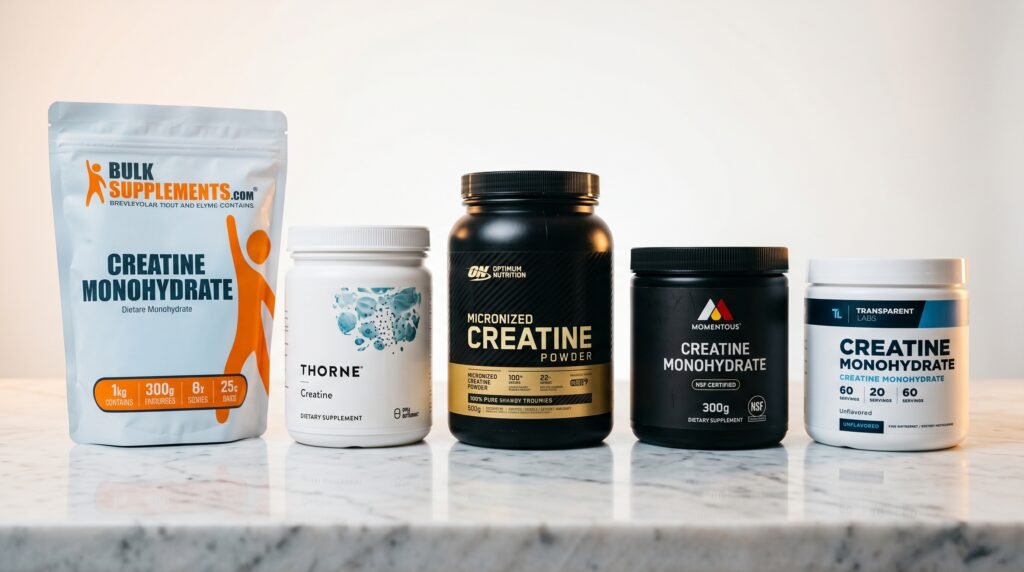
The Thorne Creatine is the best creatine monohydrate for men who want NSF Certified for Sport quality with pharmaceutical manufacturing standards at a reasonable price. For the absolute lowest cost per serving with verified purity, BulkSupplements Creatine delivers pure micronized creatine monohydrate at under $0.10 per day. Men who want the premium Creapure German-sourced standard alongside NSF certification should look at Momentous Creatine. Budget buyers can rely on Optimum Nutrition Creatine. For men cutting who want creatine plus HMB for muscle preservation, Transparent Labs Creatine HMB is the standout.
Why Creatine Monohydrate Specifically — Not Other Forms
Walk into any supplement store and you’ll find creatine in a dozen forms: creatine HCl, buffered creatine, creatine ethyl ester, creatine nitrate, liquid creatine. Every one of these alternatives is marketed as superior to creatine monohydrate — better absorption, less bloating, higher potency. The clinical evidence says otherwise, almost without exception.
Creatine monohydrate has been studied in over 500 published clinical trials across 30 years. The evidence for its safety and efficacy is comprehensive and consistent — it increases muscle phosphocreatine stores by 20-40%, improves performance in high-intensity exercise by 5-15%, and supports lean mass gains of 1-2kg over 8-12 weeks of consistent use alongside resistance training. No other creatine form has remotely comparable research support.
The counterintuitive point: creatine HCl is frequently marketed as requiring smaller doses because of superior solubility. The research doesn’t support this claim — the absorption advantage of HCl over monohydrate in practical supplementation conditions is negligible, while the cost per effective dose is significantly higher. Monohydrate at 5g daily remains the evidence-based standard by a wide margin.
Micronized creatine monohydrate — the form in all five products on this list — has smaller particle size than standard creatine, improving mixability and reducing the gritty texture that unprocessed creatine produces. Micronization doesn’t change the creatine molecule or its efficacy — it only improves the user experience of mixing it.
What Actually Separates Quality Creatine Products
Once you’ve established that creatine monohydrate is the correct form, the quality variables that actually matter are narrower than the marketing suggests.
Third-party certification is the most important quality signal. NSF Certified for Sport is the most rigorous independent testing standard available — it verifies label accuracy, tests for over 270 banned substances, and audits manufacturing processes. Informed Sport certification is equally rigorous. Products without named third-party certification may be high quality, but you’re relying on the manufacturer’s self-reporting rather than independent verification.
Manufacturing source distinguishes creatine quality at the raw ingredient level. Creapure — manufactured by AlzChem in Germany — is the most widely studied and purity-verified creatine monohydrate source available. Most clinical trials on creatine used Creapure. Products specifying Creapure as their source have documented 99.9%+ purity. Products sourcing creatine from unspecified manufacturers — often in China — have more variable purity, though reputable brands test extensively regardless of origin.
Micronization is effectively standard across quality products — it improves mixability without affecting efficacy. What matters more is particle size consistency, which good manufacturing controls ensure. A creatine powder that clumps or doesn’t dissolve fully in water is wasting a portion of every dose.
Fillers and additives — creatine monohydrate should have exactly one ingredient: creatine monohydrate. Products adding proprietary blends, amino acids, or other compounds alongside creatine make it impossible to verify you’re getting the researched 5g dose. For men who want specific combinations like creatine plus HMB, a dedicated combination product is preferable to a proprietary blend with unverified ratios.
For men focusing on complete testosterone and hormonal optimization alongside creatine, see our guide on how to increase testosterone naturally — creatine’s role in supporting the hormonal environment for muscle building is one of the most underappreciated aspects of supplementation.
The 5 Best Creatine Monohydrate Supplements for Men in 2026
1. Thorne Creatine — Best Overall (~$40/90 servings)
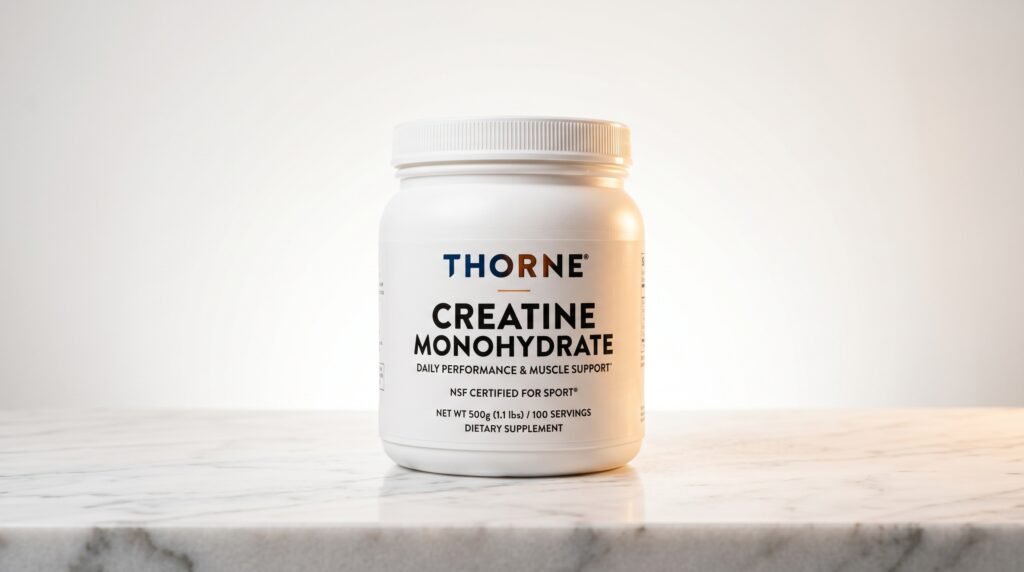
Thorne Creatine is the recommendation for men who want the highest verifiable quality standard in a mainstream supplement format. NSF Certified for Sport, pharmaceutical manufacturing, 5g pure micronized creatine monohydrate per serving with no fillers or additives. Thorne is one of a small number of supplement companies that owns and operates its own manufacturing facilities under pharmaceutical GMP standards — the quality control is internal rather than outsourced.
The micronized creatine dissolves more completely in water than standard creatine, which matters practically for men who mix it into protein shakes or plain water without a blender. The NSF certification covers both label accuracy — 5g is 5g — and contamination screening across 270+ banned substances.
At $40 for 90 servings ($0.44/day), it’s significantly more expensive than bulk alternatives but significantly cheaper than the performance loss of taking a lower-quality product inconsistently.
Pros: NSF Certified for Sport, pharmaceutical manufacturing, 5g pure creatine monohydrate, micronized, no fillers, single-ingredient formula, Thorne’s quality reputation. Cons: $40/90 servings is expensive versus bulk alternatives, unflavored only, no Creapure specification on label.
2. Optimum Nutrition Micronized Creatine — Best Budget (~$22/120 servings)
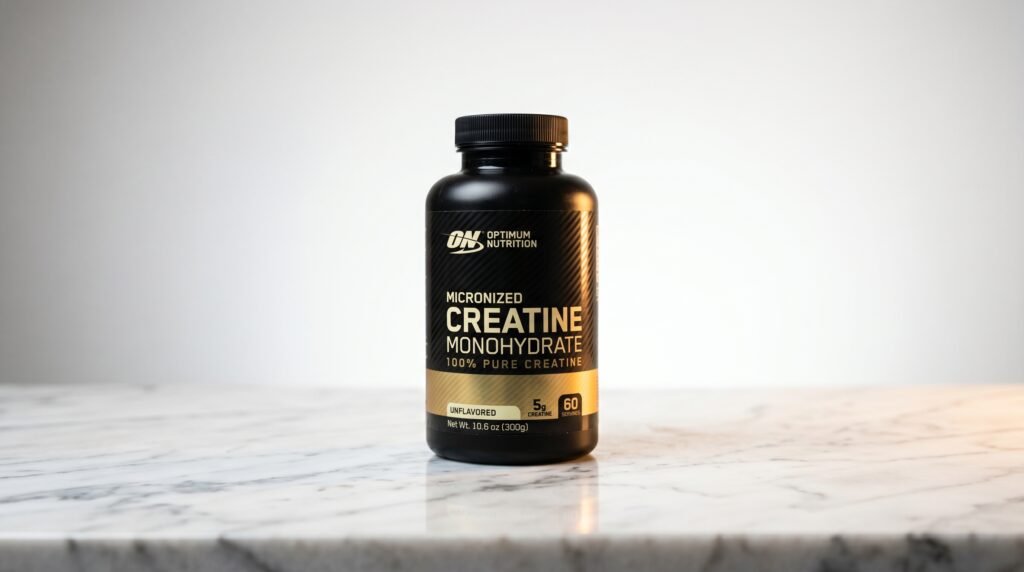
Optimum Nutrition Micronized Creatine is the world’s bestselling creatine supplement for a reason — 5g pure micronized creatine monohydrate, banned substance tested, and available at a price that makes daily consistency easy to sustain at approximately $0.18 per day.
The honest assessment: the quality difference between ON Creatine and Thorne is in certification level and manufacturing prestige, not in the creatine molecule itself. Both deliver 5g of micronized creatine monohydrate per serving. For men who want verified creatine at the lowest defensible price, ON is the correct starting point.
Best for: Men starting creatine for the first time who want a proven brand before committing to premium pricing, or budget-conscious buyers who prioritize consistency over certification prestige.
Pros: Most affordable quality option at $0.18/day, micronized, banned substance tested, 120 servings per container, Optimum Nutrition’s 30+ year reliability. Cons: Not NSF Certified for Sport, banned substance tested without a named certifying organization, no Creapure specification.
3. Momentous Creatine — Best Creapure Source (~$50/90 servings)
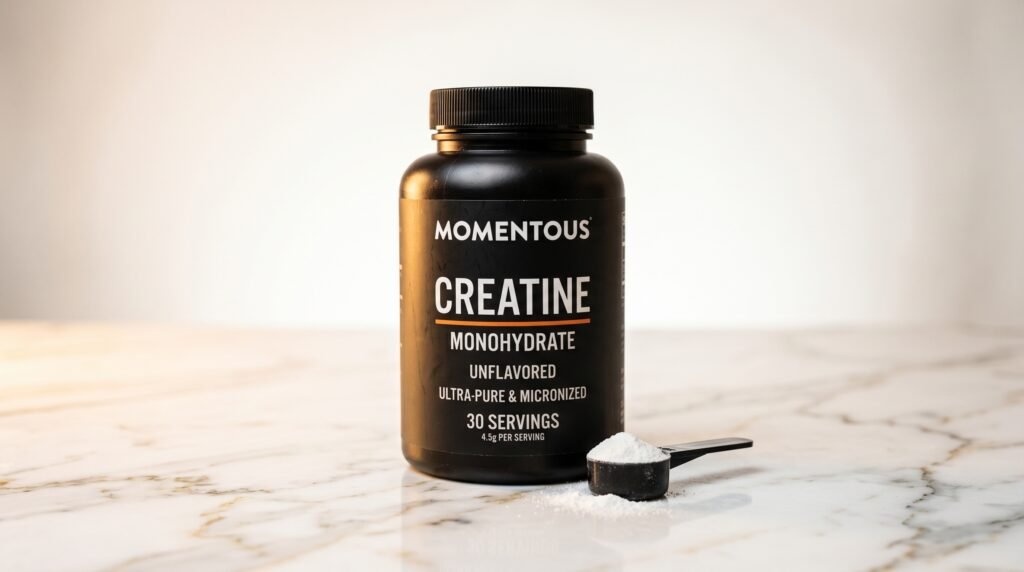
Momentous Creatine is the product for men who want both NSF Certified for Sport verification and confirmed Creapure German-sourced creatine in a single product. Momentous specifies Creapure as their creatine source and is trusted by 150+ professional and collegiate sports teams as well as the US Military — the institutional trust is a meaningful quality signal beyond any single certification.
The Creapure specification matters for men who want to replicate the conditions of clinical studies on creatine — the majority of which used Creapure as the creatine source. At $50 for 90 servings, it’s the most expensive pure creatine monohydrate on this list, justified by the dual quality assurance of Creapure source plus NSF certification.
Best for: Men who want the highest possible quality assurance through both source specification and independent certification, athletes subject to drug testing.
Pros: Creapure source verified, NSF Certified for Sport, trusted by professional sports organizations, excellent solubility, no additives. Cons: $50/90 servings is the most expensive option on this list, minimal practical advantage over Thorne for most men.
4. BulkSupplements Creatine Monohydrate — Best Value per Gram (~$20/200 servings)
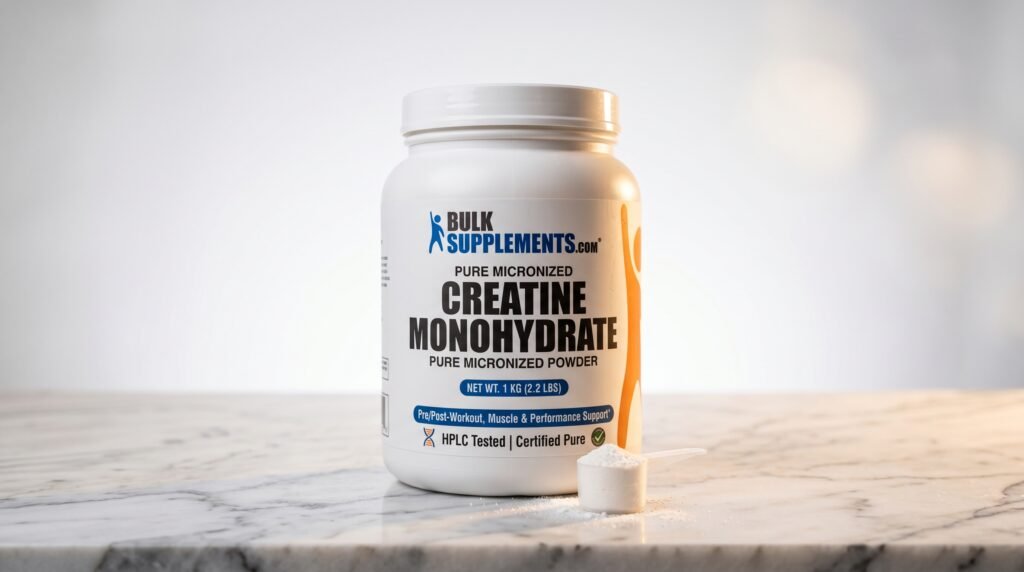
BulkSupplements Creatine Monohydrate is the recommendation for men who want pure micronized creatine at the lowest cost per gram available from a quality-tested manufacturer. 1kg of pure micronized creatine monohydrate at approximately $20 — roughly 200 servings at 5g each, or $0.10 per day. Third-party tested, cGMP certified, single-ingredient formula.
What most reviews won’t tell you is that BulkSupplements sources pharmaceutical-grade raw materials and operates cGMP-certified facilities — the quality is higher than the bare-bones packaging suggests. For men who go through creatine quickly — athletes supplementing at 5g daily for years — the cost difference versus premium brands compounds significantly over time.
Best for: Men who want to minimize cost per serving over long-term daily supplementation, or anyone who wants to buy in bulk and mix creatine into protein shakes where packaging doesn’t matter.
Pros: Lowest cost per serving at ~$0.10/day, 1kg lasts approximately 6 months, cGMP certified, third-party tested, single ingredient, minimal packaging. Cons: Not NSF Certified for Sport, bare-bones packaging with no scoop included, no Creapure specification, less brand recognition.
5. Transparent Labs Creatine HMB — Best for Cutting Phases (~$40/30 servings)
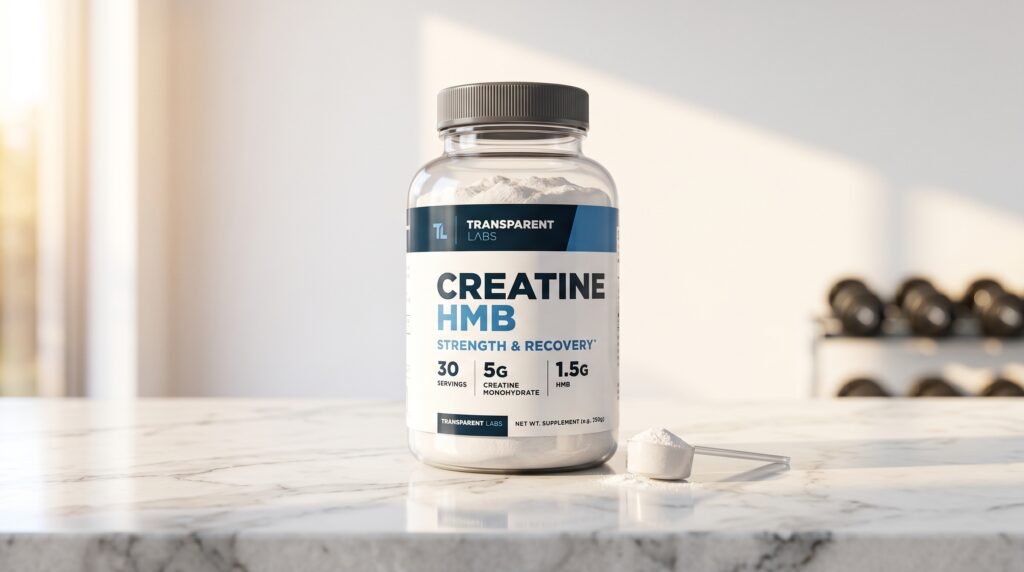
Transparent Labs Creatine HMB combines 5g creatine monohydrate with 1.5g of HMB (beta-hydroxy beta-methylbutyrate) and 5mcg of Vitamin D3 per serving. HMB is a metabolite of leucine that shows evidence for reducing muscle protein breakdown during caloric deficits — making it specifically relevant for men in cutting phases who want to preserve muscle mass while losing body fat.
The honest caveat: the evidence for HMB is more modest than for creatine — it’s a meaningful addition for men actively cutting, not a transformative ingredient for men in a caloric surplus building muscle. At $40 for 30 servings ($1.33/day), it’s the most expensive per-serving option here. The cost is justified during an active cutting phase; for bulking or maintenance, plain creatine monohydrate at a fraction of the price produces equivalent results.
Best for: Men in an active cutting phase who want to preserve lean muscle mass alongside a caloric deficit.
Pros: Creatine plus HMB combination in verified doses, Informed Sport certified, Transparent Labs quality standards, Vitamin D3 included, no artificial ingredients. Cons: $1.33/day is expensive for long-term use, HMB benefit is cutting-specific, 30 servings requires frequent reordering.
Comparison Table
| Product | Price/Month | Serving Cost | Certification | Best For | Rating |
|---|---|---|---|---|---|
| Thorne Creatine | ~$13 | $0.44 | NSF Sport | Best overall quality | 9.5/10 |
| ON Micronized Creatine | ~$6 | $0.18 | Banned substance tested | Best budget | 9/10 |
| Momentous Creatine | ~$17 | $0.56 | NSF Sport + Creapure | Best premium source | 9/10 |
| BulkSupplements Creatine | ~$3 | $0.10 | cGMP + third-party tested | Best value per gram | 8.5/10 |
| Transparent Labs Creatine HMB | ~$40 | $1.33 | Informed Sport | Best for cutting phases | 8.5/10 |
What to Look for When Choosing Creatine Monohydrate for Men
1. Third-party certification level NSF Certified for Sport and Informed Sport are the two gold standard certifications — both involve independent testing of the finished product for label accuracy and banned substance contamination. Banned substance tested claims without a named certifying organization provide weaker assurance. For men subject to drug testing in sport, NSF or Informed Sport certification is non-negotiable. For general fitness use, any of the above certifications provides adequate quality confidence.
2. Single-ingredient formula The researched dose is 5g of creatine monohydrate. Products mixing creatine with other ingredients — amino acids, caffeine, electrolytes — make it impossible to verify you’re getting the full 5g dose in the serving. Choose a single-ingredient product and stack other supplements separately if needed. The only meaningful exception is Creatine HMB for men specifically in a cutting phase.
3. Micronized vs standard Micronized creatine dissolves more completely in water and produces less gritty texture. For men mixing creatine into water or protein shakes, micronized is noticeably better in practice. All five products on this list are micronized — this should be the baseline expectation at any quality tier.
4. Serving size accuracy Studies consistently show the effective dose is 3-5g daily for maintenance after initial loading. A product listing 5g per serving should deliver exactly 5g — which third-party certification verifies. Without certification, label accuracy varies. In our experience, the most common quality problem with cheap creatine isn’t contamination — it’s underdosing, where the product delivers 3-4g per serving despite claiming 5g.
5. Cost per day versus cost per container A 120-serving container of ON Creatine at $22 costs $0.18/day. A 30-serving container of a premium product at $40 costs $1.33/day. Over a year of daily supplementation, that difference is $540. Match your certification requirements to your budget — not every man needs NSF Certified for Sport, and not every man should compromise to the cheapest option.
FAQ
When is the best time to take creatine monohydrate?
Timing is the most overanalyzed aspect of creatine supplementation. The research consistently shows that daily consistency matters far more than timing — whether you take it before training, after training, or with breakfast produces equivalent results over weeks of supplementation. Take it when you’ll reliably remember it. For most men that means mixing it into a morning protein shake or taking it immediately post-workout when the routine is already established.
Do I need to load creatine or can I just take 5g daily?
Loading — taking 20g daily for 5-7 days, split into 4 doses — saturates muscle phosphocreatine stores faster, producing performance benefits within 1 week rather than 3-4 weeks. Maintenance dosing at 5g daily achieves the same saturation level, just more slowly. For men who want faster results, loading is a legitimate approach. For men who experience digestive discomfort from high creatine doses (a common loading complaint), starting at 5g daily avoids the issue with only a 2-3 week delay in reaching full saturation.
Does creatine monohydrate cause hair loss?
The concern stems from a single 2009 study on rugby players showing elevated DHT (dihydrotestosterone) levels after creatine loading — not testosterone, and not direct hair loss. DHT is associated with male pattern baldness in genetically predisposed men. The study has never been replicated, used a specific loading protocol, and measured a hormone proxy rather than actual hair loss. The current scientific consensus is that creatine monohydrate does not cause hair loss in men without existing genetic predisposition to male pattern baldness. Men with strong family history of hair loss may choose to take a conservative approach; for everyone else, the evidence doesn’t support this concern.
Can men over 40 take creatine monohydrate safely?
Yes — and the evidence for creatine benefits in men over 40 is particularly compelling. Muscle phosphocreatine stores decline with age, meaning the relative benefit of supplementation is often greater in older men than younger ones. Research specifically in men over 50 shows creatine supplementation alongside resistance training produces meaningful improvements in muscle mass, strength, and functional performance. Long-term creatine supplementation has not shown safety concerns in healthy adults at standard doses — kidney concerns that appear in online discussions are not supported by clinical evidence in men with normal kidney function.
Our Final Verdict
The best creatine monohydrate for men in 2026 is Thorne Creatine for most buyers — NSF Certified for Sport quality at $0.44/day is the best value proposition in the certified tier. Men who want Creapure source verification alongside NSF certification should choose Momentous. Budget-conscious men who prioritize consistency over certification prestige should use Optimum Nutrition. For maximum value per gram over long-term supplementation, BulkSupplements is unmatched at $0.10/day. Men in an active cutting phase should consider Transparent Labs Creatine HMB specifically during that phase. Take 5g daily, stay consistent for 4 weeks, and train hard. Check current pricing on Amazon for all five options before buying.