
As an Amazon Associate we earn from qualifying purchases made through links on this page.
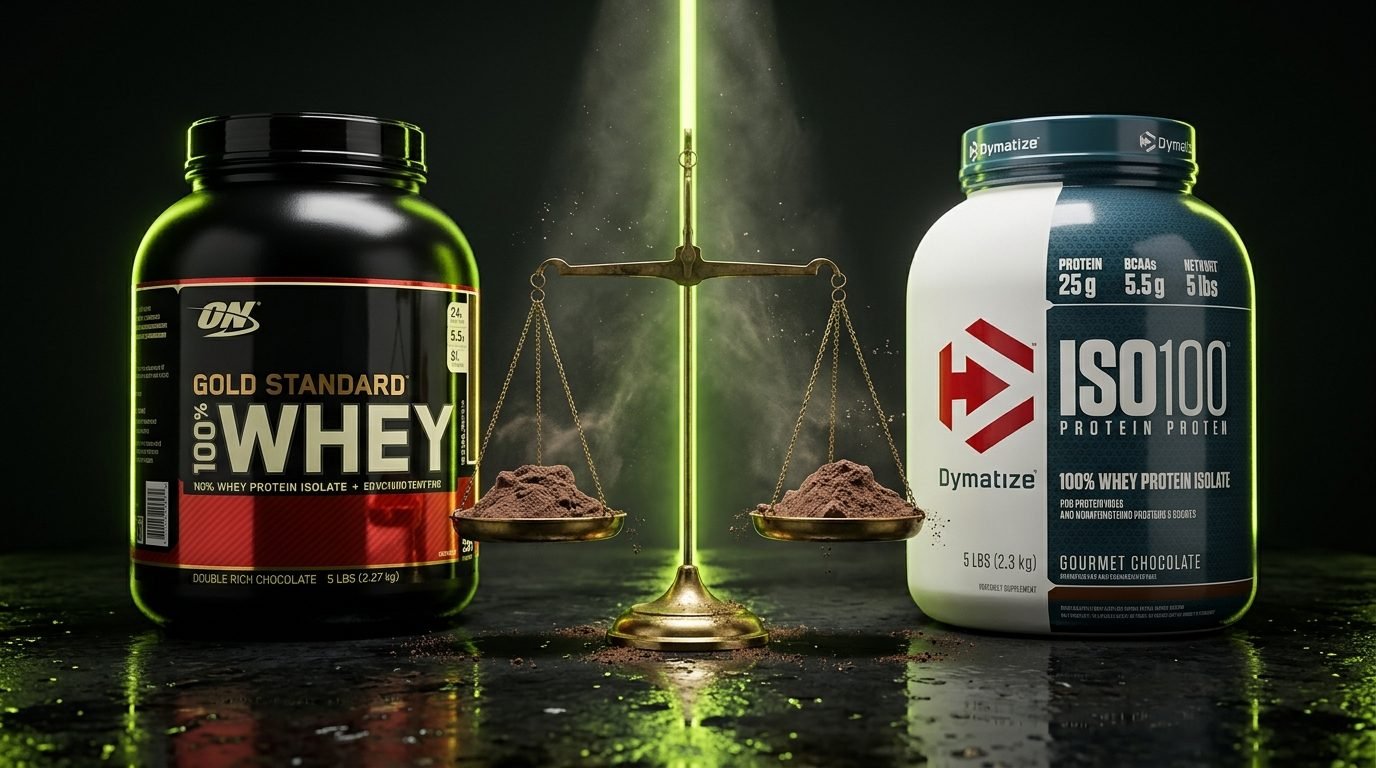
Four dollars. That is the whole gap between a five-pound tub of Optimum Nutrition Gold Standard at about $106 and Dymatize ISO100 at about $110, small enough that most people end up choosing by the color of the tub. They shouldn’t, because these are not the same powder, and the Optimum Nutrition vs Dymatize protein powder question is really a question about what those four dollars buy.
Gold Standard blends two kinds of whey. ISO100 uses only the more filtered one. Everything else on this page, from protein per scoop to which brand names its testing, follows from that single line on the ingredient list.
We went through both Amazon listings and both nutrition panels and set the figures side by side, with no scores and no taste-test theater. Our pick is Gold Standard, and the reason is not the one printed on the front of the tub.
Quick Answer
Buy Gold Standard. At about $1.43 a scoop it is the cheaper serving, and its listing names an outside testing program, Informed Choice, where ISO100’s does not.
Pick ISO100 only if you log macros to the half gram: it prints 1 g more protein and half a gram less fat per scoop, for 2 to 12 cents more.
Five Pounds Costs the Same, but It Does Not Scoop the Same
The isolate is not the expensive tub. A five-pound Gold Standard in Double Rich Chocolate runs about $106 for 74 servings, which works out to about $1.43 a scoop. A five-pound ISO100 in Gourmet Chocolate runs about $110, and the per-scoop figure depends on which part of its own listing you believe.
The product title says 76 servings. The label photo on the same page says 71. At 76, ISO100 costs about $1.45 a scoop, two cents more than Gold Standard and a difference nobody will feel. At 71, it costs about $1.55, which over a year of one shake a day adds up to roughly $44 more than the Optimum Nutrition tub.
That is not a rounding error, it is the price of a second tub of something else. If the same cart is also holding creatine, our creatine brand comparison runs the same per-serving math on that tub.
Either way, a year of daily Gold Standard costs about $520. At that volume, cents per scoop are the number that matters, and the sticker price is the one that misleads.
The Isolate Buys Half a Gram of Fat, Not a Leaner Shake
Most buyers pay for an isolate expecting a lot more protein per scoop. On these two labels the gap is one gram: Gold Standard prints 24 grams per 31-gram scoop, ISO100 prints 25.
The rest of the panel is closer than the word “isolate” suggests. Gold Standard lists 3 grams of carbohydrate and 1.5 grams of fat per scoop at 120 calories. ISO100’s own comparison chart on its listing puts it at 3 grams of carbohydrate or less, 1 gram of fat and 1 gram of sugar, at 120 calories or less. Half a gram of fat per scoop is about 37 grams across a whole tub, a little under three tablespoons of olive oil spread over ten weeks. If you log every gram through a cut, that is a line in your app. If you drink one shake after training and then eat dinner, it disappears into the meal.
Both tubs carry 5.5 grams of BCAAs per scoop on their labels, so that line, often used to sell one against the other, cancels out completely.
A Named Seal Beats a Graphic That Says “Tested”
Gold Standard‘s listing names its program: Informed Choice certified, alongside the line “banned substance tested.” A named certification is something you can look up yourself, product by product, on the certifier’s own register.
ISO100‘s listing carries a “Banned Substance Tested” graphic but does not name a program anywhere we could find on the page. That does not mean the testing is not happening; it means the buyer cannot check it from the listing alone. For someone who competes in a tested federation, that is the line that settles the purchase before taste or price come into it.
We applied the same rule when we counted certification seals in Thorne vs Garden of Life: a seal with a name beats a claim without one, every time.
“Hydrolyzed” Is a Factory Step You Cannot See in the Shaker
Dymatize builds its pitch around one word. The ingredient list opens with hydrolyzed whey protein isolate, meaning part of the protein has been broken into smaller pieces at the factory before it reaches the tub, and the brand presents that as the reason ISO100 is its top-tier product.
That is a manufacturing process, and it is the one claim on either label that we cannot turn into a number. The figures you can check are the ones above: one extra gram of protein, half a gram less fat, and a cost per scoop between two and twelve cents higher.
What you can feel is mixing. Dymatize tells you to add one scoop to 5 to 6 ounces of water or milk, which is a small glass, not a full shaker.
A tub is a daily purchase. If you are also pricing one-off recovery gear, Theragun vs Hypervolt runs the same label-against-label math on massage guns.
Label vs Label
Gold Standard first, ISO100 second. All numbers are read off the five-pound chocolate tub of each.
Price, 5 lb tub. About $106 against about $110.
Servings per tub. 74 against 71 or 76; the ISO100 listing prints both.
Cost per serving. About $1.43 against about $1.45 to $1.55.
Protein per scoop. 24 g against 25 g.
Fat per scoop. 1.5 g against 1 g.
Whey type. Isolate plus concentrate against isolate plus hydrolyzed isolate.
Named certification on the listing. Informed Choice against not disclosed.
Read down the column and the pattern is simple. ISO100 wins every line that measures the powder itself, by a gram here and a half gram there. Gold Standard wins every line that measures what you pay and what you can verify. For a tub you will finish in ten weeks and buy again, the second column of wins matters more.
Head-to-Head
Optimum Nutrition Gold Standard 100% Whey — Best for Most Men
About $1.43 a scoop buys 24 grams of protein from a blend of whey isolate and concentrate, in a 31-gram scoop that comes to 120 calories. That is the lowest cost per serving of the two tubs in this comparison, and the five-pound tub is sold and shipped by Amazon itself, which keeps returns simple.
If you drink one shake a day after training and get the rest of your protein from food, this is the tub to buy. The extra half gram of fat per scoop against ISO100 is too small to notice in a day’s eating, and accepting it buys you a lower price and a named certification.
The trade-off is the concentrate. Gold Standard is not a pure isolate, so the label carries 1.5 grams of fat and up to 2 grams of sugar depending on the flavour, where ISO100 prints 1 gram of each. The listing also states that the powder contains milk and soy, which matters if either is on your list of things to avoid.
Flavour choice is wide, and price per tub barely moves between the chocolate options: Double Rich Chocolate and Extreme Milk Chocolate both list at about $106 in the five-pound size, so pick on taste rather than cost.
Missing from the label: how much of the 24 grams comes from isolate and how much from concentrate. Optimum Nutrition prints the blend but not the ratio.
Dymatize ISO100 — Best for the Leanest Scoop
This is the wrong tub for a buyer who chooses on price per scoop, because depending on which serving count you trust, it costs between two and twelve cents more than Gold Standard for one extra gram of protein.
For everyone else it is the leaner label of the two. Each scoop prints 25 grams of protein, 1 gram of fat and 1 gram of sugar, under 120 calories, with 5.5 grams of BCAAs and 2.6 grams of leucine. The powder is all isolate, part of it hydrolyzed, and the tub is made in the USA according to the listing. If you are counting macros through a cut and every gram of fat goes into an app, this is the tub that makes the arithmetic easier.
Where it falls short is transparency on its own Amazon page. The listing shows two different serving counts for the same five-pound tub, 71 on the label photo and 76 in the title, and the testing graphic does not name the program behind it.
Flavour range is the other reason people pick it. The line runs from Gourmet Chocolate and Gourmet Vanilla to cereal-themed flavours like Fruity Pebbles, and smaller tubs are listed too, so you can try a flavour before committing to five pounds.
The listing never tells you which certification, if any, backs the “banned substance tested” claim. Until the listing names it, the buyer has to take it on trust.
What the Label Doesn’t Say
Is Dymatize ISO100 better than Optimum Nutrition Gold Standard?
On the label, ISO100 is slightly leaner and Gold Standard is cheaper and better documented. For most men drinking one shake a day, Gold Standard is the better value, and ISO100 only pulls ahead if you track fat to the half gram.
Which has more protein per scoop?
ISO100, by one gram: 25 grams against 24. That gap is small enough that the price per scoop should decide the purchase, not the protein line.
Why does the ISO100 listing show two serving counts?
The Amazon title says 76 servings and the label photo says 71 for the same five-pound tub. Until the listing is corrected, budget on 71, which puts the cost at about $1.55 a scoop.
A protein tub is a different kind of daily purchase from a greens powder; if that is the next line on your list, AG1 vs Ritual breaks down what each one costs per day.
What the Label Decides
Optimum Nutrition Gold Standard costs less per scoop and is the only one of the two that names its certification, which makes it the default buy. Dymatize ISO100 is worth the extra cents only if one more gram of protein and half a gram less fat per scoop actually change your numbers.