
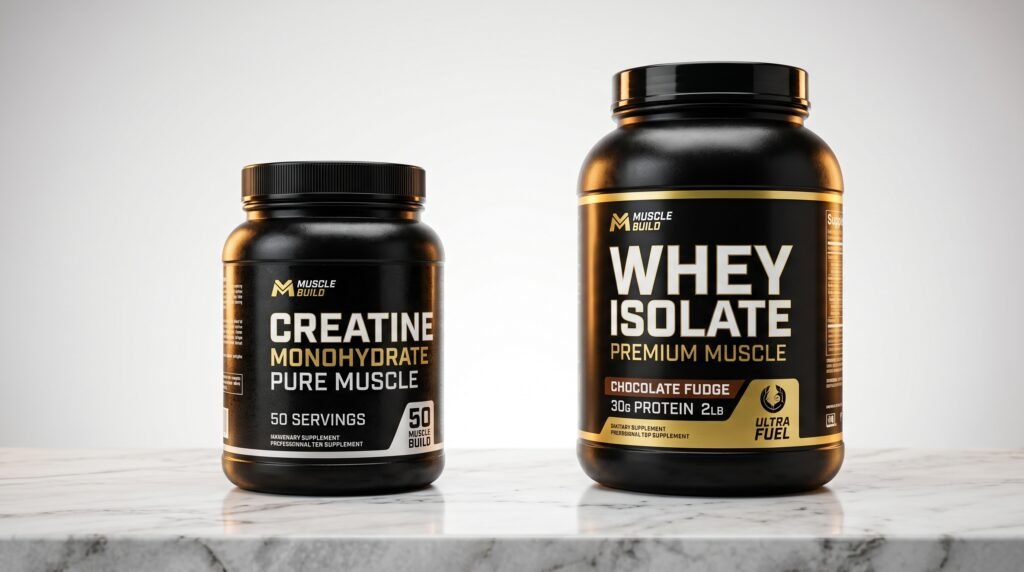
This article contains affiliate links. We may earn a commission if you buy through our links, at no extra cost to you.
Creatine vs Protein Powder: Which Is Better in 2026?
If you’ve ever stood in a supplement aisle trying to figure out whether to buy creatine or protein powder — or whether you need both — you’re not alone. This is one of the most common supplement questions men ask, and most of the answers online either oversimplify it or try to sell you a stack you don’t need. Creatine vs protein powder is not actually a competition. They work through completely different mechanisms, address different nutritional gaps, and produce different results. Choosing between them — or deciding to use both — depends on what you’re actually trying to achieve.
After researching the clinical evidence on both supplements and comparing what men over 30 actually experience from each, here is what actually works in 2026. This guide is for men who want to train harder, build muscle, or improve body composition without wasting money on the wrong supplement.
Quick Answer
If you’re eating enough protein daily (0.7-1g per pound of bodyweight) but want to improve strength and performance in the gym, start with creatine — Thorne Creatine is the most rigorously tested option. If you’re consistently falling short of your protein targets, protein powder fills that gap more directly — Optimum Nutrition Gold Standard Whey is the benchmark. Most men benefit from both, but if budget forces a choice, assess your diet first.
The Fundamental Difference: What Each Supplement Actually Does
Before comparing creatine vs protein powder, you need to understand that they don’t compete — they operate through entirely different biological pathways and address entirely different things.
Creatine is a performance supplement. It works by increasing phosphocreatine stores in your muscles, which accelerates the regeneration of ATP — the energy currency your muscles use for explosive movements like lifting, sprinting, and any high-intensity effort. More phosphocreatine means more available energy for those efforts, which translates to more reps, heavier lifts, and better sprint performance. The muscle growth that follows is secondary — a result of being able to train harder, not a direct effect of creatine itself.
Protein powder is a nutritional supplement. It provides amino acids your body uses to repair and build muscle tissue after training. It doesn’t make you stronger directly. It doesn’t improve your energy system. It simply ensures your body has the raw materials — specifically leucine and essential amino acids — to trigger and complete muscle protein synthesis after workouts.
The counterintuitive point: creatine has more direct clinical evidence for improving body composition in men over 30 than protein powder does — because most men who exercise regularly already eat enough protein, while almost nobody has optimized their phosphocreatine system. A man eating 150g of protein daily and taking creatine will outperform the same man eating 150g of protein without creatine in strength and lean mass gain over 8-12 weeks, all else equal.
For men working on complete performance optimization, see our guide on how to increase testosterone naturally — creatine’s role in hormonal health is one of the most underreported aspects of this supplement.
The Science Behind Creatine — What 200+ Studies Actually Say
Creatine monohydrate is the most researched supplement in sports science history. The clinical literature is not ambiguous — it works, consistently, across populations, with a well-understood mechanism.
The core mechanism: muscles store phosphocreatine, which rapidly donates a phosphate group to ADP to regenerate ATP during high-intensity effort. Your muscles can only store a limited amount of phosphocreatine naturally — supplementing with 3-5g of creatine monohydrate daily over 4 weeks increases muscle phosphocreatine stores by approximately 20-40%. That increase directly extends the duration you can sustain maximum effort before fatiguing.
The practical result in the gym: men supplementing creatine consistently add 1-2 reps to their heaviest sets. That sounds modest. Compounded over 6-12 months of training, those extra reps accumulate into meaningfully greater strength and muscle development than training without creatine — roughly 8-14% greater improvement in strength outcomes across most published trials.
Beyond muscle performance, creatine has documented benefits for cognitive function — phosphocreatine supports brain energy metabolism, and studies show improved short-term memory and reduced mental fatigue with creatine supplementation, particularly in sleep-deprived or high-stress states.
The water retention question comes up constantly. Creatine does cause intracellular water retention — water drawn into muscle cells, not subcutaneous bloating. This is the mechanism that makes muscles look and perform better, not a side effect. Men who report “bloating” from creatine are typically either loading at 20g/day (unnecessary) or drinking insufficient water.
The Science Behind Protein Powder — When It Actually Helps
Protein powder is valuable — but its value is entirely dependent on whether you’re already meeting your protein targets from food.
Muscle protein synthesis — the process by which your muscles repair and grow after training — is stimulated by leucine, an essential amino acid found in all complete protein sources. The research on muscle building consistently shows that hitting 0.7-1.0g of protein per pound of bodyweight daily, spread across 3-5 meals, produces optimal muscle protein synthesis rates. Above that threshold, additional protein produces diminishing returns.
The practical question for any individual man is simple: are you hitting that target from food? A 180-pound man needs 126-180g of protein daily. Three meals with 40g of protein each — achievable through chicken, eggs, Greek yogurt, and similar foods — covers the lower end of that range. Many men doing this are already adequately supplied without supplementation.
Where protein powder genuinely helps is for men who train early in the morning without time for a full breakfast, who are in a caloric deficit and struggling to hit protein targets with fewer calories, or who are vegetarian or vegan and find adequate protein difficult to source. For these situations, a quality whey isolate delivers 25-28g of complete protein efficiently and conveniently.
We found that men who add protein powder without assessing their current intake first frequently discover they were already hitting their targets — which means the protein powder produced zero additional benefit. Track your protein intake for 3 days before deciding whether you need to supplement it.
For men working on sleep and recovery alongside training — check our guide on the best supplements for sleep for men — recovery quality directly determines how well your body uses both creatine and protein.
The Best Creatine Supplements in 2026
1. Thorne Creatine — Best Overall (~$40/90 servings)
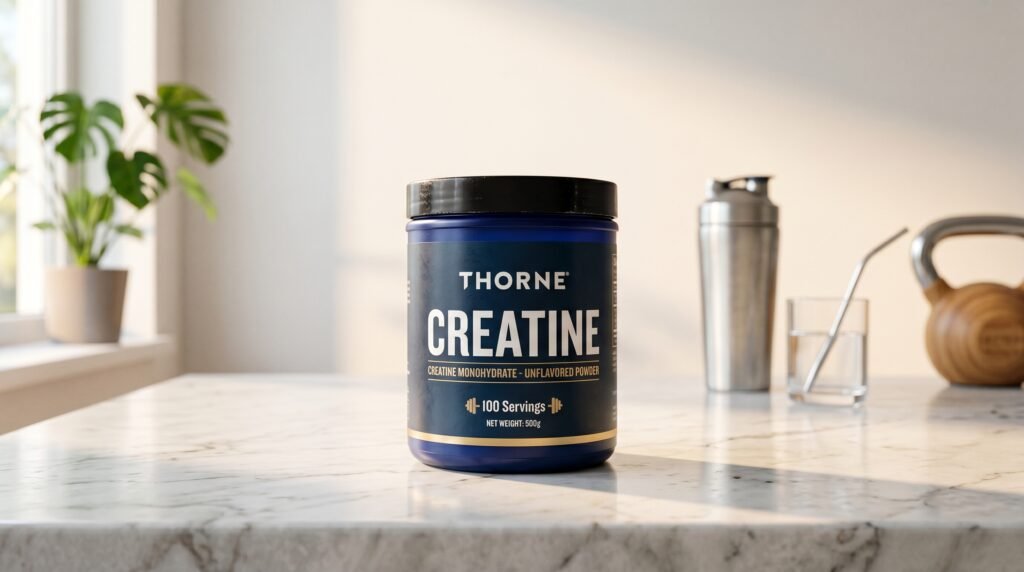
Thorne Creatine is the NSF Certified for Sport creatine monohydrate that sets the quality standard for this category. 5g per serving of micronized creatine monohydrate — nothing else. No fillers, no proprietary blends, no added sugars or artificial flavors. NSF certification means independent third-party testing has verified the 5g label claim and screened for over 270 substances banned by major athletic organizations.
Micronized creatine dissolves more completely in water than standard creatine powder — relevant for men who mix it into protein shakes or water without a blender. Thorne’s pharmaceutical manufacturing standards mean consistent product quality across batches.
At $40 for 90 servings — approximately $0.44 per day — it’s the highest-quality creatine available at a price that’s easy to justify for a supplement you’ll take every day.
Pros: NSF Certified for Sport, pharmaceutical manufacturing, 5g pure creatine monohydrate, micronized for better mixing, no fillers, Thorne’s quality reputation. Cons: $40/90 servings is more expensive than bulk alternatives, unflavored only.
2. Optimum Nutrition Creatine — Best Budget Creatine (~$22/120 servings)
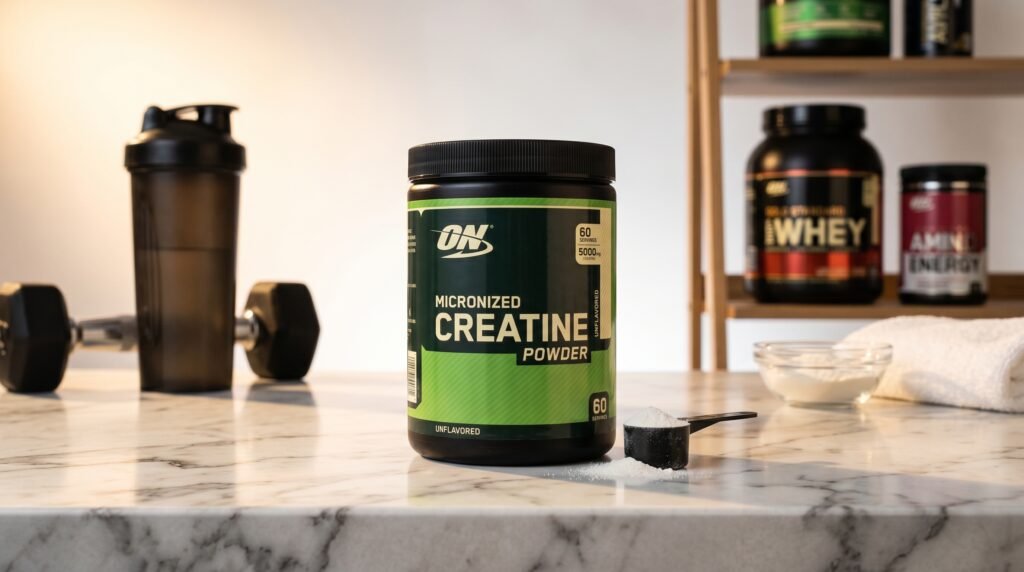
Optimum Nutrition Micronized Creatine is the most purchased creatine supplement in the world for a reason — it delivers pure 5g micronized creatine monohydrate at a price that makes consistent daily use easy to sustain. Banned substance tested, micronized for mixability, and available in the quantities that make long-term supplementation economical.
At $22 for 120 servings — approximately $0.18 per day — it’s the budget benchmark. The quality difference between ON Creatine and Thorne Creatine is in certification level and manufacturing standards, not in the creatine itself — both deliver 5g of creatine monohydrate per serving.
Best for: Men who want reliable creatine supplementation at the lowest cost per serving, or those starting creatine for the first time before committing to premium pricing.
Pros: Most affordable quality option, micronized, banned substance tested, 120 servings per container, Optimum Nutrition reliability. Cons: Not NSF Certified for Sport, less rigorous third-party testing than Thorne.
The Best Protein Powders in 2026
1. Optimum Nutrition Gold Standard Whey — Best Overall Protein (~$35-40/30 servings)
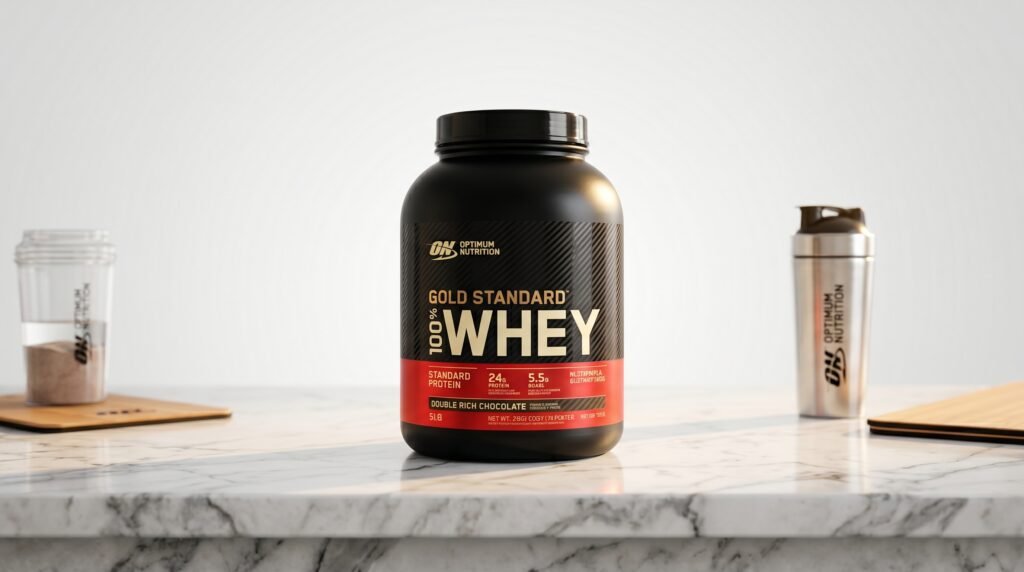
Optimum Nutrition Gold Standard 100% Whey has been the bestselling protein powder in the world for over a decade — and for good reason. 24g of protein per serving with whey protein isolate as the primary ingredient, 5.5g of naturally occurring BCAAs, banned substance tested, and a flavor range wide enough that daily compliance isn’t a chore.
At $35-40 for 2 lbs (approximately 30 servings), it’s the benchmark for value and quality in the mainstream protein powder category. The taste and mixability are genuinely excellent — it dissolves cleanly in water or milk with a shaker without clumping or grittiness.
Best for: Men who want a reliable, great-tasting whey protein for post-workout recovery and daily protein supplementation at a mid-range price.
Pros: 24g protein per serving, whey isolate primary ingredient, banned substance tested, excellent mixability and taste, wide flavor selection, 35+ years of brand trust. Cons: Contains artificial flavors and sweeteners, soy lecithin as emulsifier, not grass-fed.
2. Transparent Labs Whey Isolate — Best Premium Protein (~$60/30 servings)
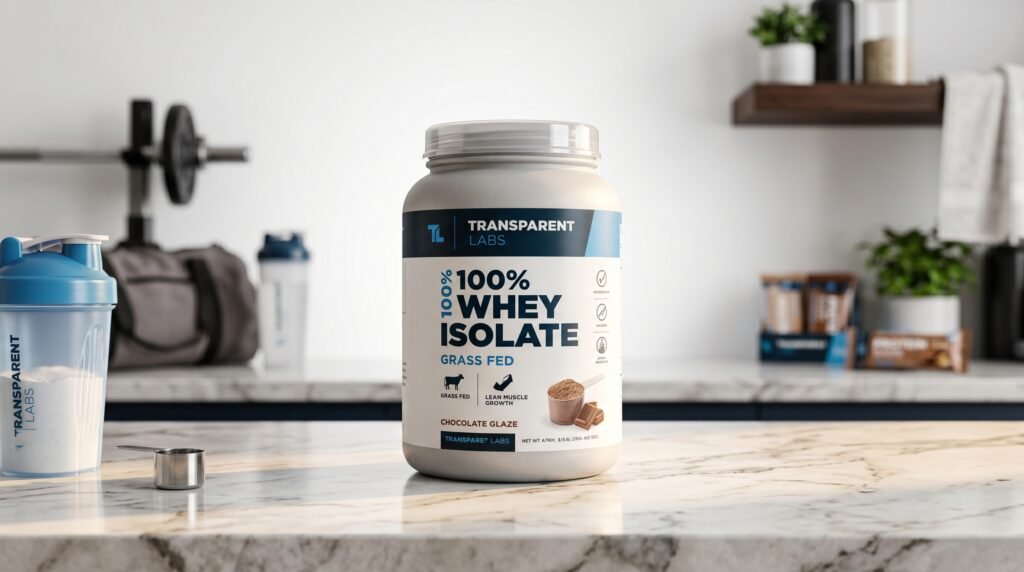
Transparent Labs 100% Grass-Fed Whey Protein Isolate is the premium option for men who prioritize ingredient quality over price. 28g of protein per serving from 100% grass-fed, hormone-free American dairy — one of the highest protein-by-weight ratios available. No artificial sweeteners, no food dyes, no preservatives, and Informed Sport certified for quality assurance.
The grass-fed distinction matters for protein powder in a way it doesn’t for creatine — grass-fed whey has a higher CLA and omega-3 content than conventional whey, which may support body composition and inflammation markers over time. At $60 for 30 servings, it’s the most expensive option here — justified for men who want the cleanest possible protein source.
Best for: Men who prioritize clean ingredients, those sensitive to artificial sweeteners, and anyone who wants the highest protein-per-serving ratio available.
Pros: 28g protein per serving, 100% grass-fed hormone-free source, no artificial ingredients, Informed Sport certified, higher CLA content, naturally flavored. Cons: $60/30 servings is significantly more expensive than ON Gold Standard, fewer flavor options, stevia-sweetened taste not for everyone.
Comparison Table
| Supplement | Product | Price/Month | Best For | Rating |
|---|---|---|---|---|
| Creatine | Thorne Creatine | ~$13 | Best quality creatine | 9.5/10 |
| Creatine | ON Creatine | ~$6 | Best budget creatine | 9/10 |
| Protein | ON Gold Standard Whey | ~$35-40 | Best overall protein | 9/10 |
| Protein | Transparent Labs Whey | ~$60 | Best premium protein | 9/10 |
What to Look for When Choosing Between Creatine and Protein Powder
1. Assess your current protein intake first Before buying protein powder, track your actual daily protein for 3-7 days using a free app. If you’re consistently hitting 0.7-1g per pound of bodyweight, protein powder won’t meaningfully improve your results — creatine will. If you’re falling short by 30-50g daily, protein powder addresses a real gap. Most men who think they need protein powder actually need creatine.
2. Training intensity and type Creatine benefits men doing resistance training, sprinting, HIIT, or any high-intensity effort. It produces minimal benefit for steady-state cardio, yoga, or low-intensity activities. If your training consists primarily of moderate-intensity cardio, protein powder is the more relevant supplement. If you lift weights 3+ times per week, creatine almost certainly helps more.
3. Budget allocation Creatine monohydrate at $0.18-0.44 per day is one of the most cost-effective supplements in existence — the clinical evidence per dollar spent is unmatched. Quality protein powder at $1.10-2.00 per serving is functional but more expensive. If budget is limited, buy cheap creatine first and hit your protein targets from whole foods.
4. Third-party testing certification For any supplement you take daily, independent testing verification matters. NSF Certified for Sport (Thorne) is the gold standard. Informed Sport certification (Transparent Labs) is rigorous. Banned substance tested claims without a named certifying organization provide weaker assurance. Check the specific certification, not just the presence of a claim.
5. Timeline expectations Creatine takes 3-4 weeks of daily loading at maintenance dose to saturate muscle stores — you won’t feel it in the first week. Protein powder works within the same meal — amino acids are available for muscle protein synthesis within 1-2 hours of consumption. Set realistic timelines: creatine benefits accumulate over months, protein powder benefits are immediate but only if you were deficient.
FAQ
Should I take creatine or protein powder first as a beginner?
If you’re eating a reasonably protein-rich diet, start with creatine. The performance enhancement from increased phosphocreatine stores is almost universal — nearly every man who lifts weights and takes creatine consistently for 4 weeks notices improved rep counts and shorter recovery between sets. Protein powder is more individually variable because its benefit depends entirely on whether you have a protein gap in your diet.
Can I take creatine and protein powder together?
Yes — and this is how most serious lifters use them. Creatine and protein powder work through completely different mechanisms and have no negative interaction. Mixing creatine into a protein shake is a common approach that simplifies compliance. The combination addresses both your energy system (creatine) and your muscle repair substrate (protein), covering the two primary nutritional requirements for resistance training adaptation.
Does creatine cause weight gain?
Creatine causes an increase in intracellular water content — water drawn into muscle cells as part of the phosphocreatine storage mechanism. Most men gain 1-3 lbs on the scale within the first 2 weeks of creatine use. This is not fat. It’s not subcutaneous water retention. It’s water inside muscle cells that makes muscles look fuller and perform better. Long-term creatine users maintain this water as part of normal muscle cell function.
Is protein powder necessary if I eat enough protein from food?
No. Protein powder is a convenient delivery mechanism for protein — it provides nothing that chicken, eggs, Greek yogurt, or cottage cheese don’t provide. If you consistently hit 0.7-1g of protein per pound of bodyweight from whole foods, you don’t need protein powder. Where powder earns its keep is convenience — post-workout when whole food isn’t practical, or during high-protein cutting phases where food volume needs to be low.
Our Final Verdict
The creatine vs protein powder debate resolves clearly once you assess your actual diet. If you’re hitting your protein targets and want to improve gym performance — Thorne Creatine is where to start, with Optimum Nutrition Creatine as the budget alternative. If you’re consistently falling short of your daily protein needs — Optimum Nutrition Gold Standard Whey covers the gap reliably. For men who want both and the cleanest possible ingredients, Transparent Labs Whey Isolate alongside any quality creatine is the optimal stack. Track your protein for a week first — then make the call. Check current pricing on Amazon for all four products before buying.