
This article contains affiliate links. We may earn a commission if you buy through our links, at no extra cost to you.
Best Sleep Tracker for Men in 2026
Most men have no idea how badly they actually sleep. They wake up tired, blame stress or a bad mattress, and move on. The best sleep tracker for men changes that by turning subjective “I slept badly” into objective data — REM duration, deep sleep percentage, HRV trends, and recovery scores that tell you not just that you slept poorly but why, and what to do about it. For men managing testosterone, energy, body composition, or athletic performance, sleep quality is the highest-leverage variable most are flying blind on.
After researching and comparing the leading sleep trackers across accuracy, wearability, and data depth specifically relevant to male health — here is what actually works in 2026.
This guide is for men who want actionable sleep data, not just a step count with a bedtime graph attached.
Quick Answer: The Oura Ring Gen 4 is the best sleep tracker for men who want accurate, comprehensive sleep and recovery data in a format that doesn’t feel like wearing a smartwatch to bed. For men who want sleep tracking integrated into a full fitness wearable, the Garmin Fenix 8 delivers the most complete athletic and sleep data package available in a watch form factor.
Why Sleep Tracking Matters Specifically for Men
The connection between sleep quality and male hormonal health is direct and well-documented — and it’s the reason sleep tracking is more actionable for men than most wellness interventions.
Approximately 70% of daily testosterone production occurs during sleep, concentrated during slow-wave (deep) sleep stages. Studies show that men sleeping 5 hours per night have testosterone levels equivalent to men 10–15 years older than their biological age. A single week of sleep restriction to 5 hours reduces testosterone by 10–15% in healthy young men — a decline that takes weeks of adequate sleep to fully recover.
HRV — heart rate variability — is the metric that most directly measures recovery readiness and autonomic nervous system balance. Men with chronically low HRV show elevated cortisol, impaired glucose metabolism, and reduced training adaptation. Sleep is the primary driver of HRV recovery — what happens during sleep determines whether tomorrow’s HRV is high (recovered, ready to train and perform) or low (stressed, cortisol-elevated, testosterone-suppressed).
The counterintuitive point: tracking sleep often improves it, not just by identifying problems but by creating accountability. Men who see their deep sleep percentage drop to 8% after drinking alcohol consistently report changing their drinking timing — not because they were told to, but because the data made the consequence concrete. Objective data changes behavior in ways that general advice doesn’t.
For men building a complete approach to testosterone and recovery around sleep, see our guide on how to increase testosterone naturally — sleep optimization is the highest single-variable intervention for natural testosterone support.
What Sleep Trackers Actually Measure — and What They Can’t
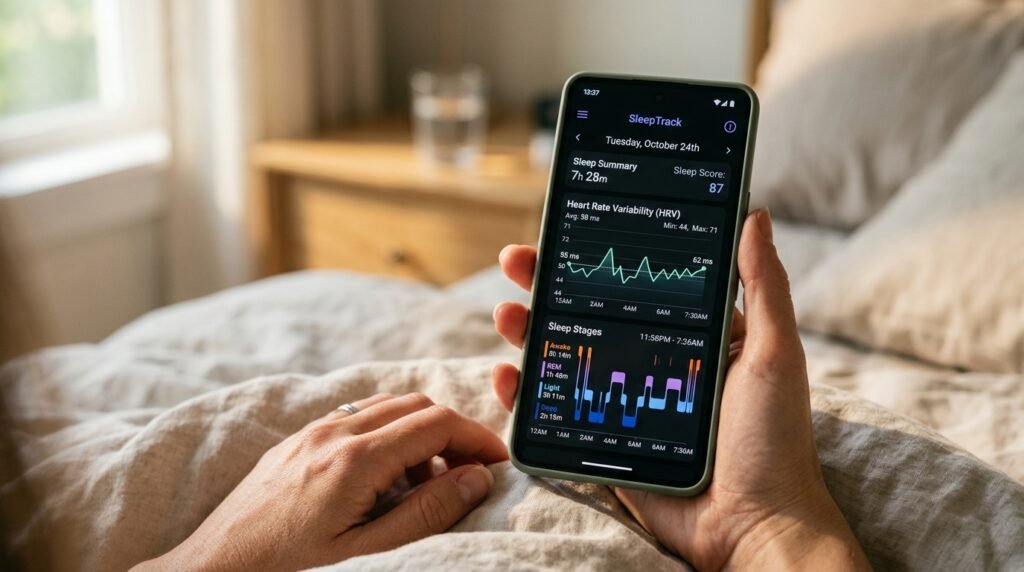
Understanding the technology behind sleep trackers sets accurate expectations before spending $300–500 on a device.
All consumer sleep trackers use photoplethysmography (PPG) — an optical sensor that measures blood volume changes through the skin to estimate heart rate and HRV. From those patterns, algorithms infer sleep stages: light, deep (slow-wave), and REM. None of these devices use EEG — the gold standard for clinical sleep stage detection — meaning sleep stage accuracy is estimated rather than measured directly.
The honest assessment: a 2023 study comparing consumer wearables to polysomnography found that Oura Ring, Garmin, and Apple Watch all detect total sleep time accurately within 10–15 minutes, but sleep stage breakdown is accurate to roughly 70–80% at the population level. Any given night’s stage breakdown may be off — trends over weeks are reliable.
What trackers reliably measure: total sleep duration, sleep timing consistency, resting heart rate trends, HRV trends, respiratory rate, blood oxygen. What trackers estimate: sleep stage breakdown. What they can’t measure: sleep quality subjectives or cortisol directly.
The practical implication: use sleep tracker data for trends over weeks rather than obsessing over a single night’s stage reading. Consistent patterns tell you something meaningful — one anomalous night usually doesn’t.
For men using sleep data to guide supplement choices, see our guide on best supplements for sleep for men — tracker data showing consistently low deep sleep or poor HRV recovery points to specific intervention categories.
The 5 Best Sleep Trackers for Men in 2026
1. Oura Ring Gen 4 — Best Overall (~$349 + $5.99/month)
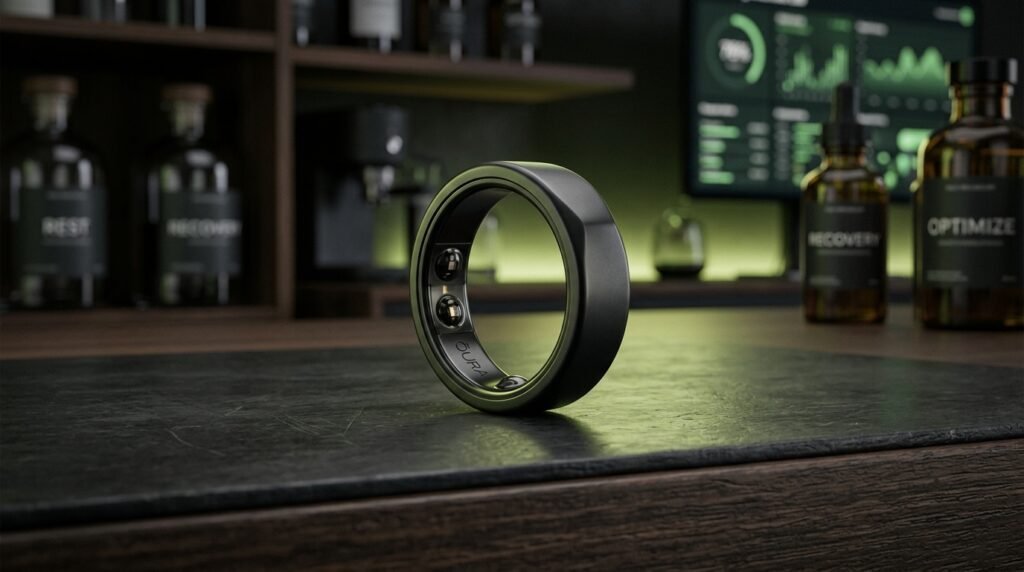
Oura Ring Gen 4 is the sleep tracker that produces the most accurate and comprehensive sleep data in the most wearable form factor available. A titanium ring worn on the finger — where arterial blood flow is stronger and more consistent than the wrist — collects heart rate, HRV, skin temperature, respiratory rate, and movement data across the night. The finger sensor placement produces HRV and heart rate accuracy that independent studies consistently rank above wrist-based devices.
The readiness score synthesizes overnight HRV, resting heart rate, sleep duration, sleep timing, and temperature deviation into a single daily number that answers the practical question men most need answered: how recovered am I today? A readiness score of 85+ means train hard. Below 60 means something physiologically significant happened overnight — illness, stress, alcohol, or inadequate recovery — and pushing hard today will compound the deficit.
The Gen 4 adds improved heart rate accuracy during sleep, better motion detection algorithms, and daytime HRV tracking. The $5.99/month membership unlocks full trend analysis and personalized recommendations — without it the hardware data is significantly less useful.
Pros: Best-in-class HRV accuracy from finger placement, comprehensive recovery scoring, titanium build, no display means no light emission disrupting sleep, 7-day battery life, temperature trend tracking. Cons: $5.99/month membership required for full functionality, ring sizing requires getting right (Oura provides sizing kit), not ideal for men who don’t like wearing jewelry.
2. Garmin Fenix 8 — Best for Athletic Men (~$800–900)
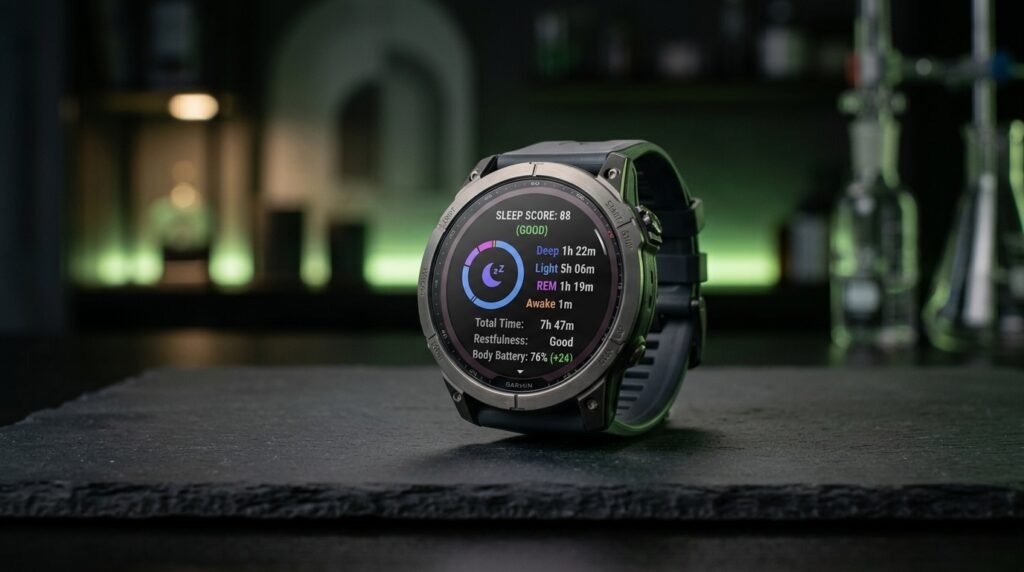
Garmin Fenix 8 is the recommendation for men who train seriously and want sleep tracking fully integrated into athletic performance monitoring — training load, recovery, sleep, HRV status, and readiness all in one platform with no separate app ecosystem to manage.
Garmin’s Body Battery metric synthesizes HRV, stress, sleep quality, and activity into a 0–100 daily energy score specifically calibrated for athletic use — it depletes with training and stress and recovers with sleep and rest. For men whose primary use of sleep data is optimizing training decisions — when to push, when to recover, when to deload — Body Battery provides the most directly actionable output of any sleep tracker on this list.
Sleep tracking accuracy on the Fenix 8 is competitive with Oura Ring for total sleep duration and HRV trends. The Advanced Sleep Monitoring feature detects sleep stages, breathing patterns, and SpO2 with continuous overnight monitoring. No subscription required.
At $800–900, the justification is the complete athletic ecosystem — GPS, training load management, performance metrics, and sleep recovery — rather than sleep tracking alone. If you only need sleep tracking, there are better value options. If you need a complete athletic wearable that also tracks sleep excellently, the Fenix 8 is the right call.
Pros: Best athletic performance integration, Body Battery for training decision-making, advanced sleep monitoring with SpO2, GPS and full sports tracking, rugged build, no subscription. Cons: $800–900 price point, bulky watch form factor less comfortable for sleep than a ring, overkill for men who only want sleep data.
3. Whoop 4.0 — Best for Recovery-Focused Men (~$0 hardware + $30/month)
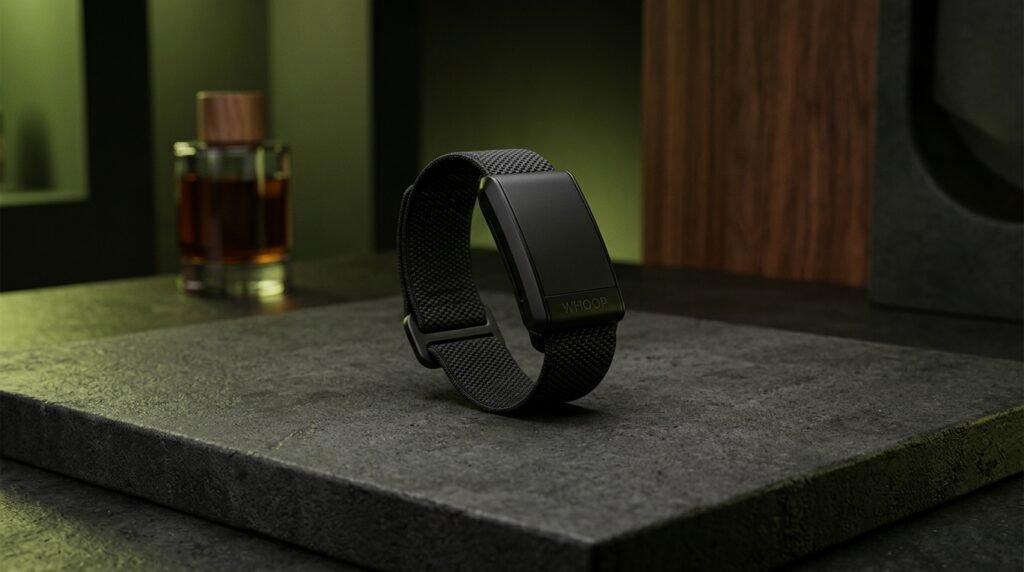
The Whoop 4.0 has no display, no step counter, no GPS, and no smartwatch features. It does one thing: measure strain, recovery, and sleep with more granularity than almost any other consumer device, then communicate that data through a coaching interface that tells you what to do with it.
The strain and recovery model is Whoop’s defining feature. Every day, Whoop calculates HRV, resting heart rate, sleep performance, and respiratory rate into a recovery score (0–100%), then tracks cardiovascular strain accumulated through the day. The daily recommendation — how much strain is appropriate given your recovery — is the most practical output for men balancing training, stress, and sleep.
Whoop’s sleep coaching is the most detailed on this list — it calculates how much sleep you need based on recent strain levels and HRV trends, setting a personalized nightly target. Men with variable schedules and training loads find this adaptive target more useful than a fixed 8-hour recommendation. The $30/month subscription is the significant ongoing cost — $360/year indefinitely.
Pros: Most detailed recovery and strain analytics, personalized sleep need calculation, no display means no light emission, continuous HRV monitoring, no hardware purchase required.
Cons: $30/month is expensive ongoing, no Amazon availability (order at whoop.com), no GPS or smartwatch features, subscription model creates lock-in.
4. Apple Watch Series 10 — Best for iPhone Users (~$399–499)
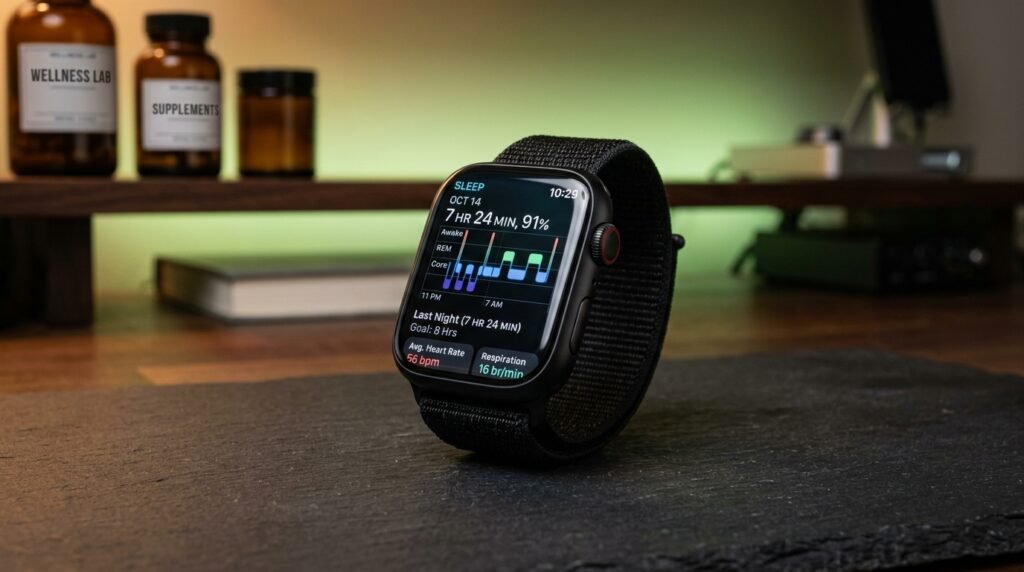
The Apple Watch Series 10 is the sleep tracker recommendation for men already in the Apple ecosystem who don’t want to manage a separate device. Sleep stages, HRV monitoring, SpO2, and temperature sensing — all integrated into a device most iPhone users already carry through their day.
Apple’s sleep tracking has improved significantly with watchOS 11 — sleep stages, HRV during sleep, respiratory rate, and wrist temperature deviation are all tracked and displayed in the Health app. The Vitals feature flags when multiple metrics deviate from baseline simultaneously, a practical early warning for illness or overtraining.
The limitation for serious sleep data: Apple’s HRV measurements during sleep are interval-sampled rather than continuous, which reduces precision compared to Oura or Whoop. Requires nightly charging for most users, creating a decision point about whether to charge or wear for sleep tracking. Available at Apple Store and major retailers — not typically on Amazon at standard pricing.
Pros: Best ecosystem integration for iPhone users, no subscription, full smartwatch features alongside sleep tracking, Vitals feature for baseline deviation detection. Cons: Interval HRV sampling less precise than continuous monitoring devices, nightly charging disrupts sleep consistency, less sophisticated than dedicated sleep trackers.
5. Fitbit Charge 6 — Best Budget Option (~$130–160)
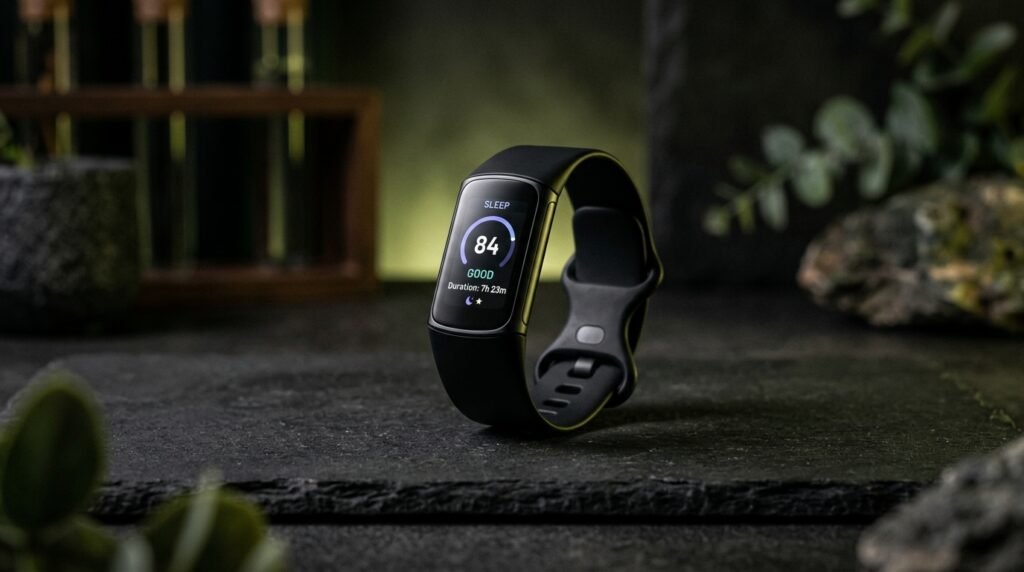
Fitbit Charge 6 is the entry point for men who want meaningful sleep data without committing to a $300+ device or a costly subscription. Sleep stages, SpO2, HRV, skin temperature variation, and a Daily Readiness Score — the metric that most directly competes with Oura’s readiness and Whoop’s recovery — all for $130–160 with Google Fitbit Premium at $10/month for full analysis.
The Daily Readiness Score requires Premium, but raw sleep data — total duration, stages, HRV, and SpO2 — is available without subscription. For men who want sleep data without a coaching layer, the free tier provides meaningful information. For men who want the readiness score and trend analysis, $10/month is the lowest subscription cost on this list.
Fitbit’s sleep stage algorithm is less accurate than Oura’s according to independent comparisons — particularly for REM detection — but total sleep duration accuracy is competitive and HRV trends are reliable for week-over-week comparison. The right starting point before committing to a premium device.
Pros: Most affordable entry point, no subscription required for basic data, Daily Readiness Score with $10/month Premium, 7-day battery life, Google ecosystem integration. Cons: Sleep stage accuracy below premium alternatives, less sophisticated HRV analysis than Oura or Whoop, requires Premium for readiness scoring.
Comparison Table
| Product | Price | Subscription | Best For | Rating |
|---|---|---|---|---|
| Oura Ring Gen 4 | ~$349 | $5.99/month | Best overall sleep accuracy | 9.5/10 |
| Garmin Fenix 8 | ~$850 | None | Best for athletic men | 9/10 |
| Whoop 4.0 | ~$0 hardware | $30/month | Best recovery coaching | 8.5/10 |
| Apple Watch Series 10 | ~$449 | None | Best for iPhone users | 8/10 |
| Fitbit Charge 6 | ~$145 | $10/month optional | Best budget option | 7.5/10 |
What to Look for When Choosing a Sleep Tracker for Men
1. HRV measurement methodology Continuous overnight HRV monitoring produces more accurate recovery assessment than interval sampling. Oura Ring and Whoop both measure HRV continuously throughout sleep. Apple Watch samples at intervals. For men using HRV as the primary recovery metric — particularly athletes — continuous measurement is worth prioritizing. For men primarily interested in total sleep duration and general trends, interval sampling is adequate.
2. Form factor for sleep comfort A sleep tracker only produces data when you wear it — and comfort determines compliance. Ring form factors (Oura) are less intrusive than watches and don’t emit display light during sleep. Watch form factors add functionality but require comfortable all-night wear. Wristband form factors (Whoop, Fitbit) sit between the two. Choose the form factor you’ll actually wear every night rather than the most feature-rich device you’ll remove after a week.
3. Subscription model sustainability Whoop at $30/month costs $360/year indefinitely. Oura at $5.99/month costs $72/year. Fitbit Premium at $10/month costs $120/year. Garmin and Apple have no mandatory subscription. Over three years, these differences compound significantly — a Whoop subscription costs more than the Oura Ring hardware in year two alone. Factor ongoing cost into the total cost of ownership before choosing.
4. Ecosystem integration with other health data Men who track fitness, nutrition, or other health metrics benefit from sleep data that integrates with those systems. Garmin integrates sleep with training load natively. Apple Watch feeds into Apple Health alongside nutrition apps. Oura integrates with third-party apps but is a standalone ecosystem primarily. Choose based on where you want your health data to live.
5. Battery life and charging routine Nightly charging creates a decision point each night — charge or wear for sleep tracking. Devices with 7-day battery life (Oura, Fitbit Charge 6) eliminate this friction by charging during a morning shower or workday. For consistent sleep data, longer battery life produces better compliance than more features requiring nightly charging.
FAQ
How accurate are consumer sleep trackers for sleep stages?
Consumer sleep trackers accurately measure total sleep duration within 10–15 minutes compared to clinical polysomnography. Sleep stage breakdown — how much deep, REM, and light sleep — is accurate to approximately 70–80% at the population level, meaning weekly trends are reliable but individual nights may vary. Use sleep stage data for trends over weeks rather than obsessing over individual night readings.
Do sleep trackers affect sleep quality?
For most men, no — the sensors are passive and the devices are designed to be unobtrusive. A small subset of men experience “orthosomnia” — anxiety about sleep tracker data that paradoxically worsens sleep quality. If checking your sleep score first thing in the morning consistently increases stress rather than providing useful information, check data weekly rather than daily.
Can a sleep tracker help with testosterone levels?
Indirectly, yes. Sleep trackers make sleep quality objective and actionable — men who can see they’re averaging 45 minutes of deep sleep rather than 90 minutes have a concrete target to improve. Since approximately 70% of daily testosterone production occurs during deep sleep, improvements guided by tracker data can meaningfully support testosterone levels over time. The tracker doesn’t improve testosterone directly — it provides data that motivates behavioral changes that do.
Is the Oura Ring worth the subscription cost?
The hardware data without subscription is significantly limited — you get basic sleep metrics but lose the readiness scoring, trend analysis, and personalized recommendations that make Oura’s data actionable. At $5.99/month ($72/year), the subscription adds meaningful analytical value to a $349 hardware investment. Compared to Whoop’s $30/month for a similar coaching model, Oura’s subscription cost is the most reasonable in the premium sleep tracker category.
Our Final Verdict
The best sleep tracker for men in 2026 is the Oura Ring Gen 4 for most men — the most accurate consumer sleep and HRV data available, the most comfortable all-night form factor, and a readiness scoring system that makes data immediately actionable. Athletic men with serious training programs should consider the Garmin Fenix 8 for its native integration of sleep recovery with training load management.
Budget-conscious men starting their sleep tracking journey should begin with the Fitbit Charge 6 before committing to a premium device. Track for 30 days before drawing conclusions — sleep data requires baseline establishment before it becomes genuinely useful. Check current pricing on Amazon for all options in this guide.