
This article contains affiliate links. We may earn a commission if you buy through our links, at no extra cost to you.
Best Zinc Supplement for Testosterone in 2026
Zinc is one of the few minerals with direct, documented involvement in testosterone production — and one of the most commonly deficient nutrients in men eating a standard Western diet. The connection isn’t theoretical. Zinc is required for the enzymatic conversion of cholesterol into testosterone in Leydig cells, and studies consistently show that zinc-deficient men have measurably lower testosterone levels that recover when zinc status is restored. The best zinc supplement for testosterone isn’t necessarily the highest dose or the most expensive option — it’s the right form, at the right dose, taken correctly.
After researching the clinical literature on zinc and testosterone and comparing the available supplement options across form, dose, and third-party testing standards — here is what actually works in 2026.
This guide is for men who want to address zinc deficiency as part of a legitimate testosterone support strategy, not for men chasing a quick hormonal fix.
Quick Answer
Thorne Zinc Bisglycinate at 15-30mg daily is the best zinc supplement for testosterone support for most men — the bisglycinate chelate absorbs significantly better than zinc oxide or zinc sulfate, causes minimal digestive discomfort, and comes from a manufacturer with pharmaceutical-grade testing standards. For men who want zinc combined with magnesium and B6 in the classic ZMA formulation, ZMA JYM covers all three nutrients at clinical doses in one capsule.
How Zinc Actually Affects Testosterone
The zinc-testosterone relationship is real but frequently overstated in supplement marketing — understanding the mechanism helps you set accurate expectations before spending money.
Zinc functions as a cofactor in multiple steps of testosterone biosynthesis. The Leydig cells in the testes require zinc to produce the enzymes that convert cholesterol into testosterone precursors. Zinc also inhibits aromatase — the enzyme that converts testosterone into estradiol — which means adequate zinc status helps maintain the testosterone-to-estrogen ratio that determines much of what men experience as masculine hormonal function: energy, libido, muscle retention, mood stability.
The critical distinction is between zinc deficiency and zinc sufficiency. In zinc-deficient men, supplementation restores testosterone toward normal levels — studies show improvements of 20-50% in severely deficient men over 6 months of supplementation. In men who are already zinc-sufficient, additional zinc supplementation does not raise testosterone further. This is the fundamental point most zinc-for-testosterone marketing obscures: zinc works for testosterone by preventing deficiency from suppressing it, not by pushing testosterone above baseline in replete men.
The counterintuitive implication: if you eat red meat, shellfish, and legumes regularly and don’t have conditions that impair zinc absorption, you may already have adequate zinc status and see minimal testosterone response from supplementing. The men who benefit most are those with genuine dietary zinc gaps — vegetarians, heavy alcohol drinkers, men with high sweat losses from intense training, and men eating highly processed diets low in zinc-rich foods.
For a complete picture of dietary and lifestyle factors that support testosterone production beyond supplementation, see our guide on how to increase testosterone naturally — zinc is one piece of a larger hormonal health framework.
Zinc Forms — Why the Molecule Attached to Zinc Determines Whether It Works
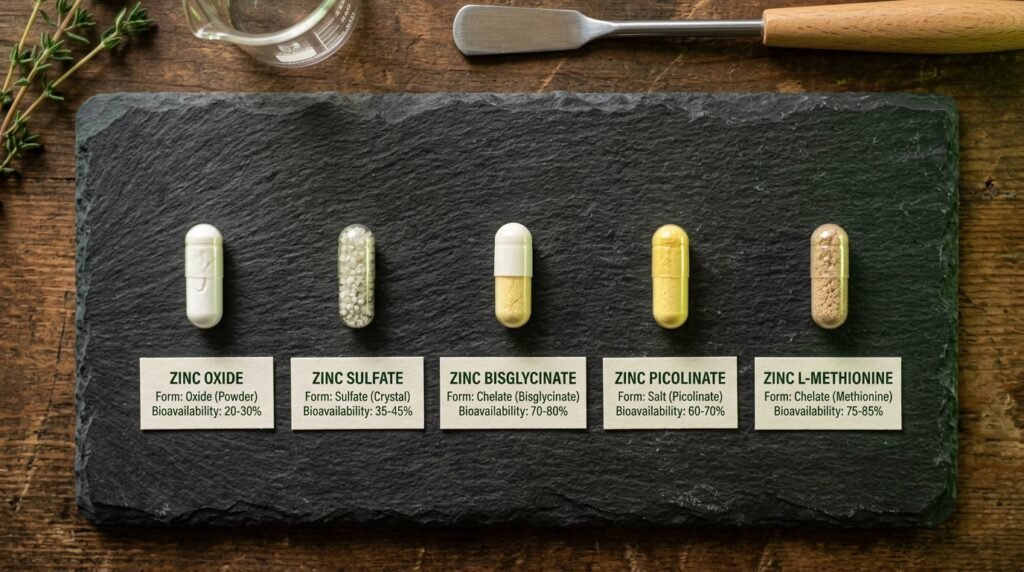
This is the most important variable in zinc supplement selection and the one most buyers get wrong by defaulting to the cheapest option.
Zinc oxide is the form used in most budget zinc supplements and many multivitamins. Lowest absorption rate — approximately 50% bioavailability compared to chelated forms. Also causes more nausea and digestive discomfort than chelated zinc, particularly on an empty stomach.
Zinc sulfate absorbs better than oxide — approximately 60-70% bioavailability — but still causes more GI irritation than chelated forms. It’s the form used in older clinical studies on zinc deficiency, which is why it appears in research contexts despite being outperformed by newer chelated options.
Zinc bisglycinate is zinc chelated to two glycine molecules, absorbed through amino acid transport pathways. Bioavailability is approximately 43% higher than zinc oxide in head-to-head absorption studies. Causes significantly less nausea and GI discomfort — suitable for daily use even on an empty stomach for most men.
Zinc picolinate chelates zinc to picolinic acid. Absorption is comparable to bisglycinate in most studies. Some research suggests slightly superior uptake in men with impaired zinc absorption, making it a relevant alternative for men with digestive conditions.
Zinc L-monomethionine is the form used in ZMA formulations — zinc bonded to the L-form of methionine. Comparable bioavailability to bisglycinate and the clinically studied form in ZMA research on athletes.
For men building a broader hormonal support stack around zinc, see our guide on the best magnesium supplement for men — zinc and magnesium work synergistically in testosterone production and are often taken together.
Dosing — How Much Zinc Actually Supports Testosterone
The RDA for zinc in adult men is 11mg per day. Most zinc-sufficient men eating a varied diet get 8-12mg from food. The supplementation question is how much additional zinc moves the needle for testosterone support.
Clinical studies showing testosterone improvement in zinc-deficient men used doses of 25-45mg elemental zinc daily. The tolerable upper intake level for zinc is 40mg per day from all sources combined — chronic supplementation above that level depletes copper, an antagonist mineral that zinc competes with for absorption.
The practical daily supplementation range for most men is 15-30mg elemental zinc from a supplement, assuming 8-12mg from diet. Men who eat red meat 4-5 times per week are likely in the lower need tier — 15mg supplemental zinc may be sufficient. Vegetarians, men with high training volumes and sweat losses, and men who drink alcohol regularly are in the higher need tier where 25-30mg supplemental zinc is more appropriate.
Taking zinc with copper at a 15:1 ratio — 30mg zinc with 2mg copper — prevents the copper depletion that high-dose zinc supplementation causes.
The 5 Best Zinc Supplements for Testosterone in 2026
1. Thorne Zinc Bisglycinate 15mg — Best Overall (~$15-18/60 servings)
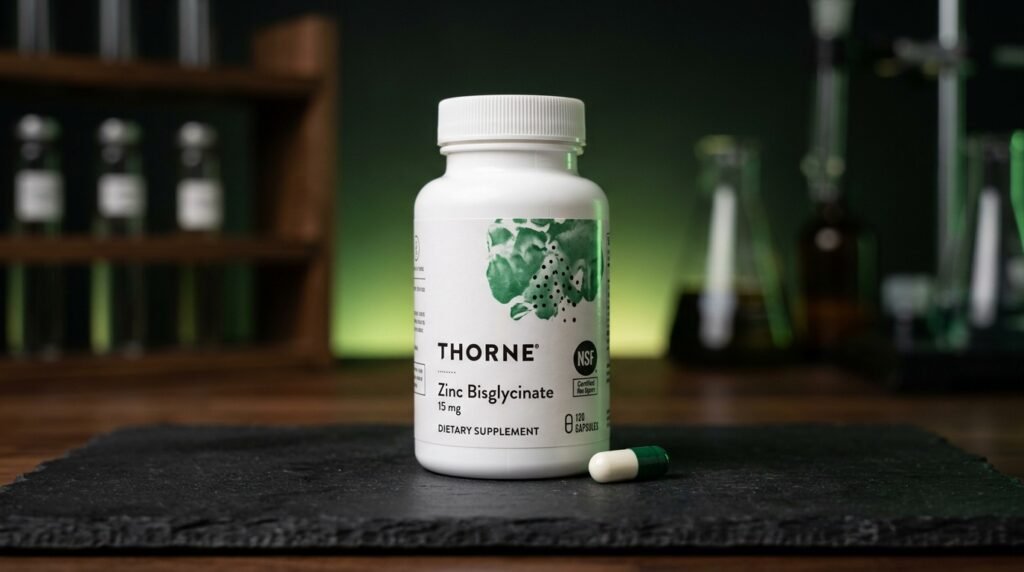
Thorne Zinc Bisglycinate at 15mg per capsule is the clean, precise zinc supplement for most men as the starting point for testosterone support. Pharmaceutical-grade manufacturing, NSF certification, bisglycinate chelate for maximum absorption and minimum GI irritation, and a dose that fits cleanly into the supplementation range without approaching the upper intake limit from a single capsule.
Thorne’s manufacturing standard means the 15mg on the label reflects 15mg of actual elemental zinc — not 15mg of zinc compound containing a fraction of that as elemental zinc. At $15-18 for 60 capsules, it’s $0.25-0.30 per day. For men who want 30mg daily, two capsules keeps the cost under $0.60 per day.
Real-world scenario: a 34-year-old software developer eating primarily processed foods with minimal red meat adds one Thorne Zinc Bisglycinate capsule daily with breakfast — within 6-8 weeks of consistent use he notices improved morning energy and libido recovery consistent with zinc status normalization.
Pros: Pharmaceutical-grade manufacturing, NSF certified, bisglycinate form for superior absorption, 15mg elemental zinc per capsule, minimal GI side effects, affordable, clean label. Cons: 15mg per capsule requires two capsules for higher dose protocols, no copper included to offset depletion at higher doses, unflavored capsule only.
2. ZMA JYM — Best for Sleep and Testosterone Together (~$25-30/90 servings)
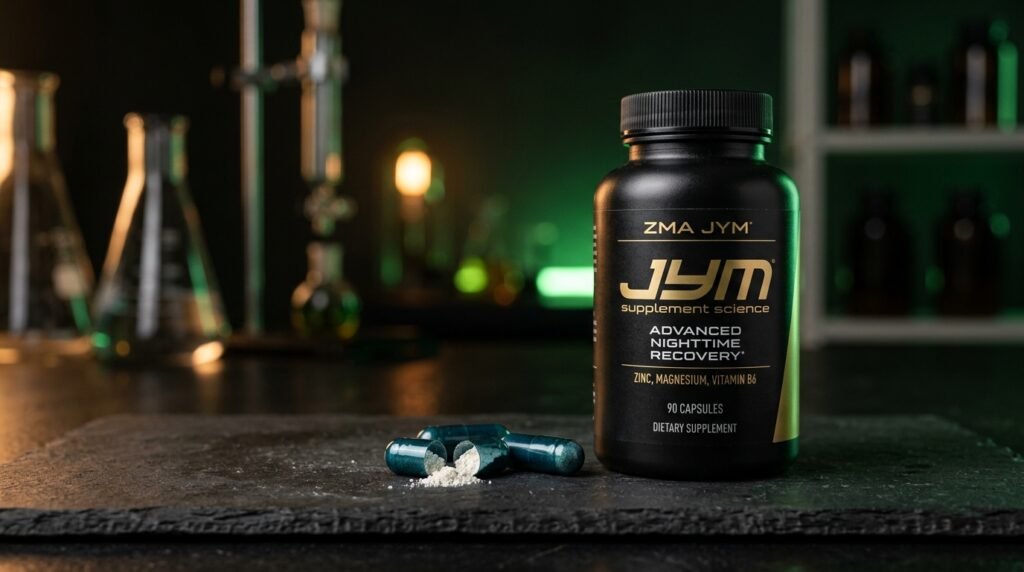
ZMA JYM combines zinc mono-L-methionine (30mg), magnesium aspartate (450mg), and vitamin B6 (10.5mg) plus BioPerine for enhanced absorption — the classic ZMA formulation with the most research support among multi-mineral testosterone stacks. Critically, ZMA JYM uses only the L-form of zinc monomethionine — the form that’s readily absorbed and used by the body. Some competing ZMA products use a mixture of L and D forms, where the D form actually inhibits absorption of the L form.
The practical scenario where ZMA specifically outperforms standalone zinc: men with high training volumes who sweat heavily and have marginal zinc and magnesium status simultaneously. Replacing both minerals in one nightly product — best taken 30-60 minutes before sleep — addresses the dual deficiency without managing two separate products.
Pros: Three-nutrient formula covers zinc, magnesium, and B6 simultaneously, L-form only zinc monomethionine with clinical research backing, BioPerine for enhanced absorption, supports both testosterone and sleep quality, 90 servings per bottle. Cons: 30mg zinc at the upper intake limit requires monitoring total dietary zinc, magnesium aspartate is a less optimal form than glycinate for sleep specifically, B6 at 10.5mg is safe but some men prefer lower B6 intake.
3. NOW Foods Zinc Glycinate — Best Budget Bisglycinate (~$12-15/120 servings)
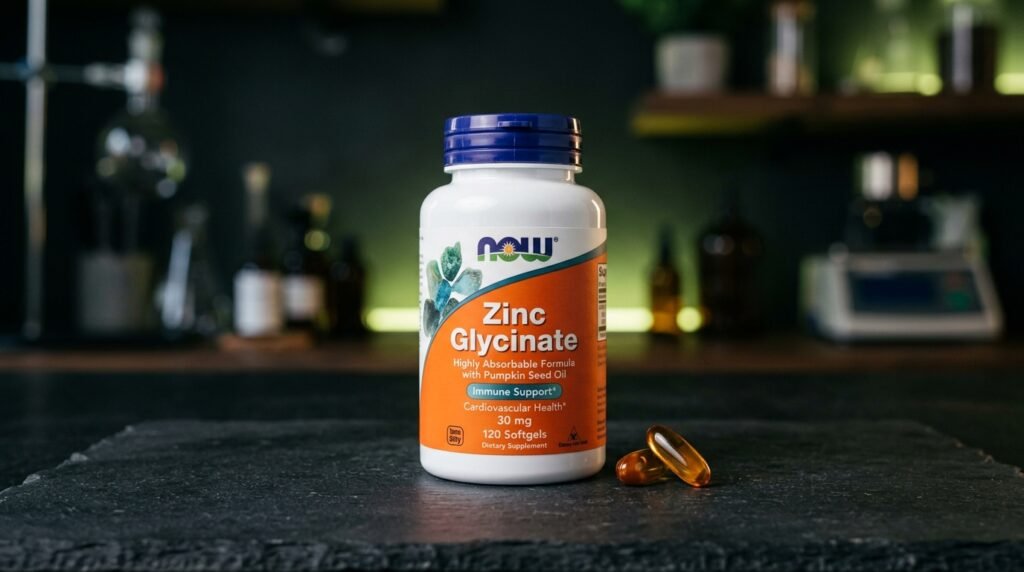
NOW Foods Zinc Glycinate delivers 30mg elemental zinc as zinc bisglycinate chelate at $0.10-0.12 per serving — the most affordable chelated zinc option from a brand with a credible quality reputation. NOW Foods holds GMP certification and regularly passes independent third-party testing through organizations like Labdoor, where their zinc products consistently score well on label accuracy and heavy metal safety.
At 30mg per capsule, it’s at the upper end of the recommended daily supplementation range for men with marginal dietary zinc intake. Men eating red meat regularly would be better served by Thorne’s 15mg option. Men with documented higher needs — vegetarians, heavy trainers, heavy drinkers — can use the 30mg capsule without concern at standard dietary zinc intake.
The value proposition: bisglycinate absorption quality at roughly half the per-serving cost of Thorne. The tradeoff is GMP certification rather than NSF certification — a meaningful but not disqualifying difference for most men.
Pros: Bisglycinate form for superior absorption, 30mg per capsule, GMP certified, excellent value at $0.10-0.12 per serving, 120 capsules per bottle, widely available. Cons: GMP certification rather than NSF, 30mg may be too high for men with adequate dietary zinc, no copper included at this dose level.
4. Jarrow Formulas Zinc Balance — Best Zinc + Copper Combination (~$10-12/100 servings)
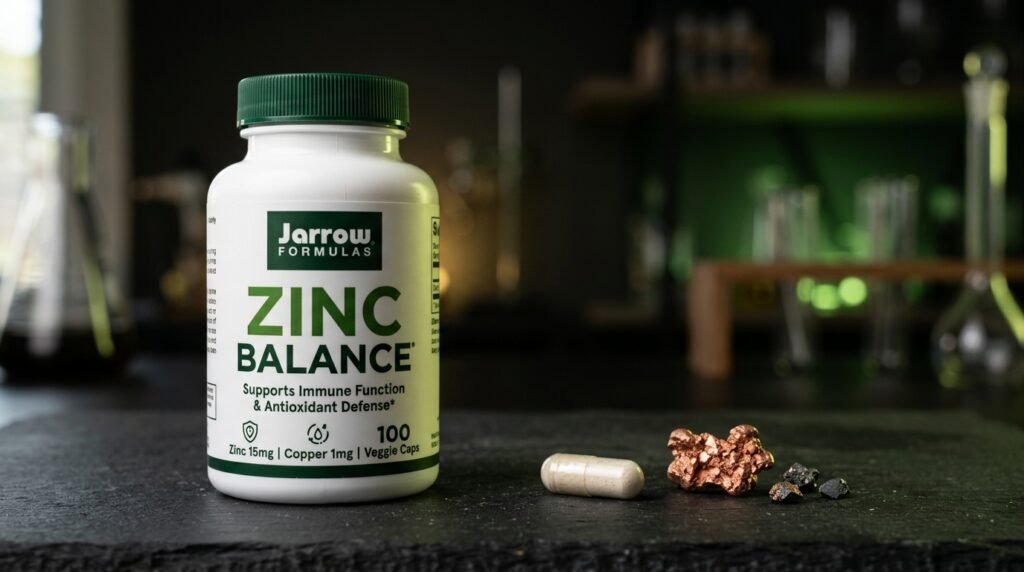
Jarrow Formulas Zinc Balance addresses the copper depletion problem directly — 15mg zinc as zinc L-methionine and 1mg copper as copper gluconate in a 15:1 ratio that maintains zinc-copper balance during supplementation. For men planning to take zinc daily for 3+ months, maintaining copper status is genuinely important and Zinc Balance handles it without requiring a separate copper supplement.
At $10-12 for 100 servings, it’s the most cost-effective option on this list and the most complete formula for men who plan to make zinc a permanent daily supplement rather than a short-term correction. Vegan, gluten-free, dairy-free, and free of all nine major allergens.
What most reviews won’t tell you: the zinc L-methionine in Zinc Balance allows zinc absorption even when phytic acid from vegetables and grains is present in the gut — a meaningful advantage for men who take zinc with food high in plant-based meals.
Pros: Zinc-copper balance addresses depletion concern at higher doses, zinc L-methionine with comparable bioavailability to bisglycinate, excellent value, 100 servings per bottle, thoughtful formulation for long-term use, vegan and allergen-free. Cons: 15mg zinc may be insufficient for men with significant deficiency who need 25-30mg, L-methionine form has slightly less research than bisglycinate specifically, Jarrow’s testing standard below Thorne.
5. Thorne Zinc Picolinate 30mg — Best for Impaired Absorption (~$22-28/60 servings)
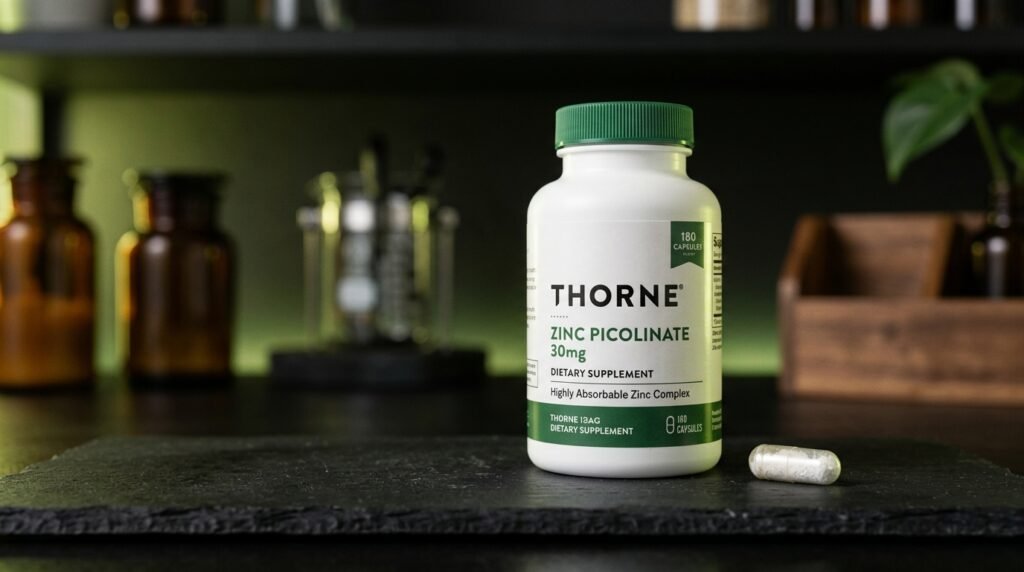
Thorne Zinc Picolinate is the recommendation for men with digestive conditions — IBS, Crohn’s, celiac, or any condition that affects mineral absorption — who need a zinc form that maximizes uptake through an alternative absorption pathway. Picolinic acid, derived from tryptophan metabolism, creates a chelate that some research suggests produces superior uptake specifically in men with compromised digestive function compared to glycinate chelates.
NSF certified, Thorne pharmaceutical manufacturing standard, 30mg elemental zinc per capsule. For men with normal digestive function, Thorne Zinc Bisglycinate at 15mg is the better starting point — picolinate’s absorption advantage is most relevant in the impaired absorption context where it was studied.
Real-world scenario: a 40-year-old with Crohn’s disease who has struggled to maintain zinc status despite dietary intake chooses Thorne Zinc Picolinate — the picolinate form’s resistance to interference from digestive inflammation makes it the more reliable form for this specific population.
Pros: NSF certified, Thorne manufacturing standards, picolinate form particularly suited to impaired absorption conditions, 30mg per capsule, clean formula without unnecessary additives. Cons: 30mg per capsule approaches upper intake limit when combined with dietary zinc, picolinate advantage over bisglycinate is modest for men with normal digestion, slightly higher price than bisglycinate option.
Comparison Table
| Product | Price/Serving | Zinc Form | Best For | Rating |
|---|---|---|---|---|
| Thorne Zinc Bisglycinate | ~$0.28 | Bisglycinate | Best overall quality | 9.5/10 |
| ZMA JYM | ~$0.30 | L-monomethionine | Sleep + testosterone stack | 9/10 |
| NOW Foods Zinc Glycinate | ~$0.11 | Bisglycinate | Best budget bisglycinate | 8.5/10 |
| Jarrow Zinc Balance | ~$0.11 | L-methionine + copper | Long-term daily use | 8.5/10 |
| Thorne Zinc Picolinate 30mg | ~$0.40 | Picolinate | Impaired absorption | 8/10 |
What to Look for When Choosing a Zinc Supplement for Testosterone
1. Form first — always check the chelate Zinc bisglycinate, zinc picolinate, and zinc L-monomethionine all outperform zinc oxide and zinc sulfate on absorption. The form is listed on the supplement facts panel — look for the word “bisglycinate,” “picolinate,” or “monomethionine” after “zinc.” If it just says “zinc” or “zinc oxide,” put it back.
2. Elemental zinc dose versus compound weight Supplement labels sometimes list the weight of the full zinc compound rather than the elemental zinc content. Always look for “elemental zinc” on the label — quality brands specify it. If only the compound weight is listed, the actual zinc delivery is significantly lower than it appears.
3. Total daily zinc from all sources Add your dietary zinc intake to your supplemental zinc before choosing a dose. A man eating red meat 3-4 times per week may already get 15-20mg from diet and needs only 10-15mg supplemental zinc to reach optimal status. Exceeding 40mg total daily intake regularly depletes copper and can cause nausea, headaches, and immune suppression.
4. Copper balance for long-term supplementation High-dose zinc supplementation — above 25mg daily — consistently reduces copper absorption over time. Men taking zinc daily for more than 8-12 weeks should either choose a zinc-copper combination product like Jarrow Zinc Balance or add 1-2mg copper separately.
5. Third-party testing standard for your use case NSF Certified for Sport (Thorne) provides the strongest overall quality assurance. GMP certification (NOW Foods) is adequate for most recreational users. No certification is a meaningful red flag for a supplement you’re taking daily for hormonal support.
FAQ
Does zinc actually increase testosterone levels?
Zinc supplementation increases testosterone in men who are zinc-deficient — studies document 20-50% improvements in severely deficient men over 6 months. In zinc-sufficient men, supplementation does not raise testosterone above baseline. The mechanism is corrective rather than additive: zinc prevents the enzymatic suppression of testosterone production that deficiency causes.
How long before zinc supplementation affects testosterone?
Men with significant zinc deficiency typically see measurable improvements in testosterone markers within 3-6 months of consistent supplementation at 25-45mg daily. Don’t evaluate zinc’s testosterone effect at 2-4 weeks — the relevant assessment window is 90-180 days.
Can I get enough zinc for testosterone from food alone?
Yes, if your diet includes zinc-rich foods consistently. Oysters are the highest zinc food source at 74mg per 3oz. Red meat provides 4-7mg per serving. Pumpkin seeds provide 2-3mg per ounce. Men eating a varied diet including red meat 3-4 times per week generally maintain adequate zinc status without supplementation.
Should I take zinc with food or on an empty stomach?
With food is the standard recommendation for most zinc forms — it reduces nausea and doesn’t meaningfully reduce absorption for chelated forms. Zinc bisglycinate is tolerable on an empty stomach for most men. Avoid taking zinc with coffee, tea, or calcium-rich foods — tannins and calcium both reduce zinc absorption.
Our Final Verdict
The best zinc supplement for testosterone in 2026 is Thorne Zinc Bisglycinate for most men — pharmaceutical manufacturing standards, bisglycinate chelate for maximum absorption, and a 15mg dose that fits cleanly into a daily stack. Men who want to address zinc and magnesium simultaneously should use ZMA JYM before sleep — the L-form zinc monomethionine plus magnesium covers both deficiencies in one nightly product.
Budget-conscious men get bisglycinate quality at the lowest price from NOW Foods Zinc Glycinate. Men making zinc a permanent daily supplement should consider Jarrow Zinc Balance for its built-in copper protection. And men with impaired absorption should choose Thorne Zinc Picolinate for the alternative absorption pathway advantage. Set realistic expectations — zinc supports testosterone by correcting deficiency, not by pushing it above your natural baseline. Check current pricing on Amazon for all five options.