

This article contains affiliate links. We may earn a commission if you buy through our links, at no extra cost to you.
How to Increase Energy Levels Naturally for Men
Chronic low energy in men is almost never a single-cause problem — and that’s why single-solution fixes like drinking more coffee or taking an energy supplement rarely work for more than a few weeks. The men who successfully and sustainably increase their energy levels naturally are the ones who address the actual drivers: cellular energy production, hormonal balance, sleep quality, and nutritional gaps — not the symptoms those problems produce.
After researching the evidence on natural energy optimization for men and comparing what actually produces lasting results versus what just masks fatigue temporarily, here is what works in 2026.
This guide is for men dealing with persistent low energy that doesn’t resolve with rest — not occasional tiredness, but the kind of chronic fatigue that affects work performance, training, mood, and motivation across the entire day.
Quick Answer: The highest-leverage interventions for naturally increasing energy levels in men are fixing sleep quality (deep sleep drives 70% of daily testosterone and growth hormone production), addressing magnesium and vitamin D deficiency (the two most common nutritional energy drains in men), and adding creatine monohydrate at 5g daily (cellular ATP production support with the strongest evidence base of any energy supplement). These three changes produce measurable energy improvements for most men within 2–4 weeks.
Why Men’s Energy Declines — The Actual Mechanisms
Most men attribute chronic low energy to stress or aging and leave it there. Both contribute, but the specific biological mechanisms are more addressable than most men realize.
Mitochondrial efficiency declines with age, poor diet, and sedentary behavior. Mitochondria — the cellular power plants that produce ATP from food — become less efficient over time, producing less energy from the same caloric input. This isn’t inevitable or irreversible. Exercise — particularly high-intensity interval training and resistance training — directly stimulates mitochondrial biogenesis, increasing both the number and efficiency of mitochondria within weeks of consistent training.
Testosterone decline produces energy reduction through multiple pathways. Testosterone supports red blood cell production (oxygen delivery to tissue), muscle protein synthesis (metabolic rate maintenance), and motivation-driving dopamine signaling. The 1% annual decline from age 30 is gradual but cumulative — by 40, most men have lost 10% of their testosterone baseline, with energy effects that compound alongside the mitochondrial decline.
Cortisol dysregulation is the mechanism most directly driven by lifestyle. Chronically elevated cortisol — from work stress, poor sleep, overtraining, or high processed food intake — depletes energy reserves through continuous activation of the stress response, suppresses testosterone production, and disrupts the sleep architecture that restores energy overnight.
Nutritional deficiencies — particularly vitamin D, magnesium, B12, and iron — impair the enzymatic processes that convert food into cellular energy. A man eating 2500 calories per day but deficient in magnesium is running an inefficient metabolic engine that produces less ATP per calorie consumed.
The counterintuitive point: adding more caffeine to chronically low energy makes the underlying problem worse over time. Caffeine masks adenosine — the sleep pressure molecule that signals fatigue — without addressing the mitochondrial, hormonal, or nutritional causes of that fatigue. The temporary energy boost comes at the cost of deeper adenosine buildup that produces worse crashes and greater fatigue when caffeine clears. Fixing the root cause is always more effective than perpetually borrowing energy from tomorrow.
For men whose low energy connects to hormonal decline, see our comprehensive guide on how to increase testosterone naturally — the interventions that support testosterone directly overlap with those that increase energy through the hormonal pathway.
The Sleep Foundation — Non-Negotiable for Energy
No supplement stack or lifestyle intervention produces sustained energy improvement on top of chronically poor sleep. This section isn’t optional — it’s the prerequisite for everything else.
Slow-wave (deep) sleep is where growth hormone is released in pulses, where testosterone production concentrates, where cellular repair happens, and where the brain clears metabolic waste products that accumulate during waking hours. Men getting insufficient deep sleep — which a sleep tracker can confirm — are starting every day with a hormonal and neurological deficit that no amount of caffeine or supplements corrects.
The two most impactful sleep changes for energy in men are consistent wake timing — same alarm 7 days per week to anchor the circadian clock — and eliminating alcohol within 4 hours of sleep. Alcohol reduces REM sleep by 20–24% and fragments deep sleep in the second half of the night, producing the characteristic “slept 8 hours but feel terrible” experience that many men attribute to stress rather than their evening drinks.
A man who fixes his sleep timing and removes late alcohol will notice energy improvement within 7–10 days — more than most supplements produce in 4 weeks. The mechanism is direct: more deep sleep means more growth hormone, more testosterone production, and better metabolic waste clearance that produces clearer, more sustained morning energy.
For men who want objective data on whether their sleep quality is actually improving, see our guide on the best sleep tracker for men — tracking removes the guesswork and shows specifically which interventions are moving the needle on deep sleep and HRV recovery.
The Nutritional Gaps Draining Your Energy
Before adding supplements, the most useful step is identifying which deficiencies are specifically impairing your energy production — because the supplements that work best are the ones correcting actual gaps, not the ones with the most marketing.
Vitamin D deficiency affects approximately 42% of American adults and directly impairs mitochondrial function, testosterone production, and mood regulation — three of the primary energy drivers in men. Men living above the 37th parallel who work indoors are functionally unable to maintain adequate vitamin D through sunlight from October through March. A 25(OH)D blood test costs $30–60 through direct-to-consumer labs. Optimal is 40–60 ng/mL; below 20 ng/mL is clinical deficiency. Supplementing 2000–5000 IU D3 daily corrects deficiency within 8–12 weeks and produces measurable energy improvement in deficient men.
Magnesium is involved in over 300 enzymatic reactions including ATP synthesis — the fundamental process of cellular energy production. Approximately 50% of American men consume below the recommended 420mg daily. Magnesium glycinate at 300–400mg daily addresses both the deficiency and, taken before bed, improves the deep sleep quality that restores energy overnight.
B vitamins — particularly B12 and B6 — are essential cofactors for converting food into cellular energy. Men eating plant-forward diets or drinking heavily are particularly vulnerable to B12 insufficiency that produces fatigue, brain fog, and mood disruption. Methylated B12 (methylcobalamin) absorbs significantly better than the cyanocobalamin form in most cheap supplements.
Iron deficiency — less common in men than women but present in high-volume endurance athletes with heavy sweat losses — directly impairs oxygen delivery to muscle and brain tissue, producing fatigue that responds to no other intervention. A standard blood panel including ferritin levels identifies this.
The Exercise Variable Most Men Get Wrong

Exercise increases energy. Chronic overexercise destroys it. Understanding where the line falls is critical for men who train regularly and still feel exhausted.
Moderate regular exercise — 3–5 sessions per week of resistance training or cardio — consistently increases energy levels through mitochondrial biogenesis, improved insulin sensitivity, testosterone support, and better sleep quality. These benefits compound over 4–8 weeks of consistent training and are among the most evidence-backed natural energy interventions available.
The problem appears when training volume exceeds recovery capacity. Men training 6–7 days per week with high intensity and insufficient sleep, inadequate protein, or high life stress are in a state of functional overreaching — cortisol is chronically elevated, testosterone is suppressed, sleep quality declines, and energy crashes despite high training volume.
The counterintuitive intervention for this man: less training, not more supplements. Reducing training frequency from 6 to 4 days per week with adequate recovery produces more energy improvement than any supplement added on top of an overreaching training load. Recovery is where adaptation happens — training is the stimulus, sleep and rest are where the energy payoff occurs.
For men in this position, Thorne Creatine is the one supplement that directly supports training recovery without adding cortisol load. 5g daily maintains cellular creatine saturation that supports ATP regeneration and reduces the perceived effort of training — allowing the same work output with less physiological stress.
The Best Supplements for Natural Energy in Men
1. Thorne Creatine — Foundation Energy Supplement (~$35–40 / 90 servings)
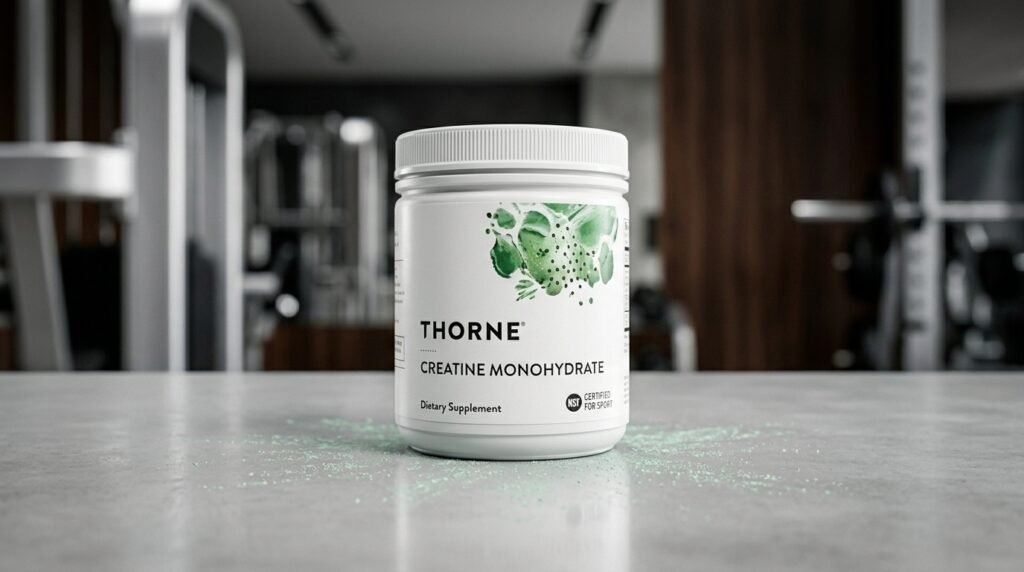
Thorne Creatine monohydrate is the energy supplement with the strongest evidence base of anything in this category. 5g daily, NSF certified, pharmaceutical manufacturing. Creatine regenerates ATP — the molecule your cells use for energy — at the cellular level, improving physical output and cognitive processing simultaneously. Most men notice meaningful energy and performance improvement within 10–14 days of consistent daily use.
Take 5g daily at any time — timing is irrelevant for the creatine saturation that produces the energy benefit. Consistent daily use matters more than any specific timing protocol. At $0.35–0.40 per day, it’s the highest evidence-per-dollar supplement on this list.
Pros: 500+ peer-reviewed studies, NSF certified, supports both physical and cognitive energy, no stimulant load, no tolerance buildup, cost-effective. Cons: Takes 2–3 weeks to saturate muscle tissue, no acute energy effect on day one, requires consistent daily use.
2. Thorne D3+K2 Liquid — Best for Vitamin D Deficiency (~$18–22 / 60 servings)
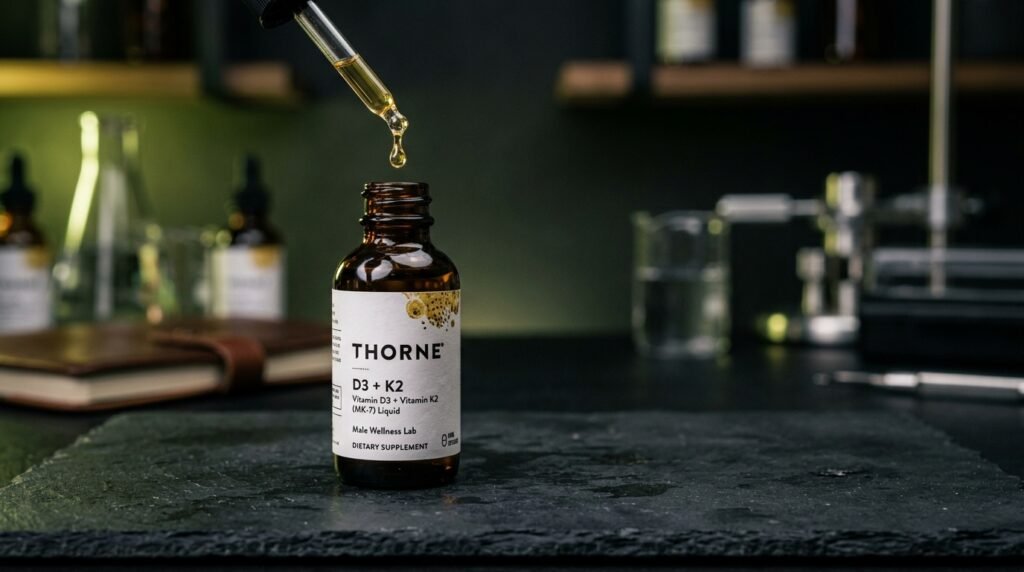
Thorne D3+K2 Liquid delivers 1000 IU D3 per drop with 200mcg K2 as MK-7 — the combination that corrects vitamin D deficiency while directing calcium appropriately through K2’s mechanism. Adjustable liquid dosing allows 2000–5000 IU for deficiency correction before stepping down to 1000–2000 IU maintenance.
Deficient men consistently report energy improvement within 6–8 weeks of correcting vitamin D status — the mechanism is direct through mitochondrial function and testosterone support. NSF certified, pharmaceutical manufacturing.
Pros: Pharmaceutical manufacturing, NSF certified, liquid format for precise dose adjustment, D3+K2 combination, clean formula. Cons: Requires blood test to determine correct dose, liquid format needs careful dispensing, refrigerate after opening.
3. Thorne Magnesium Bisglycinate — Best for ATP Synthesis & Sleep (~$22 / 60 servings)
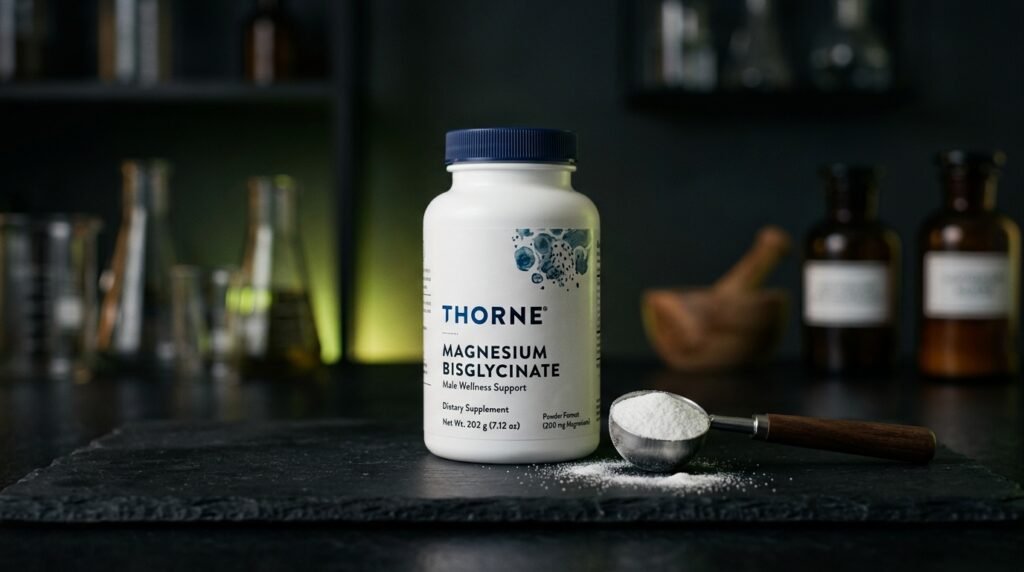
Thorne Magnesium Bisglycinate at 200mg elemental magnesium per serving addresses the ATP synthesis impairment that magnesium deficiency produces while supporting deep sleep quality that restores energy overnight. Two scoops reaches the 400mg therapeutic range for deficient men.
The bisglycinate form absorbs without digestive side effects and is specifically the form most studied for sleep quality improvement — the combination of daytime cellular energy support and nighttime sleep quality improvement makes it the highest-leverage single supplement for energy in men with documented or probable deficiency.
Pros: NSF certified, bisglycinate for superior absorption, supports both cellular energy and sleep quality, pharmaceutical manufacturing, flexible dosing. Cons: Takes 2–4 weeks for full effect, powder format less convenient for travel, add copper separately at higher doses.
4. Nutricost Rhodiola Rosea — Best for Mental Fatigue (~$18–22 / 90 servings)
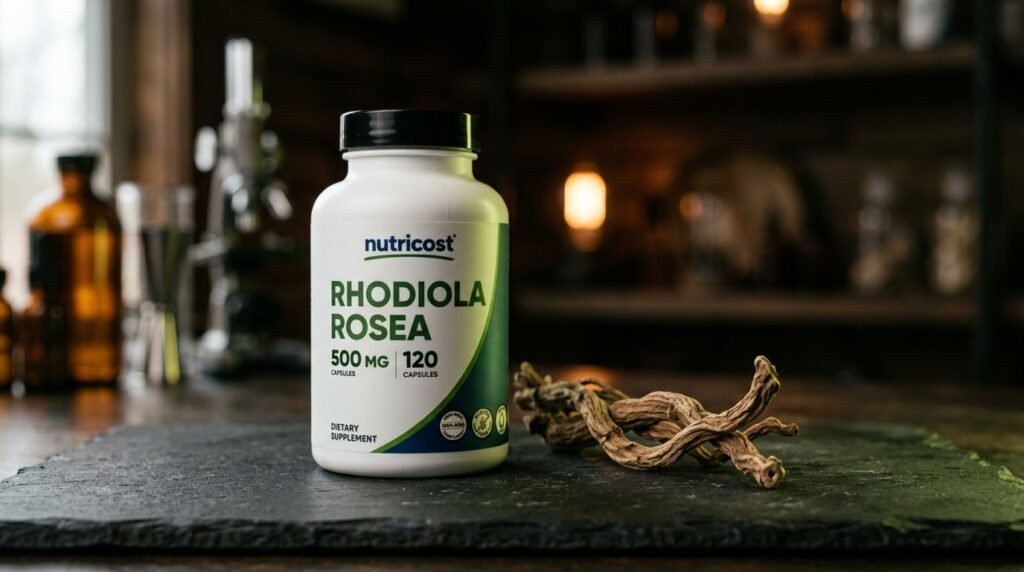
Nutricost Rhodiola Rosea standardized to 3% rosavins at 500mg per capsule is the adaptogen most directly relevant to energy specifically — it reduces mental fatigue in cognitively demanding tasks by up to 30% in clinical studies and supports the cortisol regulation that chronic stress disrupts. For men whose energy decline is primarily driven by stress and mental fatigue rather than physical fatigue, rhodiola is the most targeted intervention available.
Take in the morning — rhodiola has mild stimulant properties that can affect sleep if taken after 2pm. GMP certified, standardized extract at the research-relevant dose.
Pros: Clinical evidence for mental fatigue reduction, cortisol regulation without sedation, affordable at $0.20–0.25 per day, GMP certified, standardized extract. Cons: GMP rather than NSF certification, requires 2–3 weeks for full effect, mild stimulant properties limit evening use.
5. Thorne B-Complex #12 — Best for Energy Metabolism (~$20–25 / 60 servings)
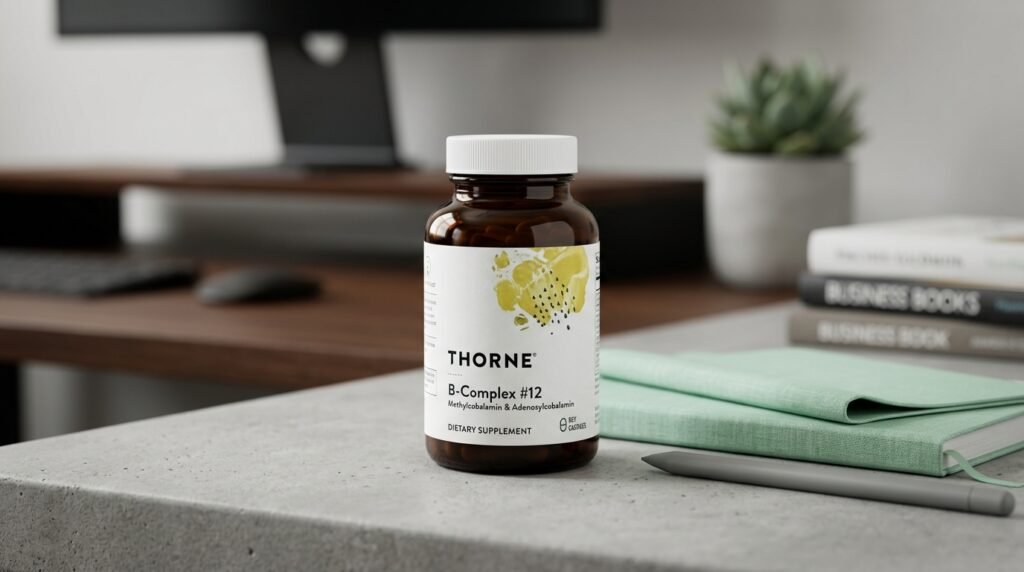
Thorne B-Complex #12 uses methylated forms throughout — methylcobalamin for B12, 5-MTHF for folate, P5P for B6 — ensuring absorption in men whose genetics or lifestyle impairs conversion of standard supplement forms. B vitamins are essential cofactors for the Krebs cycle — the cellular process that converts food into ATP. Without adequate B vitamins, this process runs inefficiently regardless of caloric intake.
Men eating plant-forward diets, heavy coffee drinkers, and anyone taking metformin should prioritize B vitamin status before any other supplementation.
Pros: Methylated forms for superior absorption, pharmaceutical manufacturing, NSF certified, covers all major B vitamins, supports energy metabolism and mood. Cons: Urine turns bright yellow (harmless), minimal effect if B status is already adequate, takes 2–4 weeks to assess.
Comparison Table
| Product | Price/Month | Primary Mechanism | Best For | Rating |
|---|---|---|---|---|
| Thorne Creatine | ~$12 | ATP regeneration | Foundation energy supplement | 9.5/10 |
| Thorne D3+K2 Liquid | ~$11 | Mitochondrial + testosterone | Vitamin D deficient men | 9.5/10 |
| Thorne Magnesium Bisglycinate | ~$11 | ATP synthesis + sleep quality | Magnesium deficient men | 9/10 |
| Nutricost Rhodiola Rosea | ~$7 | Mental fatigue reduction | Stress-driven energy decline | 8.5/10 |
| Thorne B-Complex #12 | ~$11 | Energy metabolism cofactors | Plant-forward diets, heavy coffee drinkers | 8.5/10 |
What to Look for When Choosing Natural Energy Interventions
1. Identify the root cause before choosing the intervention Low energy from vitamin D deficiency responds to vitamin D. Low energy from poor sleep responds to sleep optimization. Low energy from overtraining responds to recovery. Taking rhodiola for energy decline caused by B12 deficiency produces minimal benefit. The most useful first step is a basic blood panel — vitamin D, B12, ferritin, testosterone — that identifies which deficiencies are present before spending money on supplements.
2. Address behavioral foundations before supplements Sleep quality, consistent exercise, alcohol timing, and caffeine management produce larger energy improvements than any supplement for most men — and they’re free. Supplements work best as additions to optimized behavior, not replacements for it. A man taking creatine and rhodiola while sleeping 5 hours per night and drinking four coffees per day will see minimal benefit from either supplement.
3. Stimulant-free mechanisms for sustainable energy Caffeine, pre-workout, and energy drinks produce acute energy through adenosine blockade — borrowed energy that creates deeper fatigue when it clears. Creatine, magnesium, vitamin D, and B vitamins produce energy through cellular mechanisms that don’t create tolerance or rebound fatigue. For men who want sustainable rather than acute energy improvement, stimulant-free mechanisms are the appropriate target.
4. Third-party testing for daily supplements For supplements taken daily over months — the timeline required for meaningful energy improvement — NSF Certified for Sport or Informed Sport certification verifies label accuracy and absence of contaminants. Thorne’s NSF certification covers their manufacturing process, providing the strongest quality assurance available in the consumer supplement market.
5. Realistic timelines matched to mechanism Creatine: 10–14 days for full saturation. Vitamin D: 6–8 weeks for deficiency correction. Magnesium: 7–14 days for initial effect, 4–6 weeks for full benefit. Rhodiola: 2–3 weeks. B vitamins: 2–4 weeks if deficient. Setting the wrong timeline expectation leads men to abandon effective interventions before they’ve had time to work. Plan for 30–90 days of consistent use before evaluating any natural energy intervention.
FAQ
What’s the fastest natural way to increase energy for men?
Fixing sleep timing — consistent wake time seven days per week — produces the fastest sustainable energy improvement, typically within 7–10 days. For immediate same-day support, a caffeine plus L-theanine combination (200mg caffeine + 400mg L-theanine) delivers focused energy without the cortisol spike of straight caffeine. For sustained improvement over 2–4 weeks, creatine monohydrate at 5g daily is the most evidence-backed supplement intervention.
Can low testosterone cause low energy in men?
Yes, directly. Testosterone supports red blood cell production, muscle metabolic rate, and motivation-driving dopamine signaling — all of which contribute to daily energy levels. Men with clinically low testosterone consistently report fatigue as a primary symptom alongside reduced libido and muscle loss. Natural testosterone support — sleep optimization, resistance training, zinc and vitamin D sufficiency, stress management — addresses energy through the hormonal pathway without medical intervention for men with borderline rather than clinically deficient levels.
Is chronic fatigue always a sign of a medical problem?
Not always, but persistent fatigue lasting more than 4–6 weeks that doesn’t respond to sleep and lifestyle improvements warrants a doctor visit and blood panel. Thyroid dysfunction, anemia, sleep apnea, and clinical testosterone deficiency are all medical conditions that present as fatigue and require medical rather than lifestyle intervention. The lifestyle and supplement interventions in this guide are appropriate for men with functional low energy — not for men with undiagnosed medical conditions that require clinical diagnosis.
How much does diet affect energy levels in men?
Significantly and directly. Diets high in processed foods and refined carbohydrates produce blood glucose fluctuations that create the characteristic mid-morning and afternoon energy crashes. Protein at 30–40g per meal supports stable blood glucose and provides amino acids for neurotransmitter synthesis that affects energy and motivation. Adequate dietary fat supports testosterone production and fat-soluble vitamin absorption. The energy impact of diet quality is observable within 3–5 days of switching from a processed to whole-food diet — faster than any supplement.
Our Final Verdict
Increasing energy levels naturally for men comes down to a clear sequence: fix sleep quality first, identify and address nutritional deficiencies second, add targeted supplementation third. Start with Thorne Creatine at 5g daily and Thorne Magnesium Bisglycinate at 300–400mg before bed — those two address cellular energy production and sleep quality simultaneously and are appropriate for virtually every man regardless of specific deficiency profile.
Add Thorne D3+K2 and Thorne B-Complex #12 after getting a blood test to confirm which deficiencies are present. Layer in Nutricost Rhodiola Rosea if stress and mental fatigue are the primary driver. Build the foundation before chasing more complex interventions. Check current pricing on Amazon for all five supplements in this guide.